Welcome to 'What's My Line: Drug War Edition.' Here is your host, Blaze Thunderstone.
Today's mystery guest is Andy from Staten Island, New York. Andy, how are you doing today?
Great, Blaze, thanks.
Let's ask some questions to see if our contestants can figure out what you do for a living. Fire when ready, Mary.
Does your job have anything to do with breaking down doors and throwing grandmothers to the floor?
You might say that, yes.
Very interesting. Steve?
If I begged for mercy while you were ransacking my house, would you be likely to cut me some slack?
Ha, you wish.
I think we'll take that as a no. Harmony, your question, please.
If you broke down my door and I did not immediately get down on the floor, would you shoot me?
Of course. You would have it coming to you, in that case.
Time is up, I am afraid. Mary, what do you think that Andy here does for a living?
It's hard to say, however, I think he might be a member of the Nazi Gestapo.
Oh, close one, Mary, but that is not quite the correct answer. Steve?
Is Andy one of those mindless thugs who goes around enforcing protection rackets for the Mafia?
Oh! Once again, that's very close, but it is not the precise answer that we are looking for. Harmony, what do you think is Andy's job?
Well, if he is not in the Gestapo and he is not part of the Mob... is he one of those DEA agents who destroys houses on a whim and answers to nobody, thereby constituting an abomination in a supposedly free country?
Exactly, Harmony, well done. Yes, Andy is indeed one of those D E A agents who destroys houses on a whim and answers to nobody, thereby constituting an abomination in a supposedly free country!
You have been listening to What's My Line, Drug War edition, with your host, Blaze Thunderstone.
All drugs have positive uses. It's absurd to prohibit them because one demographic might misuse them.
I've been told by many that I should have seen "my doctor" before withdrawing from Effexor. But, A) My doctor got me hooked on the junk in the first place, and, B) That doctor completely ignores the OBVIOUS benefits of indigenous meds and focuses only on theoretical downsides.
We deal with "drug" risks differently than any other risk. Aspirin kills thousands every year. The death rate from free climbing is huge. But it's only with "drug use" that we demand zero deaths (a policy which ironically causes far more deaths than necessary).
Many psychonauts (like Terence McKenna) praise psychedelics while demonizing other psychoactive substances. No substance is bad in itself. All substances have some use at some dose for some reason for some people in some circumstance.
There's more than set and setting: there's fundamental beliefs about the meaning of life and about why mother nature herself is full of psychoactive substances. Tribal peoples associate some drugs with actual sentient entities -- that is far beyond "set and setting."
It's almost impossible not to have a problem with drugs in a world in which the government is spending over $50 billion a year to render drug use problematic.
The outlawing of coca and opium is a crime against humanity.
We live in a make-believe world in the US. We created it by outlawing all potentially helpful psychological meds, after which the number-one cause of arrest soon became "drugs." We then made movies to enjoy our crackdown on TV... after a tough day of being drug tested at work.
Before anyone receives shock therapy -- or the right to assisted suicide -- they should have the option to start using opium or cocaine daily -- in fact, any drug that makes them feel that life is worth living again.
Outlawing substances like laughing gas and MDMA makes no more sense than outlawing fire.
Break the ice with a sledgehammer: place this book on your coffee table.
This book features 150 annotated images, designed to force brainwashed Americans to confront the fact that drug prohibition is wrong. Here is what author Richard Parrish II says of the book's compiler: "The drug prohibition philosopher provides first-hand, principled, persuasive, and insightful arguments against the current drug prohibition regime..."
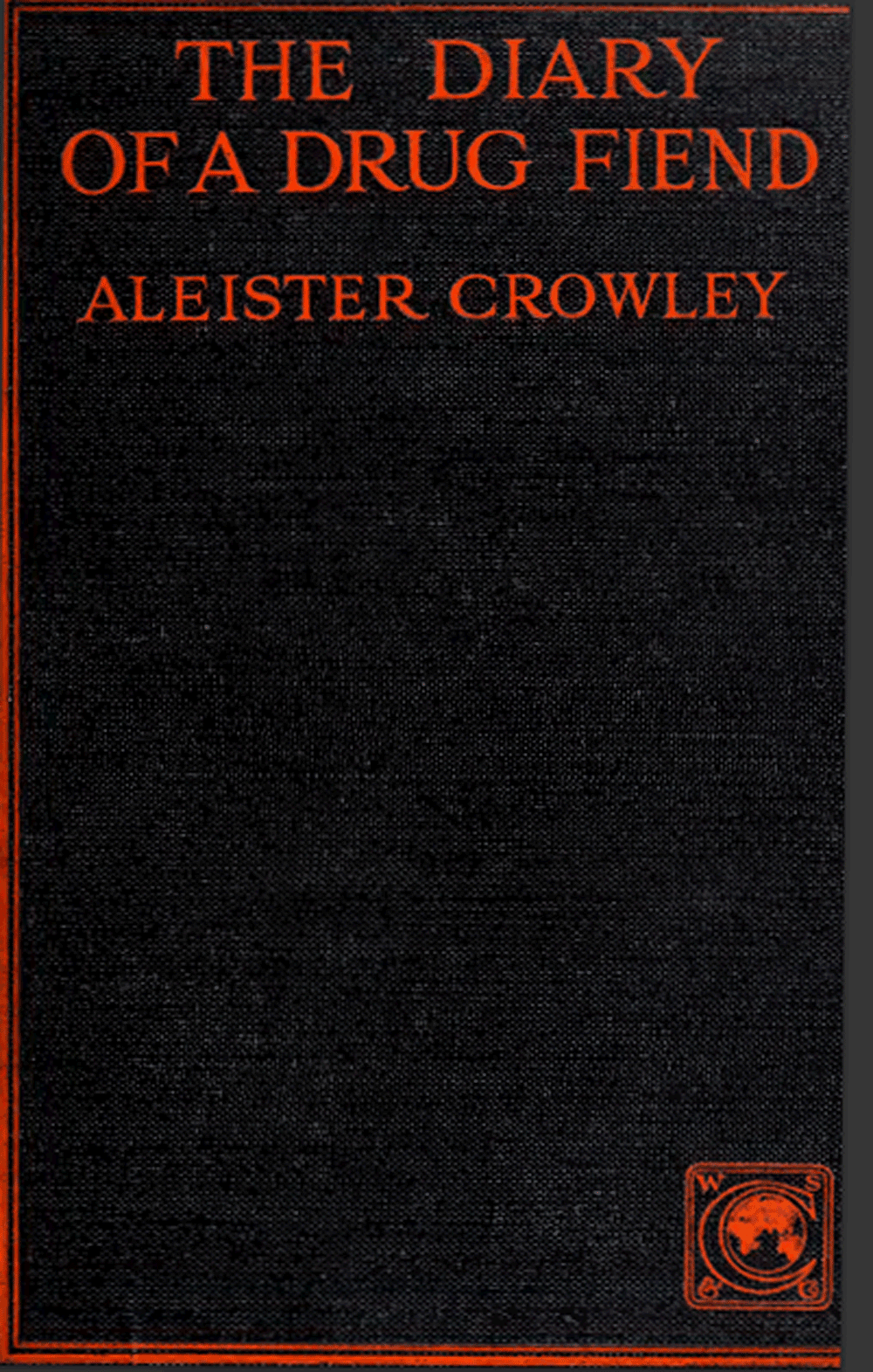
This is the only full-cast recording of Aleister Crowley's 1922 classic paeon to common sense. It is the first book -- and so far almost the only book -- to stake out a philosophy of drug use that is compatible with human freedom, one in which we learn to use drugs as wisely as possible for the benefit of humanity. This recording was produced by the Drug War Philosopher and your purchases help support his effort to push back against the tragically counterproductive policy of drug prohibition, in the name of human freedom and of humanity's right to heal.
No cookies, no ads paid for by amoral and immoral billionaires (or trillionaires).
Unless otherwise indicated, no AI is used in the creation of site content. These essays represent the original ideas of their author and not the ideas that the author SHOULD have based on an algorithmic parsing of existing data. For more on this subject, consider the AI-related viewpoints to which the author subscribes as delineated in the New York Times opinion piece entitled "What 370,000 College Essays Tell Us About A.I.’s Effects on Creativity" by Rebecca Winthrop of the Brookings Institution.











 (up)