




Who really speaks for the depressed in the age of drug prohibition?
another open letter to Robert Whitaker of Mad in America
by Brian Ballard Quass, the Drug War Philosopher
June 8, 2026
You could have knocked me down with a prescription bottle when Robert Whitaker refused to give me a voice on his Mad in America website. I had written Robert to tell him that depressed Canadian Claire Brosseau was on "death row" because of America's mad attitude about drugs. Claire was asking for her right to assisted suicide despite the fact that endless drugs exist that could make her wish to live -- a fact that can only be denied by those who are either unaware of, or are indifferent to, the state of the art in pharmacology and ethnobotany, to say nothing of the history of world religions and common sense psychology. If Robert did not like my writing style, he could have interviewed me on the subject, but to claim that I have no standing on this time-sensitive matter is infuriating. Does someone need to have "standing" in order to report that a populated building is on fire and threatening to engulf the residents? I am one of the most experienced people in the world on the subject about which Robert writes. I was on the receiving end of the disempowering psychiatric pill mill long before Robert was writing books about the scientistic myths behind modern antidepressants. I have written hundreds of essays on the subject. I am the proverbial grizzled elder in the field. But Robert thinks that academics and credentialed doctors are the real experts on matters of MY mind and MY mood. We, the depressed, should listen to our betters.
Robert wants a dispassionate professional to rework my just indignation (and my concern for Claire Brosseau) into a politically correct format that won't rattle the medical establishment and which won't force his med-dependent followers to engage in the uncomfortable task of thinking. He wants to put Claire's story on hold until a distinguished academic is willing to stick out their neck to confront the verboten issues that I alone have raised. The problem is, of course, that this blue moon that Robert is waiting for will surely shine only long after we westerners have sacrificed Claire on the altar of the drug-hating ideology of the west, telling Claire by our silence that, "Yes, Claire, we agree with you on this at least, that if Big Pharma cannot help you, then nothing can." Although Robert, for his part, would probably add: "Have you ever thought of exercise and yoga, Claire?" as if Robert knows all about the vast array of inputs that makes Claire Claire and that he can therefore decide for Claire that the answer to all her problems is to become a Christian Scientist.
Robert will say that I do not have the proper credentials and that I have not consulted the noted authorities on my "condition." But that is only because (in my opinion) Robert does not understand how philosophy works. (Actually, I HAVE consulted our credentialed experts, but almost every single one of them has ghosted me. What do I know, after all? I'm a mere patient!) My arguments are all in the form of the argumentum ad absurdum. This is a democratic form of argument: no honorific titles required, just an ability to create valid syllogisms. I adduce facts that everyone agrees to be true -- and then I reveal the dubious assumptions that have brought about those facts, while showing the absurdity that ensues when we take those assumptions to their logical conclusions, thereby (hopefully) changing the minds of my opponents. And no news story illustrates this absurdity more clearly than the case of Claire Brosseau. It is terrifying to me that neither doctors, psychiatrists, ethicists, nor reporters see any connection between drug prohibition and assisted suicide. It shows how completely America has replaced concern about the depressed with the cold calculus of biochemical determinism. (Here's the connection in a nutshell, for the benefit of biochemical determinists and Christian Scientists who are still struggling with this subject: The propriety of assisted suicide is always thought to be contingent upon "perceived quality of life," and perceived quality of life is always contingent upon mental attitude, and drug use is all about improving one's mental attitude.)
We actually seem to believe that if Big Pharma meds cannot help the depressed, then no substances can. And this is just a complete lie. Fortunately for Big Pharma, it has been all but illegal to attempt to illustrate the benefits of demonized "drugs" (as opposed to the supposed benefits of the substances that we have been taught to revere as "meds"), let alone to profit from those drugs. But the truth is out there, even though it's hidden in disreputable and fringe places -- not because the truth itself is disreputable and fringe by nature, but because vicious laws have forced the proponents of common sense and progress to retreat to dubious neighborhoods. And this is just what the prohibitionists want. Our forced exile from the mainstream will, in the simple minds of our opponents, provide "proof" that we ourselves are guilty of all the sins that they have hitherto associated with our new and unsought-for neighbors in the bullet-riddled back streets of the body politic, bullet-riddled, that is, thanks to the perverse incentives created by the prohibitionist policies of our opponents.
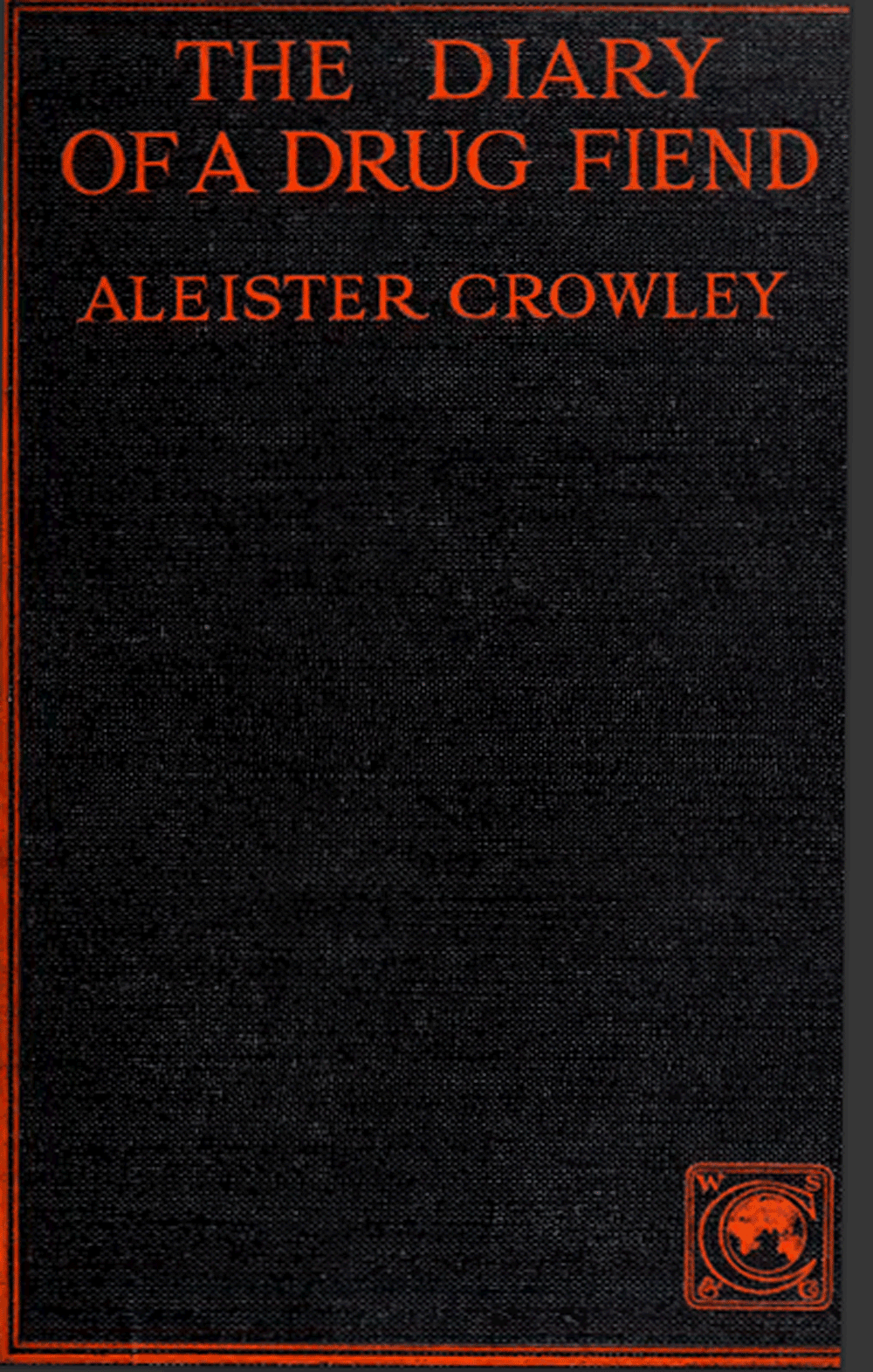
American academics (and the journalists who flatter them) will not be free until they acknowledge the following home truths: that assisted suicide for the depressed has everything to do with drug prohibition; that shock therapy for the depressed has everything to do with drug prohibition; that inner-city gunfire has everything to do with drug prohibition; that the wars in Mexico have everything to do with drug prohibition; that the school shootings have everything to do with drug prohibition (see the subject of entheogens); that dementia has everything to do with drug prohibition (see Alexander Shulgin, Aleister Crowley and Freud for testimony about drugs that drastically improve cognition); and that academic censorship has everything to do with drug prohibition.
Until academics wake up and smell the poppies, they are just playing a game of make-believe in the age of drug prohibition, albeit one for which they are being handsomely remunerated. Our credentialed pundits in the Ivory Tower are like a bunch of grade schoolers who got together in a suburban attic wearing ridiculously oversized tweed suits and fake mustaches and said:
Kid 1: "Let's pretend that we are highly esteemed academics. [attempting ponderous-sounding voice] 'Good day, honorable colleagues, good day!'"
Kid 2: "Yeah, but let's pretend that Mother Nature's psychoactive substances do not exist -- except as traps to ensnare sinners."
Kid 3: "And let's pretend that human beings have no right to the bounty of Mother Nature and that there is nothing wrong with the government telling us which drug-related subjects we can study and which not."
Kid 4: "And let's pretend that drug prohibition has no downsides in the real world."
Kid 5: "Okay, I guess so. But let's retain all of the trappings of certitude and self-satisfaction that are typically associated with pedants, failing to even consciously notice the strictures in question, let alone the fact that those strictures totally bias the playing field as to what we can study and hence what conclusions we are even allowed to DRAW!"
Let me be clear. I do not blame Robert Whitaker for disagreeing with me. Everybody who's anybody disagrees with me (at least in those rare cases in which they do not simply ghost me). I am complaining about the fact that Robert sees no significance in this very debate that we are having via e-mail, the debate over who is the expert when it comes to my -- MY -- depression. Robert says it is the credentialed academic or scientist; I say that it is the depressed themselves and that academics and scientists have clear biases on these topics in the age of drug prohibition and biochemical determinism. It's fine for Robert to draw a different conclusion on that subject, but it's wrong for him to declare victory over my viewpoint by failing to even acknowledge publicly that a debate exists!
Key Takeaways:
Assisted suicide cannot be discussed advisedly without discussing drug prohibition.
No one has to be credentialed in order to deploy the argumentum ad absurdum.
Drug law has exiled common sense and human progress from the mainstream.
Censorship has everything to do with drug prohibition.
Academics are playing a big game of make-believe in the age of drug prohibition.
America needs a debate: who speaks for the depressed, self-interested scientists and doctors or the depressed themselves?
The fact that drugs have positive uses for human beings is a psychological corollary of Husserl's phenomenology and Whitehead's philosophy of organism.
American businesses judge people, not by the color of their skin but by the contents of their digestive systems.
Drug use is judged by different standards than any other risky activity in the western world. One death can lead to outrage, even though that death might be statistically insignificant.
M. Pollan says "not so fast" when it comes to drug re-legalization. I say FAST? I've gone a whole lifetime w/o access to Mother Nature's plants. How can a botanist approve of that? Answer: By ignoring all legalization stakeholders except for the kids whom we refuse to educate.
In 1886, coca enthusiast JJ Tschudi referred to prohibitionists as 'kickers.' He wrote: "If we were to listen to these kickers, most of us would die of hunger, for the reason that nearly everything we eat or drink has fallen under their ban."
There are endless creative ways to ward off addictions if all psychoactive medicines were at our disposal. The use of the drugs synthesized by Alexander Shulgin could combat the psychological downsides of withdrawal by providing strategic "as-needed" relief.
Billboards reading "Fentanyl kills" encourage the creation of racist legislation that outlaws all godsend uses of opiates. Kids in hospice in India go without morphine because of America's superstitious fear of opiates.
Drug prohibition represents the biggest power grab by government in human history. It is the state control of pain relief and mental states.
"Just ONE HORSE took the life of my daughter." This message brought to you by the Partnership for a Death Free America.
I wonder if Nixon knew what a favor he was doing medical capitalism when he outlawed psychedelics. Those drugs can actually cure things, and there's no money in that.
Unless otherwise indicated, no AI is used in the creation of site content. These essays represent the original ideas of their author and not the ideas that the author SHOULD have based on an algorithmic parsing of existing data. For more on this subject, consider the AI-related viewpoints to which the author subscribes as delineated in the New York Times opinion piece entitled "What 370,000 College Essays Tell Us About A.I.’s Effects on Creativity" by Rebecca Winthrop of the Brookings Institution.