




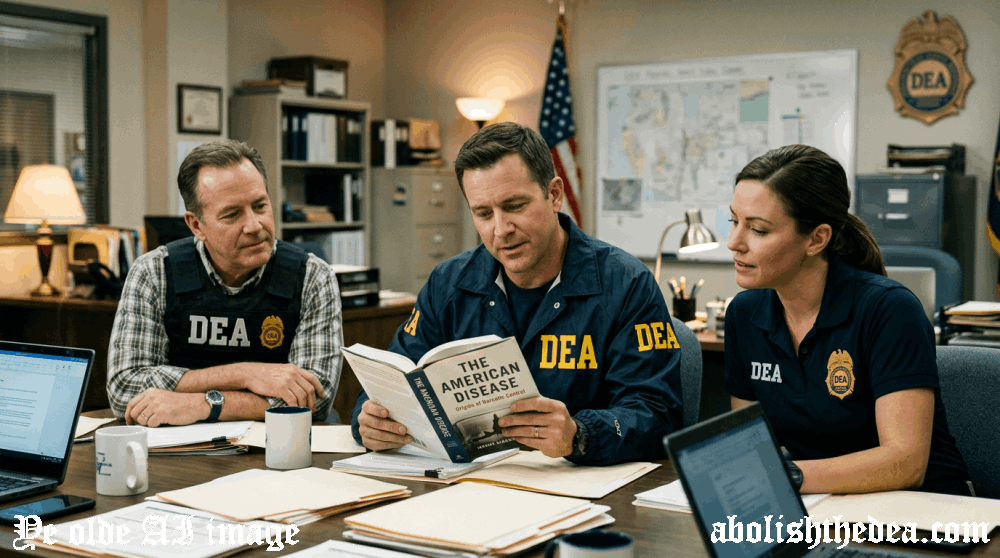
Homepage of the Drug War Philosopher, Brian Quass
blog icon orange rss icon with stylized radio waves bird icon for twitter bird icon for twitter substack icon


back navigation arrow


Why David Musto was Wrong about Drugs

Thoughts on the philosophical shallowness of 'The American Disease', America's supposedly authoritative book about drug abuse

by Brian Ballard Quass, the Drug War Philosopher

October 23, 2026


As a chronically depressed 68-year-old who has gone a lifetime without godsend medicines, I can scarcely bring myself to read David Musto's "The American Disease. 1." It is full of problematic assumptions that leave my interests completely unaddressed. But then I should not be surprised. David reveals in the Preface to the Third Edition that his research was sponsored by the National Institute on Drug Abuse. Notice that the sponsor is not the National Institute on Drug Use, it is the National Institute on Drug Abuse. And David's approach to the subject is true to that nomenclature. One need not read past the preface to see that David equates drug use with drug abuse. As he writes in the Preface to the Third Edition:


What has most impressed me is that our use of drugs and the social damage that inevitably follows has so closely paralleled our earlier fascination with drugs, which peaked around the turn of the century.


Musto could have just as easily written the following:

What has most impressed me is that our driving of cars and the accidents that inevitably follow haveso closely paralleled our earlier fascination with cars, which peaked around the turn of the century.


Here Musto is framing the problem about which he writes as a problem with drugs, not with social policy. He is interested in the lurid newspaper accounts of "addicts" (a term that Musto, like all confused Americans, casts about like a rhetorical truncheon, using the pejorative term both liberally and uncritically) but he has no interest in the hundreds of millions of depressed who could have benefited from the wise use of drugs. And wise use is possible (although few dare to be honest about this, as do Carl Hart and Jim Hogshire, for instance) -- despite the self-interested fatalism of the psychiatrists and the biological determinists. But then Musto can only research those topics for which there is a literature. He is not going to find documentary material about the millions who suffer silently at home and wish that they were dead because America managed to demonize and outlaw the use of a plant worldwide. Nor is he going to discover an archive full of reports of positive drug use, for the simple reason that no one would dare publish such reports in this free country of ours. Musto is stuck in an echo chamber where all he is going to find in his research are "facts" that persuade him of the evil of drugs. He seems to have never heard of "best practices" and the power of education, although he seems to be a big believer in the power of law enforcement.

And so, based on this heavily biased approach to the perceived problem with drugs, Musto concludes as follows:

. Anyone advocating that drugs should be legalized can look at a century during which our nation was one of the few in the Western world to allow unregulated drug use. The viewer will not see, however, a happy equilibrium resulting from that open drug economy in the nineteenth century, but rather an eventual demand by the public that action be taken to curb availability.


Yes, David, and anyone who looks at the legality of automobiles can see how that policy led to mass carnage on America's roads and highways. Such topics cannot be evaluated merely by looking at the downsides. Instead of assuming that drugs are the problem, as David and "the public" so obviously do (under the influence of sensational and highly biased newspaper coverage), we have to ask why our society raises irresponsible people. We need to talk about the need for education. Imagine spending all the money that we spend on arresting people on actually educating them instead. Imagine $51 billion a year on teaching and encouraging responsibility. Yet David thinks it's okay to outlaw Mother Nature instead. He therefore runs roughshod over the rights of an endless list of stakeholders of whose very existence he seems to be unaware: the depressed who suffer needlessly when drugs are outlawed, the philosophers who cannot continue the work of William James when drugs are outlawed, the botanists who cannot study plants to find positive uses when drugs are outlawed, the new religions that cannot even be IMAGINED when drugs are outlawed.

And on what does Musto base his conclusions? He bases them on newspaper accounts from reporters who uncritically throw around words like "addiction" and "dope" and other highly malleable pejorative terms. In other words, Musto is being preached to by the converted. The newspapers have a duty to sensationalize stories and make drugs the villain of the piece. Their goal is to get readers, not to print nuanced analyses.

Speaking of "curbing availability," California parents attempted to do just that in the 1970s when they successfully urged President Jimmy Carter to crack down on marijuana availability. And what was the result? The laws incentivized dealing by poor and undereducated minorities. Blacks throughout the country were arrested in record numbers. The white parents in California were selfishly attempting to cut down on drug risks for their white kids by outsourcing drug-related dangers to other demographics. And here's another presumption that Musto makes: he talks about the dangers of drugs but never about the dangers of drug prohibition in creating cartels out of whole cloth and destroying inner cities and depriving human beings of fundamental rights whose existence used to be the hallmark of a free society.

Musto describes people like myself as folks who want drug legalization, but this is a misleading characterization. We actually want drugs to be RE-legalized. Drugs have always been legal. It is our wholesale outlawing of drugs that is the unprecedented experiment here. The world has survived all of recorded history with drug legalization. If modern cultures cannot handle Mother Nature as it is, then there is something wrong with our modern culture, not with drugs. Instead of education, Drug Warriors say, "No, let's change human nature instead, so that no one wants to improve their mind and mood anymore -- except with the sanctioned help of the Holy Brotherhood of Materialist Medicine."

And there is yet another problem with David's entire book: he really wants us to believe that drug laws are all about safety -- but that is false. Drug prohibition is all about safety as perceived by worried parents and demagogue politicians. If we were really interested in safety, we would repeal the Second Amendment at once and return to liquor prohibition and end the psychiatric pill mill thanks to which 1 in 4 American women are dependent on drugs that were never even approved or studied for long-term use. If we are going to end humanity's right to Mother Nature, then why are we not going to end their right to a piece of metal that kills? David is really insulting our intelligence to lecture us about drug dangers in such a world, a world in which his readers will nod their head in approval and then run off to the convenient store to pick up more beer.

I am not spouting some rabid Libertarian doctrine here. I am simply saying what would have been common sense to the Founding Fathers, that human beings have a right to heal, that philosophers have a right to philosophize a la William James, and that religions have a right to be inspired -- and finally that no government has the right to outlaw Mother Nature. To say otherwise is to reject the Constitution, it is to say that, "no, basic freedoms are too dangerous after all."

Musto infuriates me because it his closed mindset -- and his outsized influence with this highly unphilosophical book of his -- that has biased generations of Americans against basic freedoms. Musto is suggesting that freedom is a problem. No, David, freedom and education are the answers -- to the extent that human beings can find answers to the problem of human misbehavior. There will always be victims of drug use just as there will always be victims of car accidents. The natural world is full of psychoactive substances. Americans have to learn to live with that fact. Instead, Musto would have us look to more authoritarian countries as role models for dealing with the psychoactive nature of the world. This approach is difficult to parody, so absurd has it become, with countries attempting to re-create the natural world by physically destroying the plants that we hold responsible for our social problems. It would be hilarious were this process not productive of so much evil.

Speaking of which, David implicitly praises other countries for not having been so naive as to allow drug use in the 19th century, but he does not tell us how much violence that prohibitionist policy spawned -- to say nothing of how many citizens were deprived of rights of which Musto does not even appear to be aware: the aforesaid rights to heal, to philosophize, etc. Incidentally, the mindset behind the destruction of plants is particularly worrisome when we think of genetics and technology. Unless Americans renounce this drug prohibition mindset, we can look forward to a day when the government takes genetic actions to destroy the ability of plants to produce godsends. The mind boggles when one considers the breathtaking metaphysical presumption that would be behind such an act, the potentially irreversible tyranny that such a deed would represent... -- and deep depression soon follows when one considers that most mainstream Americans would probably be in favor of such an intervention if America continues to think so wrongheadedly about drugs.

We are just beginning to learn about the endless beneficial uses of drugs (both synthesized and organic) for altering minds for the better. The list of drugs that can do this is theoretically endless. But Musto would have us engage in an eternal war against all such substances, thereby bringing the military and police forces into every aspect of our lives as overseers and protectors of a Christian Science status quo. If we believe in this ideology, than we will have to take the DEA with us into outer space.2

The problems with Musto's book would require a whole book -- or even series of books -- to elucidate. Unfortunately, that is a book that no one will publish, except maybe in 100 years when an academic might finally dare to write such heresy.

I apologize for the no doubt jerky writing style of this essay. Musto's book irritates me to the point that I find it difficult to patiently develop my thesis, namely, that Musto's analysis of the 'American Disease' is based on a variety of assumptions and presumptions that do not stand up to philosophical scrutiny. Speaking of which, the "disease" metaphor is very unfortunate. As Thomas Szasz points out, such use of language has implications. If drug use is a disease, then the state can be justified in taking harsh measures.

A physician who is a professor in a medical school here asserts that heroin addiction is like malaria, that heroin is like a parasite, and that the person who sells heroin is like a mosquito. The verminization of the human being, begun by the Health Ministry of National Socialist Germany, is thus continued— without any public recognition that it is— through the American war on “drug abuse.” 3


Here is another thing that Musto overlooks. He talks about the evils of addiction and alludes to biochemical theories from self-interested doctors preaching despair, telling us that it is impossible to get off drugs without their help. Yet this fatalism is a lie. Malcolm X knew better when he got his followers off of heroin: he knew that all they needed to get off was a reason to get off: a reason that motivated them. As Thomas Szasz wrote in "The Ethics of Addiction":

The opiate habit, like the cigarette habit or the food habit, can be broken—usually without any medical assistance —provided the person wants to break it. Often he doesn’t. And why indeed should he if he has nothing better to do with his life? Or as happens to be the case with morphine, if he can live an essentially normal life while under its influence? 4


If there is any drug that is impossible to get off, it may well be modern antidepressants, especially SNRIs like Effexor. But this a topic that drug prohibitionists refuse to discuss.

Speaking of addiction: Musto tells us, both implicitly and explicitly throughout his book, that we have to get the drug dependent off of drugs. To which I ask, why? One in four American women take a dependence-causing Big Pharma med every day of their life and we praise them for doing so. We consider them to be good patients for doing so. Why then do we not leave the opiate-dependent alone -- or rather help them by regulating supply and teaching them best use practices? A good historian will know that many people have used opiates on a daily basis and actually flourished in life. And here is another thing about addiction to which Musto is blind: the common-sense fact that drugs can help people get off drugs. If one does not like a given drug, they can transcend and obfuscate the downsides of withdrawal with the strategic and symptomatic use of a variety of drugs that inspire the same sought-for effects but with different biochemical modes of action. This much is psychological common sense. Of course, such use would have to be tailored carefully to a specific situation, but the protocol itself makes sense on a prima facie basis. In other words, drug prohibition itself helps make "addiction" a problem by outlawing substances that could make withdrawal possible -- indeed, we can say that drug prohibition helps turn dependence into addiction, at least if we define addiction as "problematic dependence." Unfortunately, it is heresy to suggest that we fight drugs with drugs -- except when the government wants to give us drugs that will make it harder for us to appreciate the effects of hated drugs like opiates.

I am only writing this as a matter of faith, hoping that someday these ideas will resonate with someone.

Speaking of which, talk to me, folks. Tell me what you're writing that touches on these subjects.

AFTERWORD

I can't praise Andrew Weisse enough, for he is the only one I know on Substack who realizes that all drugs have potential positive uses. But I am sometimes puzzled by what an aviator might call his "angle of approach" to various drug-related topics. While I was writing the above, I received a heads-up about a new substack post of his telling us decisively that the Soma of the Vedic people of the Punjab was NOT a drug. Now, as it happens, I have done some study on this topic with the help of the sources listed below, and I know that there is a theory to this effect, that Soma was not a drug. 5 But I found this to be a minority viewpoint among researchers in the field, judging from the academic papers that I discovered on this topic. Now, I have no doubt that Andrew found good reasons to be convinced to join the minority camp. But my question is, why would he want to do so? Given the equivocal evidence involved, questions like "Was Soma a drug?" are, at best, antimonies. One could answer them either yes or no and make a plausible and perhaps even convincing argument in defense of that answer. Given this situation, why would an advocate of drug relegalization (which I assume Andrew to be) wish to plump for the "no" side of this debate? Why promote an answer that would shield Drug Warriors from the force of historical analogies that stress the religious intolerance implicit in drug prohibition?

My own suspicion is that Andrew is so eager to strike down what he takes to be extravagant speculation and to create eye-catching headlines that he has overshot his mark. I won't go into the evidence here. The reader can use the links below as a starting point to do their own research. Personally, however, I see the mainstream answer as more consistent with human psychology. I think that it is more likely that a religion with staying power, such as the Vedic, was inspired by a deeply felt (i.e., drug-aided) experience rather than by mere metaphors. I think this helps explain why regular church attendance has declined from 42% to 30% of U.S. adults over the last two decades6. At some point, people want more than just "words, words, words." As Quanah Parker writes of the religious use of the peyote cactus:

The white man goes into his church house and talks about Jesus; the Indian goes into his teepee and talks to Jesus. 7


Soma (resources)


Blue Tide: the Search for Soma 8

Botanical identity of Soma 9

Confusion about Vedic Soma Plant 10

From The Vedas: The Creation and Purpose of Soma 11

History of Ayurveda 12

In Search Of Soma: An Elixir for Immortality of Soul 13

Soma 14

Soma 15

Soma: Divine Mushroom of Immortality 16

Soma 17

Soma: A Deep Dive into the Sacred Vedic 18

Soma, an Enigmatic, Mysterious Plant of the Vedic Āryas: An Appraisal 19

Soma in Vedic Mythology and Ritual (study) 20

The importance of rituals around Soma in the Rig Veda 21

Somayana -The Vedic Soma Sacrifice 22

The Search for Soma 23

The Secret of the Soma Plant 24

The Secret Substance Soma: Bringing Human Beings Closer to the Gods 25

Soma: The God of the Moon and the Sacred Drink


Notes for essay entitled Why David Musto was Wrong about Drugs: Thoughts on the philosophical shallowness of 'The American Disease', America's supposedly authoritative book about drug abuse:

1: Musto, David F. 2026. “Google Books.” Google.Com. 2026. https://www.google.com/books/edition/The_American_Disease/7VrQy2d8PxYC?hl=en&gbpv=1&dq=david+musto&pg=PR9&printsec=frontcover. (up)
2: Drug Warriors in Outer Space DWP (up)
3: “Ceremonial Chemistry – Syracuse University Press.” 1974. Syr.edu. 2026. https://press.syr.edu/supressbooks/1114/ceremonial-chemistry/. (up)
4: “Full Text of ‘The Ethics Of Addiction.’” 2026. Archive.Org. 2026. https://archive.org/details/382239100-the-ethics-of-addiction. (up)
5: “Blue Tide - Mike Jay.” 2025. Mike Jay. May 18, 2025. https://mikejay.net/books/blue-tide/. (up)
6: Jones, Jeffrey. 2024. “Church Attendance Has Declined in Most U.S. Religious Groups.” Gallup.Com. March 25, 2024. https://news.gallup.com/poll/642548/church-attendance-declined-religious-groups.aspx. (up)
7: “Schultes, Hofmann Plants of the Gods ( Healing Arts, 2001) : Alberto Hoffman : Free Download, Borrow, and Streaming : Internet Archive.” 2015. Internet Archive. 2015. https://archive.org/details/SchultesHofmannPlantsOfTheGodsHealingArts2001. (up)
8: “Blue Tide - Mike Jay.” 2025. Mike Jay. May 18, 2025. https://mikejay.net/books/blue-tide/. (up)
9: “Botanical Identity of Soma–Haoma.” 2026. In Wikipedia. https://en.wikipedia.org/w/index.php?title=Botanical_identity_of_soma%E2%80%93haoma&oldid=1381067906. (up)
10: “Confusion About Vedic Soma Plant.” 2013. Tamil and Vedas. May 5, 2013. https://tamilandvedas.com/2013/05/05/confusion-about-vedic-soma-plant/. (up)
11: Hinduism Today. 2016. “From the Vedas: The Creation and Purpose of Soma.” Hinduism Today. April 2016. https://www.hinduismtoday.com/magazine/april-may-june-2016/2016-04-from-the-vedas-the-creation-and-purpose-of-soma/. (up)
12: “Soma: The Nectar of the Gods.” n.d. History of Ayurveda. https://www.historyofayurveda.org/library/soma. (up)
13: Shah, Bipin. 2021. “In Search of Soma-an Elixir for Immortality of Soul.” Academia.edu. June 10, 2021. https://www.academia.edu/49200796/In_Search_Of_Soma_An_Elixir_for_Immortality_of_Sou (up)
14: Clark, Matthew. 2019. “Soma.” Soma. 2019. https://www.academia.edu/41346564/Soma. (up)
15: “Soma - New World Encyclopedia.” 2023. Newworldencyclopedia.Org. 2023. https://www.newworldencyclopedia.org/entry/Soma. (up)
16: Wasson, Gordon. 2006. “The Divine Mushroom.” ThriftBooks. February 20, 2006. https://www.thriftbooks.com/w/soma-divine-mushroom-of-immortality_r-gordon-wasson/468400/. (up)
17: Das, Vaishnava. 2015. “Soma - Elixir of the Gods.” IndiaDivine.org. May 20, 2015. https://www.indiadivine.org/soma-elixir-of-the-gods/. (up)
18: Oliverio, Dan. 2025. “Soma: A Deep Dive Into the Sacred Vedic ‘Drug’ and Its Connection to Vimanas.” Substack.Com. Dan’s Substack. January 31, 2025. https://danoliverio.substack.com/p/soma-a-deep-dive-into-the-sacred. (up)
19: Shah, N C. 2015. “Soma, an Enigmatic, Mysterious Plant of the Vedic Āryas: An Appraisal.” Indian Journal of History of Science 50 (1). https://doi.org/10.16943/ijhs/2015/v50i1/48110. (up)
20: www.wisdomlib.org. 2021. “Association of Soma With Other Gods [Chapter 1(C)].” Wisdomlib.Org. April 29, 2021. https://www.wisdomlib.org/hinduism/essay/soma-in-vedic-mythology-and-ritual-study/d/doc627289.html. (up)
21: Le Bevillon, Hervé. 2024. “The Importance of Rituals Around Soma in the Rig Veda.” Le Rig Veda. November 24, 2024. https://rigveda.blog/2024/11/24/the-importance-of-rituals-around-soma-in-the-rig-veda/. (up)
22: Rao, Rekha. 2021. “Somayajña -the Vedic Soma Sacrifice – Smriti.” Upaasana.net. May 20, 2021. https://smriti.upaasana.net/2021/05/20/somayajna-the-vedic-soma-sacrifice/. (up)
23: “The Search for Soma, the Ancient Indian Psychedelic.” 2015. Psychedelic Times. November 4, 2015. https://psychedelictimes.com/the-search-for-soma-the-ancient-indian-psychedelic/. (up)
24: Prabhu, U. Mahesh. 2016. “The Secret of the Soma Plant | American Institute of Vedic Studies.” June 13, 2016. https://www.vedanet.com/the-secret-of-the-soma-plant/. (up)
25: dhwty. n.d. “The Secret Substance Soma: Bringing Human Beings Closer to the Gods.” Www.Ancient-Origins.Net. Accessed October 23, 2026. https://www.ancient-origins.net/myths-legends/secret-substance-soma-bringing-human-beings-closer-gods-005943. (up)
26: “Soma: The God of the Moon and the Sacred Drink.” 2024. Ramana Maharshi. December 12, 2024. https://www.ramana-maharshi.org/soma-the-god-of-the-moon-and-the-sacred-drink/. (up)


read more essays here


Ten Tweets

against the hateful war on US


The drug war is a slow-motion coup against democracy.

Assisted suicide cannot be discussed meaningfully without discussing the drug prohibition that renders it necessary in the first place.

That's why we damage the brains of the depressed with shock therapy rather than let them use coca or opium. That's why many regions allow folks to kill themselves but not to take drugs that would make them want to live. The Drug War is a perversion of social priorities.

Scientists are so used to ignoring "drugs" that they don't even realize they're doing it. Yet almost all books about consciousness and depression (etc.) are nonsense these days because they ignore what drugs could tell us about those topics.

Yeah. That's why it's so pretentious and presumptuous of People magazine to "fight for justice" on behalf of Matthew Perry, as if Perry would have wanted that.

Orchestras will eventually use psychedelics to train conductors. When the successful candidate directs mood-fests like Mahler's 2nd, THEY will be the stars, channeling every known -- and some unknown -- human emotions. Think Simon Rattle on... well, on psychedelics.

In the 19th century, poets got together to use opium "in a series of magnificent quarterly carouses" (as per author Richard Middleton). When we outlaw drugs, we outlaw free expression.

If NIDA covered all drugs (not just politically ostracized drugs), they'd produce articles like this: "Aspirin continues to kill hundreds." "Penicillin misuse approaching crisis levels." "More bad news about Tylenol and liver damage." "Study revives cancer fears from caffeine."

I'd like to become a guinea pig for researchers to test the ability of psychoactive drugs to make aging as psychologically healthy as possible. If such drugs cannot completely ward off decrepitude, they can surely make it more palatable. The catch? Researchers have to be free.

Drug War censorship is supported by our "science" magazines, which pretend that outlawed drugs do not exist, and so write what amount to lies about the supposed intransigence of things like depression and anxiety.


Click here to see All Tweets against the hateful War on Us


back navigation arrow
Book Cover

Break the ice with a sledgehammer: place this book on your coffee table.

This book features 150 annotated images, designed to force brainwashed Americans to confront the fact that drug prohibition is wrong. Here is what author Richard Parrish II says of the book's compiler: "The drug prohibition philosopher provides first-hand, principled, persuasive, and insightful arguments against the current drug prohibition regime..."

Purchase Your Copy
Book Cover

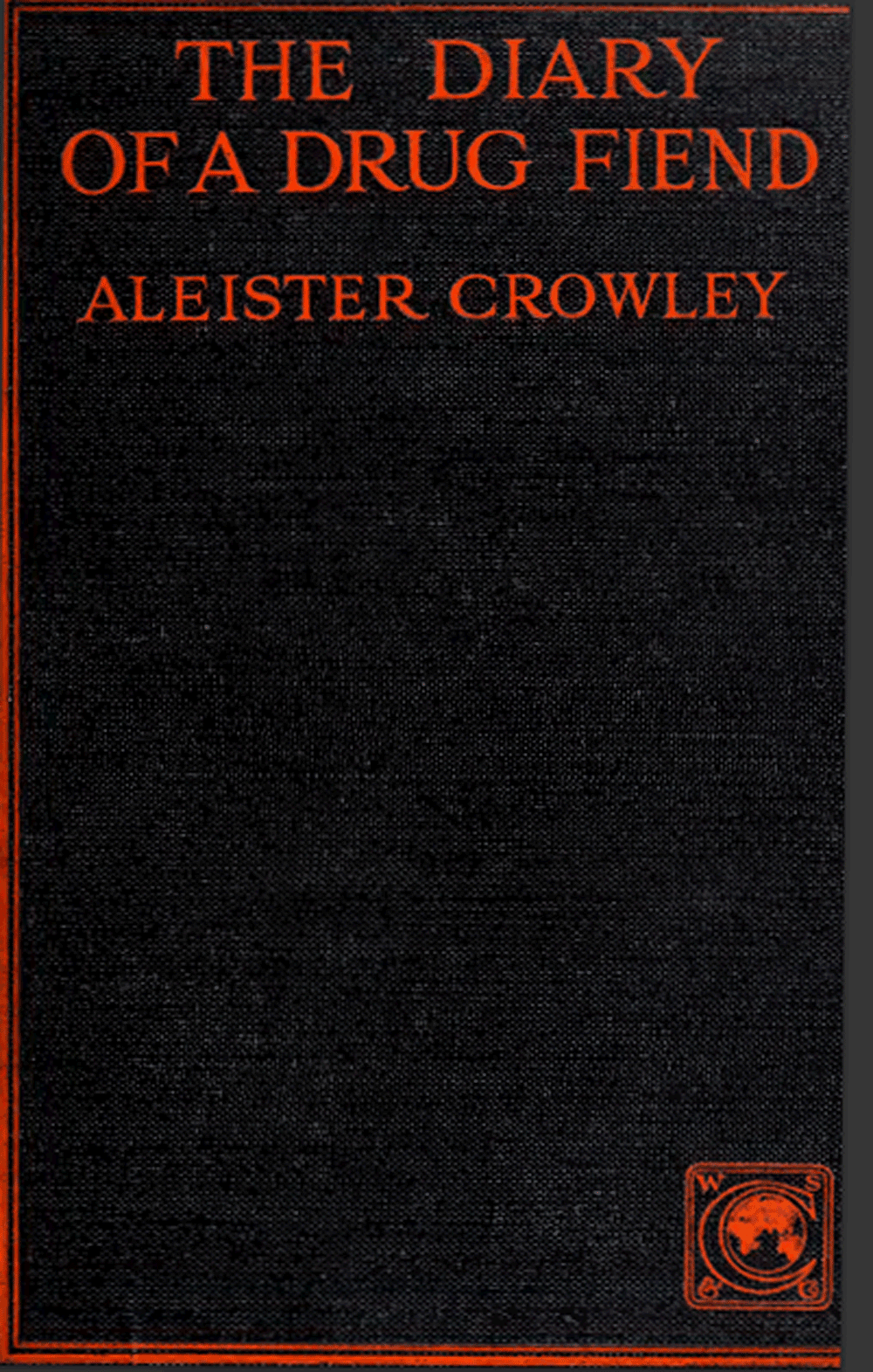
Diary of a Drug Fiend

This is the only full-cast recording of Aleister Crowley's 1922 classic paeon to common sense. It is the first book -- and so far almost the only book -- to stake out a philosophy of drug use that is compatible with human freedom, one in which we learn to use drugs as wisely as possible for the benefit of humanity. This recording was produced by the Drug War Philosopher and your purchases help support his effort to push back against the tragically counterproductive policy of drug prohibition, in the name of human freedom and of humanity's right to heal.

Purchase Your Copy


No cookies, no ads paid for by amoral and immoral billionaires (or trillionaires).


Unless otherwise indicated, no AI is used in the creation of site content. These essays represent the original ideas of their author and not the ideas that the author SHOULD have based on an algorithmic parsing of existing data. For more on this subject, consider the AI-related viewpoints to which the author subscribes as delineated in the New York Times opinion piece entitled "What 370,000 College Essays Tell Us About A.I.’s Effects on Creativity" by Rebecca Winthrop of the Brookings Institution.

The Partnership for a Death Free America is a proud sponsor of The Drug War Philosopher website @ abolishthedea.com.


Copyright 2026, Brian Ballard Quass Contact: quass@quass.com

tombstone for American Democracy, 1776-2024, RIP (up)