




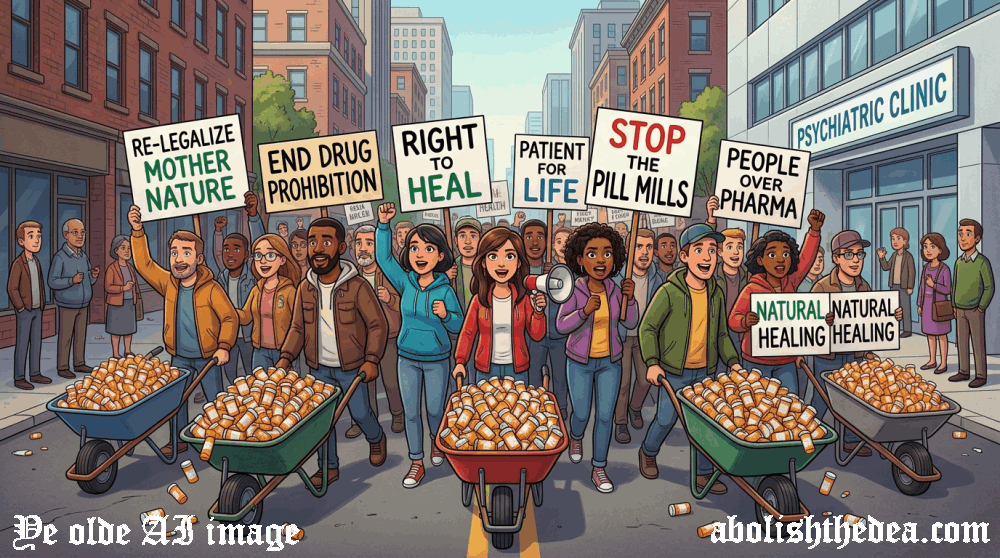
Homepage of the Drug War Philosopher, Brian Quass
blog icon orange rss icon with stylized radio waves bird icon for twitter bird icon for twitter substack icon


back navigation arrow


Justice for the Med-Dependent Depressed

a critique of the philosophy of Michel Foucault from the point of view of a ward of the healthcare state

by Brian Ballard Quass, the Drug War Philosopher

October 21, 2026


Having just begun my study of Michel Foucault, I must resist the temptation to make any criticisms of his philosophy that may conceivably be addressed to my satisfaction after future study on my part. I was startled, for instance, to learn that Foucault essentially champions the views of Thrasymachus over those of Socrates when it comes to the definition of justice. Justice, Foucault tells us, is a matter of power politics, not some transcendent ideal toward which we all must strive. What we call justice, he says, is just a system of social arrangements designed to produce outcomes that, collectively speaking, serve to benefit the powers-that-be. But this conclusion runs counter to everything that I've been taught in my academic career. My temptation is to "fire back" in defense of my university professors who always told me that Socrates was right on this subject, that Justice was a great objective ideal, and that our goal in politics is to create institutions that accord with that understanding. But I will hold my fire for now, in part because my gun is almost empty. It had never occurred to me that this topic was even up for debate and so Foucault has caught me unarmed as to a response. I suspect that an intelligent response could be formulated, but that will have to wait for a future essay after I have upgraded my arsenal by dint of more reading on this topic.

[Editor's note: Now Brian goes on to discuss the subject anyway!]

I would like to parenthetically suggest, however, one practical problem with Foucault's outlook, namely this: that the popularization of this idea about the relativity of justice tends to disillusion young people about the validity of the principles upon which American democracy was premised -- which, strictly speaking, were those of natural law and the idea that some things were really wrong, as in evil, and not just wrong from the standpoint of power politics. This was a basic assumption, or faith, on which our country was founded. By giving to justice only a relative definition, Foucault would seem to be cutting the ground out from under those who would wish to argue for the restoration of basic rights, like our right to Mother Nature. If justice is just a political arrangement created by the powers that be, there are no basic principles to appeal to in the imagination of the oppressors and so the oppressed only have two options: apathy or revolution -- revolution so that they themselves can gain power in the zero-sum game of power politics, after which they themselves can start writing the laws to accord with their own vision of "the good life." Given Foucault's ideas, there seems no way that oppressor and oppressed can come together by appealing to a higher metaphysical standard regarding what life is all about, which, in the case of the United States, has always been supposed to be summed up in the phrase "freedom and justice for all," where justice was conceived of in the Socratic sense of that word, as a noble standard rather than a malleable tool of the powers-that-be.

If we accept Foucault's definition of justice, we would seem to have to accept the cynical counsel of Mao Zedong that "Political power grows out of the barrel of a gun.1" This brings us to the fallacy, not of reductio ad absurdum but of reductio ad bellum: the charge that Foucault's ideas on this topic tend toward the production of war and strife.

This is where we can invoke the philosophy of pragmatism of William James2 and ask: Are we not better off in believing that there is more to justice than expediency, Michel? We are dealing with antimonies here, after all, questions that cannot be rationally proven one way or the other. Why not choose between those antimonies with peace and harmony in mind? Let us grant, as a practical matter, that "justice" contains oodles of expedience for the power holder. The world would still be better off if everyone, including the power holder, had faith in a higher meaning of the word, in the same way that some have faith in God. This was the original dream of America, that it would be a country founded on the presupposition that there is such a thing as Justice writ large; it would be a nation wherein all patriotic citizens would be taught from childhood to aspire to bringing that sort of justice about in the real world. In such a world, there is room for dialogue between parties with different mundane interests and so politics is not a zero-sum game. If we accept Michel's analysis, on the other hand, Americans must swap heroes. When it comes to civil rights, we must reject Martin Luther King Jr. and his ideas of universal brotherhood and embrace Malcolm X instead with his cries of "by any means necessary."

SORRY

My apologies, by the way. It seems that my rhetorical gun still had a few bullets in it after all. I had intended to avoid the topic of "justice" today and to focus instead on what I believe to be Foucault's misunderstanding about the significance of Sigmund Freud, a misunderstanding that he shares with every other modern philosopher on the planet; but all of these topics are related, philosophically speaking, and their thorough analysis will give us a case study in how modern philosophers manage to avoid speaking up about the greatest philosophical problem of our time: namely, the unprecedented wholesale outlawing on a worldwide basis of almost all substances that inspire and elate, aka drug prohibition.

This brings me to what I really wished to emphasize today: the fact that neither Foucault nor any other philosopher has yet noticed the biggest contribution of Sigmund Freud to humanity. It is, however, a contribution that is obvious to someone in my position, someone who has gone a lifetime now without access to medicines that could have ended my depression in a trice. Hint: It is not psychoanalysis. Freud only took up the study of psychoanalysis after he saw that his first great idea was going to be summarily dismissed by self-interested doctors. Sigmund Freud recognized that cocaine could successfully treat depression for most people, and what's more he was willing to say so. That was his great accomplishment, not the fact that he dreamed up a mytho-centric theory that would eventually prove to be fodder for endless research papers. "My impression," wrote Freud in On Cocaine, "has been that the use of cocaine over a long time can bring about lasting improvement.3" Now, I ask the reader to put aside for a moment the biases against the drug that have been dinned into them since childhood and consider Freud's statement from the point of view of a chronic depressive. Is this not a marvelous breakthrough -- and would you not be furious as a chronic depressive if the response of self-interested doctors was to focus only on the downsides of a minority of users, without ever acknowledging the benefits available to the majority?

Let us grant that cocaine is dangerous for certain types of people. Why on earth is that the end of the story here? That should just be the beginning of the story. "Okay, let's work around that," we should say, "to see that the maximum number of sufferers benefit as safely as possible from the drug, as they do in Peru and have done for millennia." We now know that there are potentially endless drugs that could give us the benefits of cocaine, each with its own risk profile, some with little or no ability to promote addiction in vulnerable populations. Why is the story still all about drug dangers? Why is no one speaking up for the right of the depressed to heal? It's as if penicillin had initially been used as a cocktail, and after thus causing sickness, we decided that penicillin could not be used wisely by anyone, anywhere, ever. It is simple insanity. The poster child for this inhumane viewpoint is the late social psychologist Henry L. Lennard who wrote in the New York Times of July 1972 about "Freud's Disaster with Cocaine.4" And what was Freud's "disaster" with cocaine? The fact that he had tried to get a morphine addict off of morphine with the help of cocaine and the addict subsequently became psychologically addicted to cocaine use. But this was not proof that cocaine was bad: it was simply a proof that a person who is prone to self-destructive excess is, indeed, a person who is prone to self-destructive excess.

That was it, by the way. Lennard only offered this one single example to justify his claim that Freud's work with cocaine was a disaster. One. There is something about the statistically challenged nature of Drug Warriors that would be quaint did it not have such awful consequences in the real world. For the prohibitionist, one swallow makes a summer. If they can find one person who cannot handle a drug that cures depression, then they will insist that none of the millions of depressed have a right to use that substance. They have a "zero tolerance" policy for death and suffering when it comes to psychoactive substances. Meanwhile, they have nothing to say about the 178,000 deaths from alcohol in America every single year. To borrow the words of Thomas Nagel, it is "manifestly unfair." Yet this is the mindset of the editors of the New York Times to this very day. If anyone doubts this, I invite them to read my recent essay entitled The New York Times gives drug prohibition another mulligan 5, in which reporter Heather Knight tells us in her logic-challenged way to "be afraid, be very afraid" when it comes to drugs -- again, based on one single but highly relatable death.

Here then is Foucault's additional shortcoming, one that he shares with literally everybody else. He failed to see that shouting slogans like "Cocaine kills!" is philosophically equivalent to shouting "Fire bad!" In both cases, the speaker is urging us to fear a dangerous substance rather than to learn how to use it as wisely as possible for human benefit. The outsized significance of this superstition (for superstition it is) is clear when we consider that the WHO is predicting that depression will be the number one cause of lost productivity by 2030. It is exactly as if the world had outlawed antibiotics and then the WHO determined that bacterial infections would be the main cause of lost productivity by 2030.

WHY BLAME FOUCAULT?

I think Foucault is especially culpable here for the same reason that Noam Chomsky is. Both seek to cut through misdirection and find out what's really going on in societies in terms of politics and foreign policy, etc. But they themselves are either reticent (in Noam's case) or silent (in Michel's) about the most glaring problem of all. We are talking here about a drug prohibition policy that limits how and how much a person can even think about that drug prohibition policy. In other words, this is a meta injustice and as such should be at the top of the activist philosopher's to-do list of wrongs that need redressing. Otherwise, he or she may someday actually create a truly just society, only to find that hundreds of millions of the supposed beneficiaries of that society are unable to enjoy it.


Notes for essay entitled Justice for the Med-Dependent Depressed: a critique of the philosophy of Michel Foucault from the point of view of a ward of the healthcare state:

1: 2024. “Mao Zedong: ‘Political Power Grows out of the Barrel of a Gun..’” The Socratic Method. February 17, 2024. https://www.socratic-method.com/quote-meanings-interpretations/mao-zedong-political-power-grows-out-of-the-barrel-of-a-gun-2. (up)
2: James, William. n.d. “Pragmatism: A New Name for Some Old Ways of Thinking.” Https://Www.Gutenberg.Org/Files/5116/5116-h/5116-h.Htm. Accessed October 9, 2026. https://www.gutenberg.org/cache/epub/5116/pg5116-images.html. (up)
3: “Freud on Cocaine : Freud, Sigmund, 1856-1939 : Free Download, Borrow, and Streaming : Internet Archive.” 2023. Internet Archive. 2023. https://archive.org/details/freudoncocaine0000freu/page/n5/mode/2up?view=theater. (up)
4: Lennard, Henry L. 1972. “Freud’s Disaster with Cocaine.” The New York Times, July 22, 1972, sec. Archives. https://www.nytimes.com/1972/07/22/archives/freuds-disaster-with-cocaine.html. (up)
5: The New York Times gives drug prohibition another mulligan DWP (up)


read more essays here


Ten Tweets

against the hateful war on US


Prohibition is wrong root and branch. It seeks to justify the colonial disdain for indigenous healing practices through fearmongering.

No wonder the "Justice" Department relies on plea deals; otherwise juries could use nullification to free those charged with mere drug possession.

The FDA says that MindMed's LSD drug works. But this is the agency that has not been able to decide for decades now if coca "works," or if laughing gas "works." It's not just science going on at the FDA, it's materialist presuppositions about what constitutes evidence.

It's because of such reductive pseudoscience that America will allow us to shock the brains of the depressed but won't allow us to let them use the plant medicines that grow at their feet.

What I want to know is, who sold Christopher Reeves that horse that he fell off of? Who was peddling that junk?!

Even fans of sacred medicine have been brainwashed to believe that we do not know if such drugs "really" work: they want microscopic proof. But that's a western bias, used strategically by drug warriors to make the psychotropic drug approval process as glacial as possible.

Almost every article about suicide is shallow because it takes drug prohibition as a natural baseline, even though drug prohibition outlaws substances that could so clearly elevate mood.

Democratic societies need to outlaw prohibition for many reasons, the first being the fact that prohibition removes millions of minorities from the voting rolls, thereby handing elections to fascists and insurrectionists.

Freud had the right idea: He noticed that cocaine use actually ended depression in his patients. Unfortunately, he was ambitious and was more interested in making a name for himself than in pushing back against the statistically challenged fear mongering of prohibitionists.

Drug Prohibition is a crime against humanity. It outlaws our right to take care of our own health.


Click here to see All Tweets against the hateful War on Us


back navigation arrow
Book Cover

Break the ice with a sledgehammer: place this book on your coffee table.

This book features 150 annotated images, designed to force brainwashed Americans to confront the fact that drug prohibition is wrong. Here is what author Richard Parrish II says of the book's compiler: "The drug prohibition philosopher provides first-hand, principled, persuasive, and insightful arguments against the current drug prohibition regime..."

Purchase Your Copy
Book Cover

Diary of a Drug Fiend

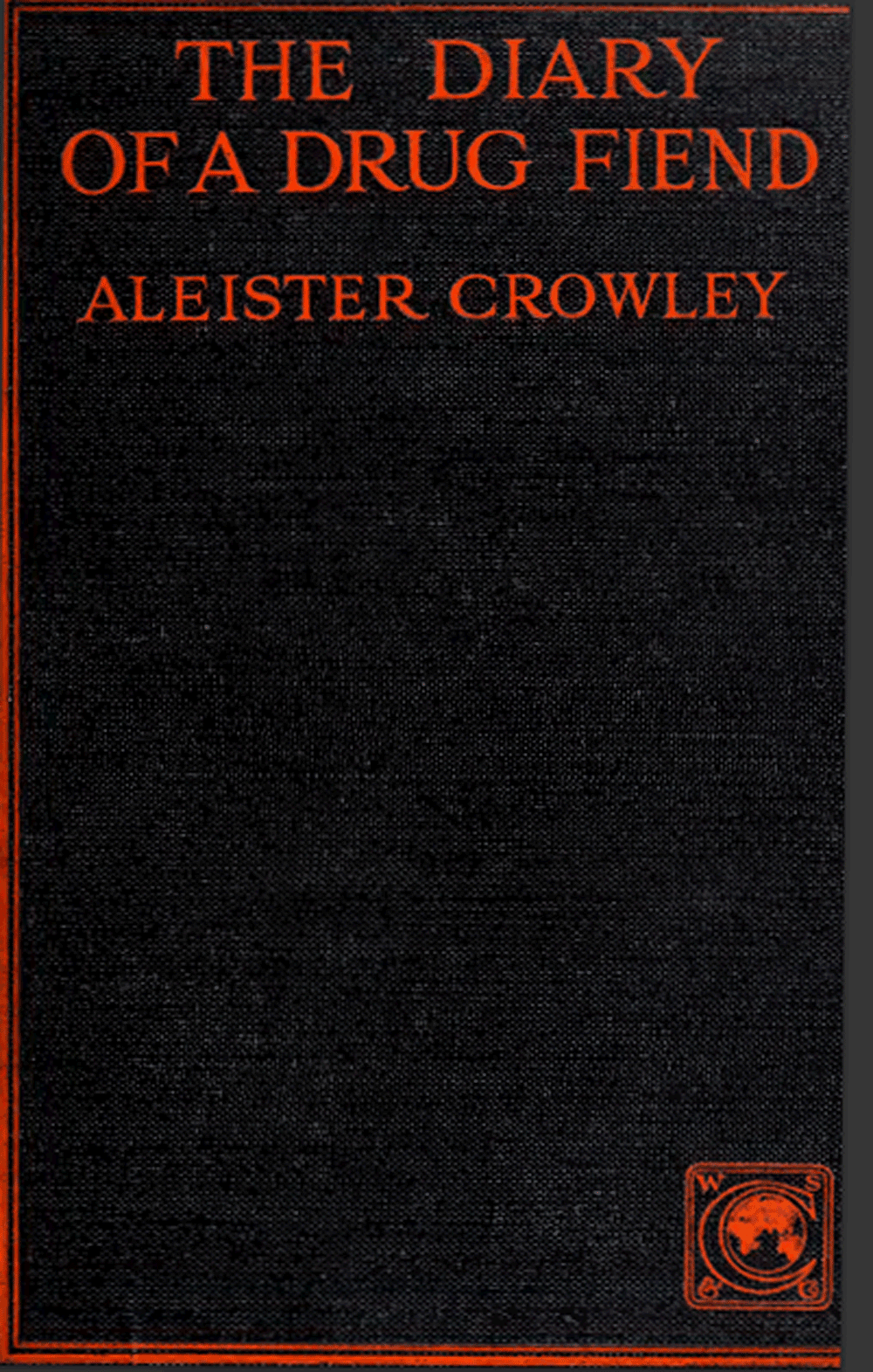
This is the only full-cast recording of Aleister Crowley's 1922 classic paeon to common sense. It is the first book -- and so far almost the only book -- to stake out a philosophy of drug use that is compatible with human freedom, one in which we learn to use drugs as wisely as possible for the benefit of humanity. This recording was produced by the Drug War Philosopher and your purchases help support his effort to push back against the tragically counterproductive policy of drug prohibition, in the name of human freedom and of humanity's right to heal.

Purchase Your Copy


No cookies, no ads paid for by amoral and immoral billionaires (or trillionaires).


Unless otherwise indicated, no AI is used in the creation of site content. These essays represent the original ideas of their author and not the ideas that the author SHOULD have based on an algorithmic parsing of existing data. For more on this subject, consider the AI-related viewpoints to which the author subscribes as delineated in the New York Times opinion piece entitled "What 370,000 College Essays Tell Us About A.I.’s Effects on Creativity" by Rebecca Winthrop of the Brookings Institution.

The Partnership for a Death Free America is a proud sponsor of The Drug War Philosopher website @ abolishthedea.com.


Copyright 2026, Brian Ballard Quass Contact: quass@quass.com

tombstone for American Democracy, 1776-2024, RIP (up)