





introduction to the Drug War Philosopher website at abolishthedea.com
blog icon orange rss icon with stylized radio waves bird icon for twitter bird icon for twitter substack icon


back navigation arrow forward navigation arrow


Why universities should offer degrees in Beneficial Drug Use

a plan to end drug prohibition inspired by the philosophy of Alfred North Whitehead

by Brian Ballard Quass, the Drug War Philosopher

July 10, 2026


In his lecture series entitled "Science and the Modern World," Alfred North Whitehead tells us that, "It requires genius to create a subject as a distinct topic for thought." 1 That statement got me thinking. I had read it before while trying to wrap my mind around Whiteheadian philosophy, but today was different; today I read it as a challenge. For I realized that I myself know of a distinct topic for thought that is completely ignored today in academia and which therefore requires the creation of a field of its own in modern universities. I am talking about the subject of the beneficial uses of the psychoactive substances that we call -- or rather deride as -- drugs. The need for such a field is extant and can be seen by anyone who surfs the academic web for articles about the beneficial uses of drugs, and especially about those substances that politicians have been frightening us into calling "hard drugs." One will simply not find such articles online.

You will find plenty of highly annotated papers in which an impressively titled researcher speculates freely about the potential downsides of using MDMA, or the street version of that drug called Ecstasy, but you will search in vain to find one that credits the drug for the totally unprecedented peace, love and understanding between races and creeds that its use brought about on the British dance floors in the 1990s. 2 To publish such a story would be to run afoul of Drug War orthodoxy according to which drugs can have no positive uses and are just a potential death trap for unwary young people. The UK's chief drug advisor, DJ Nutt, was fired by the government in 2009 because his scientific advice was not sending the moral message that the government wished to be sending about drugs. Nutt claimed at one point that using Ecstasy was no more dangerous than riding a horse. Such honesty is simply not allowed in government or in academia. 3

This is one of the biggest "findings" that I have gleaned thus far from my ongoing investigation of American drug attitudes, the fact that almost no academics will admit that there are any potential beneficial uses for "drugs," as if the moment that racist politicians assign that name to a psychoactive substance, it becomes unusable, at any dose, for any reason, in any country, ever. Today's academics can be shown to hold this silly (or is it cowardly?) belief, not by what they say, but by what they do not say. And what do they not say?

They do not say that there is a prima facie case for using mind-focusing drugs like cocaine and heroin for helping the victims of dementia to delay the worst symptoms of that condition -- and perhaps to even help them avoid some downsides altogether by encouraging the brain to find workarounds for those conditions. They do not say that there is a prima facie case for the use of empathogenic drugs to help the autistic, as well as inveterate haters, to experience what compassion is all about and so transform their lives for the better, and the lives of those around them. They do not say that there is a prima facie case for the use of a wide variety of drugs (like LSD and other psychedelics and phenethylamines and tryptamines) to help hospice patients make their peace with their upcoming death. They do not even say that there is a prima facie case for the use of drugs like laughing gas and cocaine to elate the suicidal and make them feel that maybe life need not be so bad after all, that there are substances whose wise use can make life far more than bearable. 4 5

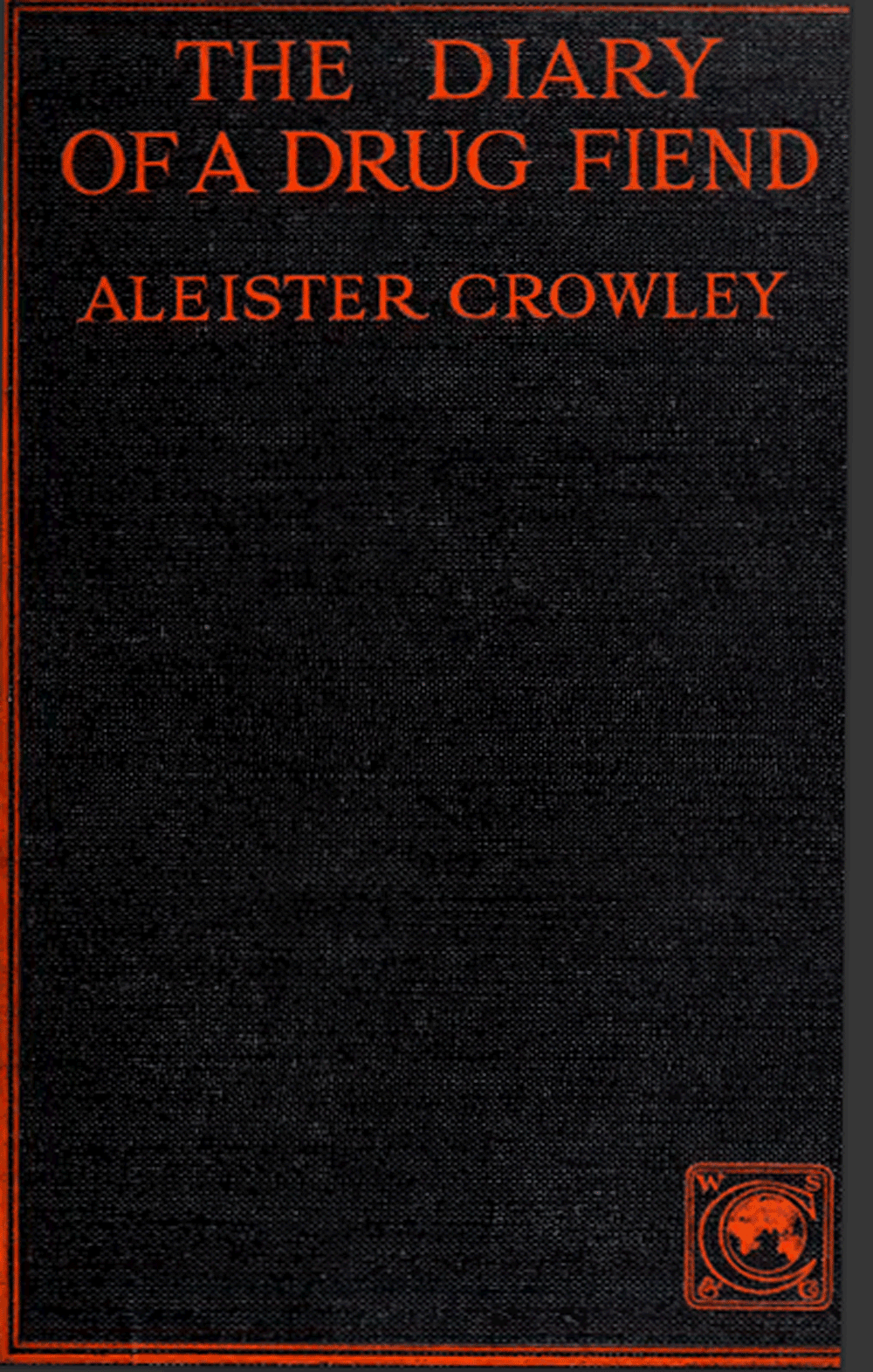
Indeed, academics are so blind to the glaringly obvious benefits of drug use that they do not see any connection between the subject of assisted suicide for the depressed and the fact that the west has outlawed almost all the naturally occurring substances that can inspire and elate. This blindness has at least four possible origins. Either it demonstrates 1) the academics' ignorance of drug literature, or 2) their determination not to be bothered by facts that run counter to Drug War ideology, or 3) that they fear the consequences of being honest on such topics, or 4) that they are enthrall to an outdated materialist understanding of the world, about which I will say more below. Whatever the origins of the outlook, this mindset cannot pass the laugh test for those of us who have dared to study the actual effects of a wide variety of drug use, rather than taking the word of demagogue politicians that drug use can only end in death and ruin -- which, if true, is only a result of the fact that drug laws have been written with the idea of bringing about that very result. As Aleister Crowley wrote of his first use of cocaine:

The depression lifted from my mind like the sun coming out of the clouds. 6
Aleister Crowley -- The Diary of a Drug Fiend

Now, we could certainly hold a day-long seminar discussing the safest and wisest ways to harness the power of this drug for helping the suicidal, but when academics insist by their silence that such drugs cannot help such people at all, we can only look on in amazement and conclude that they are gaslighting us for reasons best known to themselves. This is why universities need a Department of Beneficial Drug Use, to study the potentially endless ways that human beings might use drugs wisely (at various doses, at various times, for various reasons, etc.). Under the aegis of such a new department-- run by humanities professors rather than scientists -- drug researchers would finally be in a position where they can start unapologetically speaking truths that everybody already knows to be true without fear of losing their jobs for doing so.

And now I call on Whitehead once again, this time to explain why our new Department of Beneficial Drug Use should be run by the humanities departments of our universities and not by our scientists. This is because "scientific reasoning," according to the English philosopher, "is completely dominated by the presupposition that mental functionings are not properly part of nature." 7 The scientist learns nothing from the fact that a drug makes you laugh and smile -- they care only about what the drug is doing on the quantifiable molecular level. They are dogmatically inclined to view "patients" as biochemical widgets, susceptible of one-size-fits-all fixes as suggested by a microscopic analysis of the molecular evidence.

Why is Whitehead's philosophy important here? It is important because it finally makes sense of the otherwise highly puzzling fact that our scientists claim to find no beneficial uses for drugs that inspire and elate, no, not even when we are talking about a user who might commit suicide in the absence of such elation. Scientists want to "fix" something instead, as if they were dealing with a broken transistor radio. And how do you "really" fix something according to the materialist mindset? You take that thing apart and look at its most basic parts outside of context. And so, while scientists are running clinical trials to see if the depressed could benefit from using, say, laughing gas, these materialists are not impressed by the laughter of their study participants, nor their smiles, nor their protestations that this is the happiest moment of their lives; no, the scientists remain "objective," insisting that efficacy is to be found only under a microscope, where one can determine (without any unseemly emotion) whether brain chemicals are moving about in a way that accords with the latest biochemical theories about mind and mood medicines. Scientists require a "real" cure for depression, and yet as Whitehead concluded in Process and Reality: "There is no going behind actual entities to find anything more 'real'." In other words, guess what: the laughter and happiness of the user of nitrous oxide actually IS real. They're cured. Leave them alone to be so while you as a materialist scientist go on searching for the elusive holy grail of your "real" cure. 8

Of course, the counterintuitive mindset of the materialist9 is a blessing for Drug Warriors. It allows them to claim scientific support for their absurd idea that substances that have been considered panaceas since the time of Galen actually have no reasonable uses whatsoever.

And so I call for the creation of a new subject for thought, the hitherto verboten topic of Beneficial Drug Use. The mere creation of university departments devoted to this topic would constitute a huge and long overdue pushback from academia against drug prohibition, a policy which has outlawed academic freedom and allowed the government to dictate both what substances our academics can study and what conclusions they can draw from those studies without running the risk of losing government funding. Once these departments are up and running, the government can no longer pretend, as they have for over a century now, that white American young people are the only stakeholders when it comes to drug policy. In such a world, demagogue politicians will no longer be able to destroy the Bill of Rights under the pretext that literally "anything goes" when it comes to protecting our kids from the fact that they are growing up in a world full of psychoactive medicine.


Author's Follow-up:

July 11, 2026

icon for abolishthedea.com, featuring essays against drug prohibition from the point of view of a med-dependent patient and ward of the healthcare state


In presenting this all-too-novel idea -- this suggestion that we freely study beneficial drug use! -- I am reminded yet again of the words of Whitehead, this time in his introduction to his lecture series entitled The Concept of Nature:

"In the presentation of a novel outlook with wide ramifications, a single line of communications from premises to conclusions is not sufficient for intelligibility. Your audience will construe whatever you say into conformity with their pre-existing outlook." --Alfred North Whitehead, The Concept of Nature10


With this warning in mind, I wish to reinforce the link between Whitehead's philosophy of organism and a sensible approach to the study, treatment, improvement and/or exploration of mind and mood in the species Homo sapiens. I will do so by adducing a quotation from a research paper published in the 21st century, lest the reader suppose that I am referring to discredited or obsolete notions from the philosophical history books. In his 2008 paper entitled A.N. Whitehead and Subjectivity, Peter Stenner writes:

As soon as one begins to consider the nature of living organisms, and especially higher order animal life, it becomes at best deeply problematic to maintain the irrelevance of issues of value, aim, enjoyment and mental activity in general. 11
Paul Stenner -- A.N. Whitehead and Subjectivity

And this is exactly what modern psychiatry does when it creates one-size-fits-all cures for the human condition based on the notion that we must treat the "real" cause of depression and not just its symptoms: it tacitly maintains the irrelevance of the specific individual and instead attempts to treat him or her as a biological Everyman or Everywoman. And where did scientists get this notion that they could do so? They got it from committing the error for which Thomas Szasz flagged them in the 20th century: they assumed that mental problems were physical problems, that depression was a literal illness and that psychological conditions could be treated exactly as we treat the common cold, or ileitis (or a strained tendon, even), by finding the "real" cause. The point I am adding to Szasz's conclusion here is that when we do thius, when we treat mental illness as a literal illness, we end up going on a Quixotic search for a "real" biochemical cure -- under the assumption that human mentation is an epiphenomenon and that human beings are biochemically determined robots.

And this has disastrous results in the real world.

This way of looking at the world has a body count. I know this from personal experience. It has turned me into a ward of the healthcare state. It has denied me symptomatic godsends by insisting that I need a "real cure" for my sadness instead. But that cure, of necessity, had to pass muster with politicians and pharmaceutical executives. As a natural result, then, this "cure" was going to turn out to be both underperforming and highly dependence-causing -- in addition to the fact that it was not created for myself, personally, but rather for the vast category made up of "sad people in general." And yet to hear my psychiatrists tell it, I was being "really" cured with antidepressants. If I had simply "bucked myself up" from time to time with the help of a variety of mind- and mood-improving drugs, that would have been a "copout," they taught me, that would not have been a "real" cure. Well, all that one can say to such dogmatic materialism is: "So much the worse for real cures." We may as well tell the nightly beer drinker that he or she is not "really" addressing their fatigue and jangled nerves when they "throw back a cold one" at the end of a busy workday, that they need to "really" treat their exhaustion and anxiety -- with pills, perhaps, and if that does not work, there is always shock therapy -- on sale this week, two brains for one.

Forgive the black humor, but the status quo is truly beyond parody. Shock therapy is employed 100,000 times a year in the United States alone. Psychiatrists say it's not as grisly a process as it used to be, but that is only because they are using more drugs to keep the "patient" relaxed during the treatment. 12 And yet I alone -- me, myself and I -- seem to be the only one in the philosophical world who realizes that the propriety of shock therapy cannot be discussed ethically without also discussing the propriety of the drug prohibition which outlaws all drugs that could so clearly help the "patient" -- see, for instance, Forbidden Quotations about the beneficial use of drugs. This is what I mean when I say the situation is beyond parody, because even the leaders in the movement to end shock therapy refuse to see any connection between that gothic protocol and the fact that America has outlawed all substances that inspire and elate!


Notes:

1: “Science and the Modern World : Whitehead, Alfred North, 1861-1947 : Free Download, Borrow, and Streaming : Internet Archive.” 2019. Internet Archive. 2019. https://archive.org/details/sciencemodernwor0000unse. (up)
2: How the Drug War killed Leah Betts DWP (up)
3: “BBC NEWS | UK | Cannabis Row Drugs Adviser Sacked.” 2025. Bbc.Co.Uk. BBC. 2025. http://news.bbc.co.uk/2/hi/8334774.stm. (up)
4: Open Letter to Claire Brosseau DWP (up)
5: Nolen, Stephanie, and Chloë Ellingson. 2025. “Claire Brosseau Wants to Die. Will Canada Let Her?” The New York Times, December 29, 2025. https://www.nytimes.com/2025/12/29/health/assisted-death-mental-illness-canada.html. (up)
6: Arthur Crowley. “Full Text of ‘the Diary of a Drug Fiend.’” 1922. Archive.org. 2017. https://archive.org/stream/b29826433/b29826433_djvu.txt. (up)
7: “Nature and Life : Alfred North Whitehead : Free Download, Borrow, and Streaming : Internet Archive.” 1934. Internet Archive. 1934. https://archive.org/details/naturelife0000alfr. (up)
8: “Process and Reality : Alfred North Whitehead : Free Download, Borrow, and Streaming : Internet Archive.” 2022. Internet Archive. 2022. https://archive.org/details/processreality0000alfr. (up)
9: I agree with Whitehead that the materialist paradigm has many positive uses, at least to the extent that we consider the frighteningly rapid growth of new technologies to be a good thing. I believe, however, that it is a category error to place materialists in charge of mind and mood medicine. Materialists are not impartial scientists in such cases; they come at the subject with very definite -- and very debatable -- behaviorist ideas about mind, mood and causation. (up)
10: Alfred North, Whitehead. 1920. Review of The Concept of Nature. Project Gutenberg. Project Gutenberg. 1920. https://www.gutenberg.org/ebooks/18835. (up)
11: Stenner, Paul. 2008. “A.N. Whitehead and Subjectivity.” Subjectivity 22 (1): 90–109. https://doi.org/10.1057/sub.2008.4. (up)
12: “Stats & Facts About Modern ECT.” 2017. CCHR International. May 8, 2017. https://www.cchrint.org/electroshock/. (up)


read more essays here


Ten Tweets

against the hateful war on US


"The depression lifted from my mind like the sun coming out of the clouds." -- Arthur Crowley after using cocaine

Most people think that drugs like cocaine, MDMA, LSD and amphetamines can only be used recreationally. WRONG ! This represents a very naive understanding of human psychology. We deny common sense in order to cater to the drug war orthodoxy that "drugs have no benefits."

Drug War censorship is supported by our "science" magazines, which pretend that outlawed drugs do not exist, and so write what amount to lies about the supposed intransigence of things like depression and anxiety.

The media called out Trump for fearmongering about immigrants, but the media engages in fearmongering when it comes to drugs. The latest TV plot line: "white teenage girl forced to use fentanyl!" America loves to feel morally superior about "drugs."

If there is an epidemic of "self-harm," prohibitionists never think of outlawing razor blades. They ask: "Why the self-harm?" But if there is an epidemic of drug use which they CLAIM is self-harm, they never ask "Why the self-harm?" They say: "Let's prohibit and punish!"

No wonder conservatives are terrified of drugs. It is not safety that worries them, else they would demand education. They are terrified of new ways of seeing life. The outlawing of drugs is the outlawing of whole mindsets. It is a meta injustice.

The fact that some drugs can be addictive is no reason to outlaw drugs. It is a reason to teach safe use and to publicize all the ways that smart people have found to avoid unwanted pharmacological dependency -- and a reason to use drugs to fight drugs.

The American Philosophy Association should make itself useful and release a statement saying that the drug war is based on fallacious reasoning, namely, the idea that substances can be bad in themselves, without regard for why, when, where and/or how they are used.

Politicians protect a drug that kills 178,000 a year via a constitutional amendment, and then they outlaw all less lethal alternatives. To enforce the ban, they abrogate the 4th amendment and encourage drug testing to ensure that drug war heretics starve.

It's no wonder that folks blame drugs. Carl Hart is the first American scientist to openly say in a published book that even the so-called "hard" drugs can be used wisely. That's info that the drug warriors have always tried to keep from us.


Click here to see All Tweets against the hateful War on Us


back navigation arrow forward navigation arrow


No cookies, no ads.


Unless otherwise indicated, no AI is used in the creation of site content. These essays represent the original ideas of their author and not the ideas that the author SHOULD have based on an algorithmic parsing of existing data. For more on this subject, consider the AI-related viewpoints to which the author subscribes as delineated in the New York Times opinion piece entitled "What 370,000 College Essays Tell Us About A.I.’s Effects on Creativity" by Rebecca Winthrop of the Brookings Institution.

The Partnership for a Death Free America is a proud sponsor of The Drug War Philosopher website @ abolishthedea.com.


Copyright 2026, Brian Ballard Quass Contact: quass@quass.com

tombstone for American Democracy, 1776-2024, RIP (up)