




Homepage of the Drug War Philosopher, Brian Quass
blog icon orange rss icon with stylized radio waves bird icon for twitter bird icon for twitter substack icon


back navigation arrow


Why Drug Prohibition is the Perfect Racist Crime

what the death of Jason Arday tells us about the mainstream attitude toward psychoactive substances

by Brian Ballard Quass, the Drug War Philosopher

August 22, 2026


When I first started publishing my philosophical essays against drug prohibition seven years ago now, I worried that my focus on western drug attitudes would make it difficult for me to address many of the "breaking news stories" that capture the public interest. After all, I reasoned, there are many stories that have nothing to do with drugs and drug attitudes whatsoever. As a Drug War philosopher, I would have to sit back in frustrated silence and ignore many of the big stories of the day because they were "off-topic." And yet I began to find over the years that I was wrong about that seemingly obvious conclusion. I was increasingly discovering that many, if not most, of our big news stories had some connection with drug attitudes after all, at least when considered from a philosophical point of view. Nor should this have come as a surprise to me. The policy of drug prohibition has helped create the world that we live in today. It has given us our baseline from which we evaluate a wide variety of social problems under the false belief that a level playing field is in place. Meanwhile, drug prohibition starkly limits the ways that we can go about improving that world. Together, these two facts render drug prohibition relevant to almost all social problems imaginable.

Let's take the tragic case of Jason Arday, for instance1. I do not intend to comment on the details of his case, except to share my opinion that right-wing activists, with the help of thoughtless journalists, tried this man in public in order to make a political point. It is the supposed merits of that "political point" that I will be discussing here today, not the specific case of Jason Arday.

That said, I have to "call out" the Sky News commentators who, in my view, clambered to outdo each other in expressing their indignation and surprise about the black professor's rise to prominence among the white academia at Cambridge. Even after the professor's death, these exclusively white commentators could not bring themselves to entirely "stand down" with respect to their campaign of outraged innocence. I recall one journalist in particular who began her postmortem by deploring the tragedy of Jason's death in a very equivocal way indeed. I do not have a photographic memory, nor did I write down her report, and yet I can clearly recall the upshot of her observations. She started her commentary with the obligatory expression of deep regret at Jason's untimely passing. And yet, with scarcely a pause worthy of a semicolon, she then resumed her questioning of Jason's qualifications, like a child who has just grudgingly apologized for a fault but who cannot resist concluding that apology with an attempt at self-justification.

She conceded that Jason had been exonerated by Cambridge University on the plagiarism charges leveled against him, but she still wanted to know how Jason could have run 600 miles in six days for charity, with a broken leg, no less. She seemed to me like a child who had been chided for fighting with her brother but who was now shouting at her parents: "HE started it!" or in this case, "He's the one who was telling these apparent WHOPPERS, not ME! Why are you looking at me like that?! I'm as sorry about his death as everybody else!" One can't help but wonder if this reporter is an equal opportunity skeptic, however. Is she equally concerned about the misleading exaggerations voiced by white academics? If so, she might wish to begin scouring the online comments of the university dons about the size of the "big ones" that got away from them during their fishing expeditions in the nearby rivers. She might discover that there is reason to question the integrity of white Cambridge academics as well. One can hear her dropping her bombshell news story now: "Cambridge University is investigating Vice-Chancellor Deborah Prentice after she posted a comment on a fishing forum in which she claimed that she had caught a 70-pound pike at Bourn Brook during a private expedition. Fishing experts have pointed out that this claim is suspicious, given the fact that the biggest pike catch on record was 55 pounds in 1986 in Germany, and that this record has stood unchallenged for the last four decades!"

When I first heard the plagiarism charges, I naively assumed that they had come from a heavy-hearted but nonpartisan assessment of Arday's published work inside the hallowed halls of Cambridge University, that somber deans were making these allegations, as it were, sadly and against their will. I figured moreover that these were essentially proven charges. The university and the media would surely not be characterizing Arday in such a potentially libelous fashion unless they had solid proof of malfeasance on his part. It turned out, however, that I was wrong. The allegations against Arday did not come from Cambridge University at all; they came from an postdoctoral researcher at Ghent University by the name of Nathan Cofnas, an American academic who makes a living attempting to "prove" that blacks are less intelligent than whites. This explains the widespread coverage of this story. In the context of the anti-democratic times, Cofnas' allegations quickly became a cause célèbre for racists who wanted to discredit the idea of affirmative action and diversity, even at the expense of bringing about the death of a man whom they had never met.

But enough of the case-specific details. I will now explain how drug attitudes are connected with this story. Note that I am not interested here in the question of how (or even if) a society should go about rectifying the wrongs of the past through programs such as affirmative action and diversity-based hiring decisions. My focus is rather on two things: 1) how drug prohibition helped create the current baseline social conditions in the first place, and 2) how drug prohibition keeps us from improving those conditions.

There is, in fact, no secret as to why minorities, and blacks in particular, would be underperforming as a group these days when it comes to the educational standards established by whites. Black communities are, generally speaking, in complete disarray thanks to drug prohibition. Drug prohibition has destroyed black inner cities around the nation (and, indeed, around the globe) by incentivizing gunfire and violence in poor and undereducated communities. This is what one does when one outlaws desired substances. Americans knew this. This was the lesson that we supposedly learned from liquor prohibition. Everyone realized that liquor prohibition had brought machine-gun fire to city streets. And yet rather than profiting from this knowledge, racist politicians decided to use it for their own nefarious purposes. They realized that by outlawing all of liquor's psychoactive competition, they could incentivize drug dealing in poor and uneducated communities and thereby rip those communities apart with violence. The arrests and social disintegration that would follow would greatly limit the political power of blacks in a socially acceptable way. They could even get the black leaders to support this new version of Jim Crow by playing on their propaganda-inspired fear and distrust of psychoactive substances. In other words, they realized that drug prohibition was the perfect racist crime. John Ehrlichman admitted as much in a 1994 interview published in Harper's magazine:

The Nixon campaign in 1968, and the Nixon White House after that, had two enemies: The antiwar left, and black people. You understand what I'm saying? We knew we couldn't make it illegal to be either against the war or black. But by getting the public to associate the hippies with marijuana and blacks with heroin, and then criminalizing both heavily, we could disrupt those communities. We could arrest their leaders, raid their homes, break up their meetings, and vilify them night after night on the evening news. Did we know we were lying about drugs? Of course we did. 2


And Nixon's plan to divide and conquer minorities with the help of drug prohibition worked all too well, as Collen Cowles reports in her eye-opening 2025 book entitled "War on Us: How the War on Drugs and Myths about Addiction Have Created a War on All of Us":

The U.S. imprisons blacks at higher percentage rates than South Africa during apartheid. There are more black Americans locked in U.S. prisons or on probation or on parole today than were slaves in 1850 -- before the U.S. Civil War. 3


This is why the so-called "scientific" focus of Nathan Cofnas and his right-wing supporters is so despicable. First, the white political establishment uses drug prohibition to create a world in which the proper education of young black people is impossible (surrounded as they are by a world of whizzing bullets and single mothers); then, decades later, having accomplished their dirty work by ruining inner cities, they set out to "prove" that the resulting statistical disparity in educational accomplishments between black and white people demonstrates the inherent biological and genetic shortcomings of black people themselves. That's like claiming that the starving prisoners of a concentration camp are bad athletes because they cannot sprint as quickly as their well-fed guards. If Cofnas' heart was in the right place, he would be dedicating his academic life to removing the social barriers that keep blacks and whites from "competing" on an even playing field. Instead, he spends his time and grant money attempting to derive some kind of universal scientific law out of a dysfunctional status quo that was purposefully brought about by white racists themselves.

Having thus explained how drug prohibition helped create the current baseline social conditions, I will now turn to my second focus: how drug prohibition keeps us from improving those conditions.

In one sense, the answer to that question is obvious and, indeed, has already been given: drug prohibition destroys inner cities, and it therefore follows that its ongoing presence will be an obstacle toward minority advancement in a wide variety of fields, including academia. But an end to drug prohibition would only be the first step in removing the obstacles to the advancement of an underdog community that has been maliciously targeted by white racists for disintegration under the razor-thin veneer of a feigned interest in public health. This then is not my focus here. Nor am I even talking about the important next steps, such as insisting that well-paid, top-notch teachers are provided for all students regardless of income or color and not simply for those children whose families can afford to place their kids in expensive private schools. I am talking rather about the controversial fact that drugs exist (both in nature and inspired by her) that can drastically increase the power of human mentation, when used in the proper context, in the proper way, and with the proper state of mind, etc.

Consider the following drug use reports from Pihkal by Alexander Shulgin4:

Intense intellectual stimulation, one that inspired the scribbling of some 14 pages of handwritten notes.


Tremendous clarity of thought.


Poetry was an easy and natural thing. Both the reading of it and the writing of it.


The sharpness of observation is enhanced, but one can focus at every different depth of a thing or a concept. Colors are not just brighter; there are more of them. There is a profoundness of meaning inherent in anything that moves.


My curiosity is insatiable- every nugget of information I stumble upon becomes a deep rabbit hole of reading and taking in as much information as possible, even the most mundane little things on the internet, the most one-off mentions of anything I scroll by on social media attract immense fascination.


The relevance of these drug use reports to Cofnas' claims about the learning ability of blacks is obvious: we clearly know nothing about the limits of the brain when it comes to learning. It is therefore wrong for researchers to "stop time," as it were, in order to demonstrate that the learning potential of blacks as it currently exists in 2026 has anything to do with the potential learning ability of blacks going forward. The evidence is out there on one thing, however: that we can increase the powers of the human mind with the strategic use of psychoactive medicine. Whether we're willing to do so is another question, of course. Americans have to decide whether they want to use drugs as wisely as possible for the benefit of humanity or if they would prefer to continue clinging to their superstitious belief that drugs have no beneficial uses whatsoever. In choosing that latter path, we would be following firmly in the footsteps of our prehistoric ancestors, shouting "Drugs kill!" for the exact same reason that our forebears once shouted "Fire bad!" In both cases, we are demonstrating that we prefer to fear dangerous substances instead of using them as wisely as possible for the benefit of humanity.

I hope that I have satisfactorily explained the connection between the sad story of Jason Arday and the philosophy of drug prohibition. I hope that I have shown how the right-wing supporters of academics like Nathan Cofnas first kick minorities to the ground with drug prohibition, and then kick them while they're down by blaming them for their own downfall. I also hope that I have made the reader understand that drug prohibition is inherently racist to the core. And now here comes the big ask: I hope that I have caused the reader to realize something that everyone knew until Americans started scapegoating drugs for social problems in the 19th century: namely, that drugs are inanimate objects and that literally all of them have positive potential uses of some kind, at some dose, when used for some reason, in some context, alone or in combination, and that to insist otherwise based on political considerations is inhumane, anti-scientific and anti-human progress.


Notes for essay entitled Why Drug Prohibition is the Perfect Racist Crime: what the death of Jason Arday tells us about the mainstream attitude toward psychoactive substances:

1: Hui, Sylvia. 2026. “UK’s Burnham Says Death of Ex-Cambridge Professor Jason Arday Is a Tragedy.” AP News. August 15, 2026. https://apnews.com/article/britain-jason-arday-cambridge-death-burnham-b9e2463ca6b474ac90cc6196ed668238. (up)
2: “War on Us – the War on Drugs Is a War on All of Us.” 2019. Waronus.com. 2019. http://waronus.com/. (up)
3: “War on Us – the War on Drugs Is a War on All of Us.” 2019. Waronus.com. 2019. http://waronus.com/. (up)
4: PiHKAL: A Chemical Love Story UC Berkeley Center for the Science of Psychedelics (up)


read more essays here


Ten Tweets

against the hateful war on US


"Judging" psychoactive drugs is hard. Dosage counts. Expectations count. Setting counts. In Harvey Rosenfeld's book about the Spanish-American War, a volunteer wrote of his visit to an "opium den": "I took about four puffs and that was enough. All of us were sick for a week."

There was no opioid crisis when Americans were free to smoke opium nightly in their homes. Now scientists around the country are making money hand over fist by "solving" the problem in a politically correct way, without even mentioning the drug prohibition that caused it.

When scientists refuse to report positive uses for drugs, they are not motivated by power lust, they are motivated by philosophical (non-empirical) notions about what counts as "the good life." This is why it's wrong to say that the drug war is JUST about power.

Psychiatrists keep flipping the script. When it became clear that SSRIs caused dependence, instead of apologizing, they told us we need to keep taking our meds. Now they even claim that criticizing SSRIs is wrong. This is anti-intellectual madness.

The formula is easy: pick a substance that folks are predisposed to hate anyway, then keep hounding the public with stories about tragedies somehow related to that substance. Show it ruining lives in movies and on TV. Don't lie. Just keep showing all the negatives.

The MindMed company (makers of LSD Lite) tell us that euphoria and visions are "adverse effects": that's not science, that's an arid materialist philosophy that does not believe in spiritual transcendence.

Drug prohibition has resulted in hundreds of thousands of completely unnecessary deaths thanks to totally preventable drug overdoses!

LA Police Chief Daryl Gates said drug users should be summarily executed. William Bennett said drug dealers should be beheaded. These are the Nazi attitudes that the drug war inculcates. This racist and brutal ideology must be wiped out.

Cop and detective shows are loaded with subtle drug war propaganda, including lines like, "She had a history of drug use, so..." The implication being that anyone who uses substances that politicians hate cannot be trusted.

All the problems that folks associate with drugs are caused by prohibition. Thousands were not dying on the streets when opioids were legal in America. It took prohibition to bring that about.


Click here to see All Tweets against the hateful War on Us


back navigation arrow
Book Cover

Break the ice with a sledgehammer: place this book on your coffee table.

This book features 150 annotated images, designed to force brainwashed Americans to confront the fact that drug prohibition is wrong. Here is what author Richard Parrish II says of the book's compiler: "The drug prohibition philosopher provides first-hand, principled, persuasive, and insightful arguments against the current drug prohibition regime..."

Purchase Your Copy
Book Cover

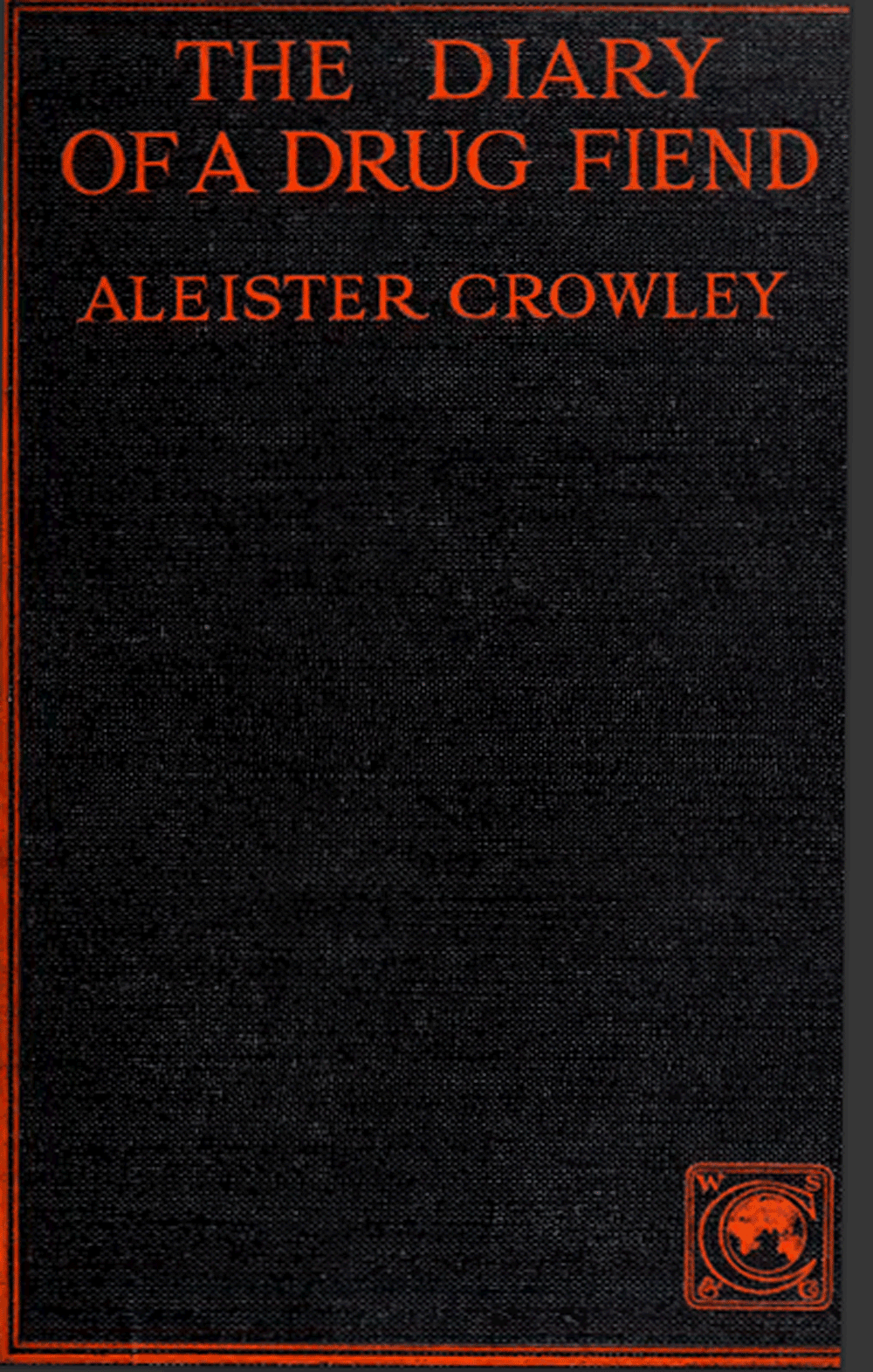
Diary of a Drug Fiend

This is the only full-cast recording of Aleister Crowley's 1922 classic paeon to common sense. It is the first book -- and so far almost the only book -- to stake out a philosophy of drug use that is compatible with human freedom, one in which we learn to use drugs as wisely as possible for the benefit of humanity. This recording was produced by the Drug War Philosopher and your purchases help support his effort to push back against the tragically counterproductive policy of drug prohibition, in the name of human freedom and of humanity's right to heal.

Purchase Your Copy


No cookies, no ads paid for by amoral and immoral billionaires (or trillionaires).


Unless otherwise indicated, no AI is used in the creation of site content. These essays represent the original ideas of their author and not the ideas that the author SHOULD have based on an algorithmic parsing of existing data. For more on this subject, consider the AI-related viewpoints to which the author subscribes as delineated in the New York Times opinion piece entitled "What 370,000 College Essays Tell Us About A.I.’s Effects on Creativity" by Rebecca Winthrop of the Brookings Institution.

The Partnership for a Death Free America is a proud sponsor of The Drug War Philosopher website @ abolishthedea.com.


Copyright 2026, Brian Ballard Quass Contact: quass@quass.com

tombstone for American Democracy, 1776-2024, RIP (up)