



Drug users don't need treatment, they need education and choice
in response to 41 Surprising War on Drugs Statistics by Elma Mrkonjic, published by The High Court website
by Brian Ballard Quass, the Drug War Philosopher
January 29, 2026
Thank you for this excellent summary of the downsides of drug prohibition.1
I would just like to add a few downsides that you missed.
Drug prohibition outlaws the right of Americans to take care of their own health, the most basic of human rights. Depression is basically a “thing” in America because we have outlawed the coca leaf and cocaine, which Sigmund Freud promoted as a godsend for the depressed – until his fellow doctors studied the drug by focusing only on its downsides, exactly as if they were to study alcohol by focusing only on alcoholics234. No one asked the depressed what they thought. And no one noticed that doctors had a vested interest in demonizing cocaine, just as they had a vested interest in demonizing opium. The healthcare industry owes its wealth today to the outlawing of those two drugs.
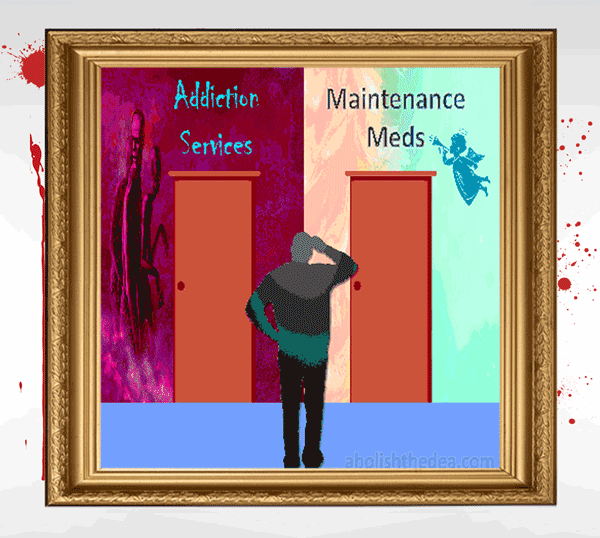
Americans have been taught to hate Mother Nature's plant medicines and to trust in Big Pharma 'meds' instead, many of which turn the depressed into patients for life with extreme chemical dependency.
As a chronic depressive myself, I am one of the millions of unacknowledged victims of the Drug War. Drug prohibition has denied me the power to take care of my own health, shunting me off instead onto a Big Pharma “med” that is far harder to kick than heroin 5. In fact, the “med” that I am on (Venlafaxine) has a 95% recidivism rate 6 for long-term users. 95%. That’s what my former psychiatrist told me – shortly before he was fired for his candor. Compare this relapse rate to heroin. When American soldiers returned from Vietnam, 34% had used heroin regularly while overseas, and yet only 5% required help getting off the drug when they returned to the States. 5%. (See the Lee Robins study.7)
Speaking of heroin, consider the irony: we call it a hard drug and denounce its use, while we yet praise 1 in 4 American women for taking a Big Pharma med every day of their life.
Drug warriors denounce chemical dependency and yet drug prohibition has rendered 1 in 4 American women chemically dependent for life by shunting them off onto Big Pharma drugs that are FAR harder to kick than heroin.
Even most drug law reformers tend to write as if drugs have no positive uses, but this is not true. Drugs can keep people from committing suicide and can give new hope and meaning to their life. In fact, I think we have a duty to give people drugs if they are on the verge of suicide and need to be cheered up ASAP. Why do 49,000 Americans commit suicide every year after all?8 Surely, it has something to do with the fact that we have outlawed all the drugs that could cheer them up! Indeed, Americans are so convinced that drugs have no positive uses that doctors actually encourage the severely depressed to undergo brain-damaging shock therapy!
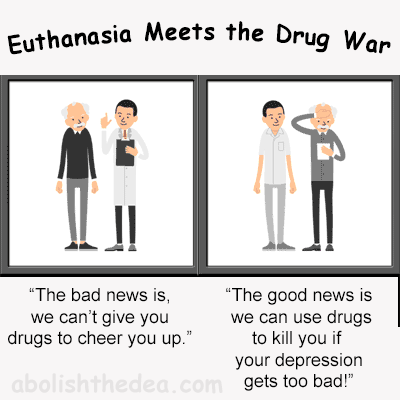
And the madness does not stop there. Now people with severe depression (like Canadian entertainer Claire Brosseau) are demanding the right to assisted suicide.9 Imagine the irony here! First, the medical industry works to deny us drugs that could cheer us up in a trice. Then we ask them to kill ourselves when we can’t stand the depression anymore! This madness is brought about by the fact that we have all been brainwashed since childhood to hate drugs, above all by the media censorship of all positive uses for drugs.
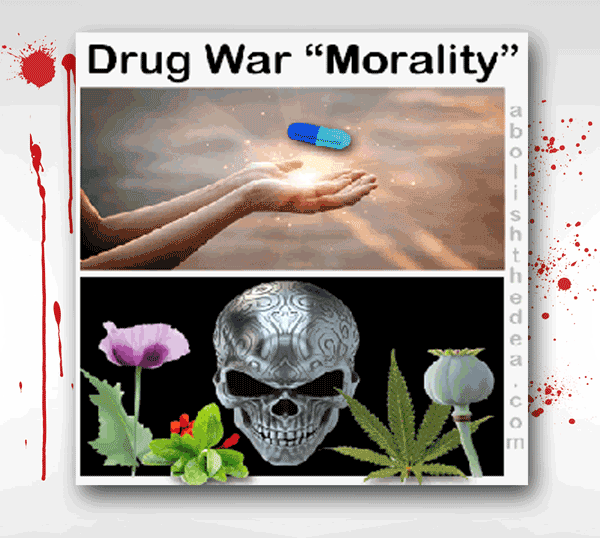
Americans have been taught to superstitiously believe that drugs are bad. Drugs are not bad or good. They are inanimate objects. Their widespread misuse tells us something about society, not about drugs.
So while it may sound progressive to say that drug users need treatment, what they really need is drug choice and education about safe use. Americans were not dying in the streets from overdoses when opiates were legal in America. Opium fans smoked the regulated product peaceably at home. It was drug prohibition which caused the problems by incentivizing the switch to more powerful synthesized opiates and forcing users to rely on uncertain supplies of uncertain dosage and quality, etc.
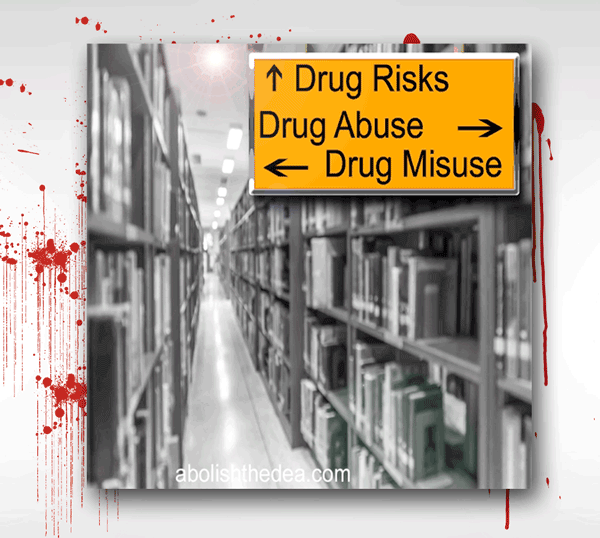
And there are many other downsides to drug prohibition that almost no one notices: like the fact that it has censored academia, to the point that everyone writes about drug abuse and misuse and no one writes about beneficial use. We forget that indigenous people, living close to the earth, have always used drugs for human benefit, as ethnobotanist Richard Schultes discovered.10 It is a uniquely western point of view to be suspicious of plant medicine, this despite the fact that God himself said his creation was good in the book of Genesis. Drug hating is even built into the D.C. bureaucracy: this is why we have a National Institute on Drug Abuse rather than a National Institute on Drug Use.
Drug prohibition also outlaws philosophical research. The philosophy of William James was inspired by his use of laughing gas, a gas that the FDA is now seeking to classify as a “drug,” thus making it even less available than it already is on a practical basis.11 James urged philosophers to use substances like nitrous oxide to study different forms of consciousness in order to learn about the nature of reality writ large. But drug prohibition says that such study must never take place, thereby vetoing human progress. (In a sane world, we would provide laughing gas kits to the suicidal in the same way that we now give epi pens to those with severe allergies.)1213
Don't think your life has been censored? Go into the local library and see how many books there are on the BENEFITS of drug use!
Drug prohibition also outlaws new religions by denying us the use of the kinds of substances that have inspired their creation in the past, as Soma inspired the Vedic religion (hence the Hindu faith) and the coca plant was considered divine by the Inca.1415
Two more observations and then I’m done:
First, regarding the idea that the Drug War has failed: I would add that the Drug War never had the right to succeed in the first place, given the downsides stated above and many others that I would mention if time permitted. Second, the Drug War HAS succeeded in a way: at least if we assume that its real goal was to divide Americans, destroy minority communities, hand elections to demagogues, humiliate labor, destroy the Bill of Rights (except for the second amendment, of course) and put Latin America under the thumb of the U.S. military, meanwhile destroying the rule of law south of the border.
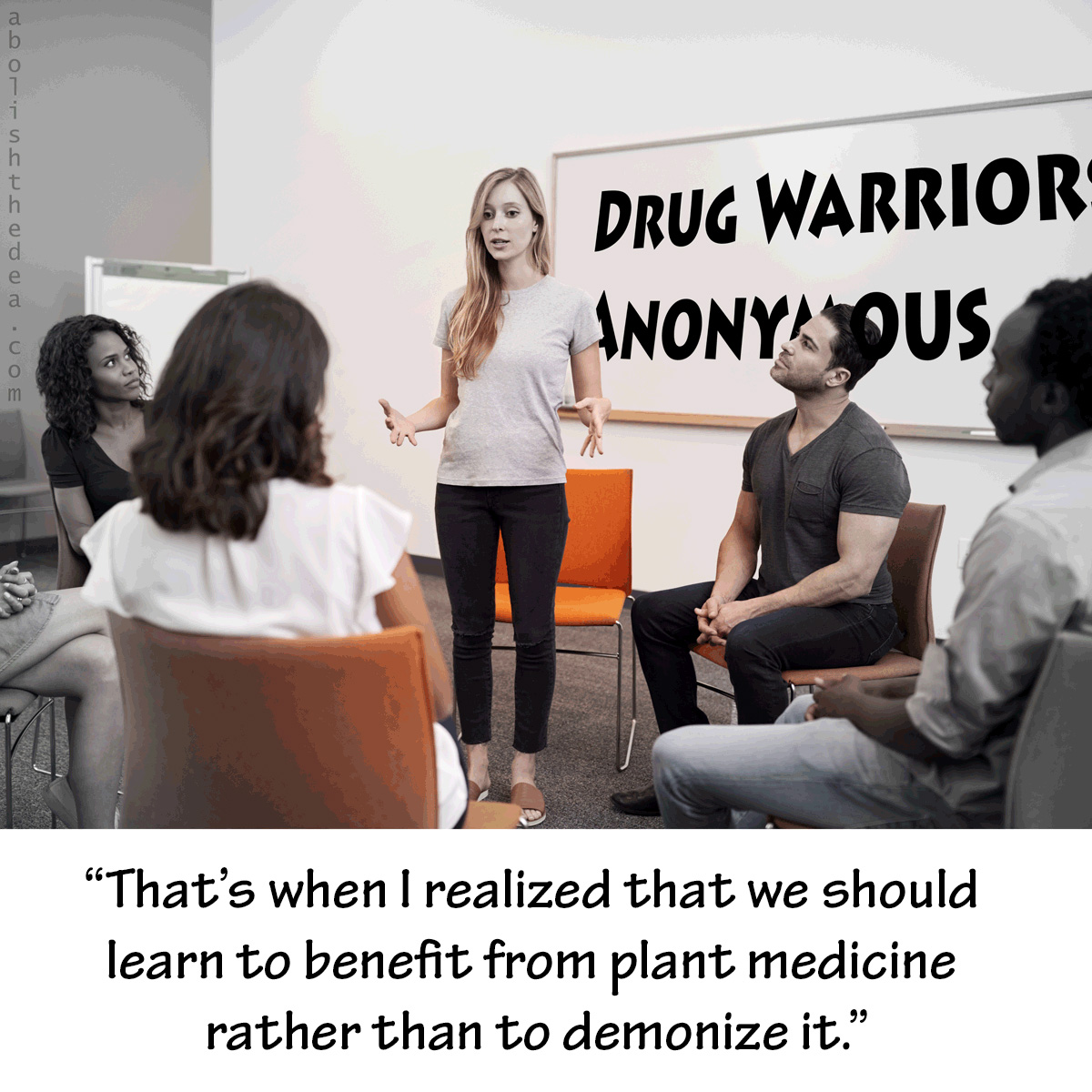
Imagine a 12-step group designed to help people free themselves from the mental shackles of a lifetime of anti-drug propaganda.
American businesses judge people, not by the color of their skin but by the contents of their digestive systems.
In "The Book of the Damned," Charles Fort shows how science damns (i.e. excludes) facts that it cannot assimilate into a system of knowledge. Fort could never have guessed, however, how thoroughly science would eventually "damn" all positive facts about "drugs."
Addiction thrives BECAUSE of prohibition, which limits drug choice and discourages education about psychoactive substances and how to use them wisely.
What prohibitionists forget is that every popular but dangerous activity, from horseback riding to drug use, will have its victims. You cannot save everybody, and when you try to do so by law, you kill far more than you save, meanwhile destroying democracy in the process.
Scientists are not the experts on psychoactive medicines. The experts are painters and artists and spiritualists -- and anyone else who simply wants to be all they can be in life. Scientists understand nothing of such goals and aspirations.
If opium and cocaine were legal again in America, the healthcare industry would suddenly have to undergo extensive downsizing, as Americans were once again put in charge of their own health.
I'm told antidepressant withdrawal is fine because it doesn't cause cravings. Why is it better to feel like hell than to have a craving? In any case, cravings are caused by prohibition. A sane world could also end cravings with the help of other drugs.
This is the problem with trusting science to tell us about drugs. Science means reductive materialism, whereas psychoactive drug use is all about mind and the human being as a whole. We need pharmacologically savvy shaman to guide us, not scientists.
If there were no other problem with antidepressants, they would be wrong for the simple reason that they make a user dependent for life -- not as a bug (as in drugs like opium) but rather as a feature: that's how they "work," by being administered daily for a lifetime.
Hollywood presents cocaine as a drug of killers. In reality, strategic cocaine use by an educated person can lead to great mental power, especially as just one part of a pharmacologically balanced diet.