Homepage of the Drug War Philosopher, Brian Quass
blog icon orange rss icon with stylized radio waves bird icon for twitter bird icon for twitter substack icon


back navigation arrow


Give Me Liberty -- except over my own body, of course -- Or Give Me Death

The Drug War philosopher responds to brainwashed substackers on episode 3 of Notes Wednesday

by Brian Ballard Quass, the Drug War Philosopher (Substack version)

August 13, 2026


It's your lovable old Herr Professor here for another Note Wednesday, ready to take the always bracing step of reading more of the claptrap cranked out by my brainwashed fellow Substackers on the subject of drugs. And you know it don't come easy. This is exactly like stepping into an ice bath for me. I have trouble taking this stuff in stride because I know that the attitudes that offend me have consequences in the real world, that they are responsible for forcing me to go a lifetime now without godsend medicines, meanwhile denying me the ability to follow up on the research of William James regarding the nature of ultimate reality. And so whenever armchair drug haters on Substack set themselves up as experts on drugs in the abstract, I have a tendency to throw my hands up in despair and curse the epoch in which I was born. And the problem is, this attitude is inescapable. I would gladly leave American drug haters to enjoy themselves in their Christian Science utopia; I would gladly move to a country in which Mother Nature is still legal, but the U.S. has seen to it that there are no such countries in the world. Why? Well, it seems that Adam Smith failed to mention one thing about capitalism: it turns out that it is incompatible with mental freedom -- and since modern capitalism is also inherently imperialistic, unable to fulfill its destiny without the participation of the entire world, it follows that mental freedom must be illegal worldwide.
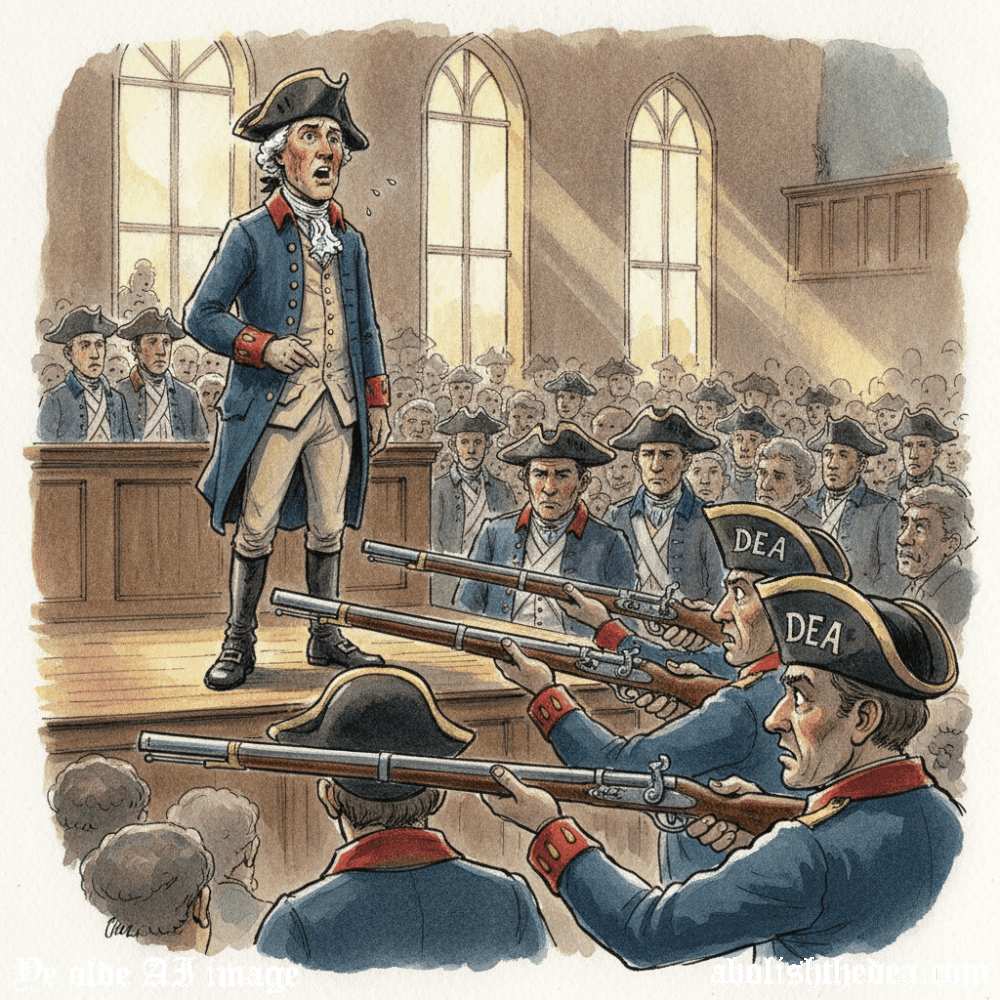
This reminds me of Thomas Szasz's comment that our right to drugs is anterior even to our right to vote. One can clearly see why this is so. Indeed, one can clearly FEEL why this is so. By denying our right to drugs, the government can control and limit the very way that we think about voting -- and about everything else in the world. They can control the amount of passion that we ascribe to it and the amount of belief that we place in the power of the individual to effect change in the real world. This is why I say that economic politics is always a secondary consideration for yours truly. The most important thing is never the economic system under which I live. The most important thing is how I am allowed to feel about that system and about everything else in that life. I would far rather live under an inefficient economic system while having complete control over my own mental state than to live in an uber-efficient capitalist system wherein drug policy denies me the right to heal, meanwhile turning me into a ward of the healthcare state by shunting me off onto "meds" that are harder to kick than heroin.

But our modern Patrick Henry's disagree. They shout, "Give me liberty -- except when it comes to my own mental state, of course -- or give me death." Talk about odd priorities. That's kind of like telling a thief: "Take my first-born child, but whatever you do, don't you dare touch that Ming vase of mine!" In fact, all high-flying talk about American liberty in the 21st century is incoherent when considered against the backdrop of this craven surrender of our bodies to government and its extrajudicial enforcers in big business. "You are going to tell me about the importance of liberty, you who have so readily thrown away your most important liberty of all?"

But I digress. It's time once again for me to comment on the trigger words and phrases in the latest Notes to which the Substack algorithms have been subjecting me lately. Ahem.

Oh, but first, speaking of trigger words, I recently read a NY Times article explaining how major publishers have started hiring sensitivity readers to evaluate manuscripts from the points of view of disparate audiences, to see wherein the authors may be giving offense to valued demographics. I'd like to hire myself out to read psychology and psychiatry texts and books about drugs from the point of view of a 'patient' who has been turned into a ward of the healthcare state by drug prohibition. I'd need a lot of red pencils to keep up with that work. I would be justifiably offended by every other word. But then I have yet to find anyone who cares much about the points of view of the med-dependent patient. To be sure, many organizations want to help the med-dependent, but no one wants to listen to them, at least not if they recommend anything that would actually work to end their med-dependent status almost overnight: namely, the re-legalization of Mother Nature.

This will seem like a brash claim to readers who are unfamiliar with drug benefits, the idea that drugs could help one get off of drugs, but it is really just psychological common sense -- at least for anyone who is familiar with drug history, which is to say almost nobody in the age of drug prohibition. But this is neither the time nor the place for me to give the world a crash course on the many inconvenient truths that the conglomerate media has been at such pains to prevent them from learning over the course of their life. Suffice it to say that I have written hundreds of essays on such topics should they ever decide to learn about drugs rather than simply fearing them in fealty to the Christian Science indoctrination that they received from groups like DARE as kiddies.

Speaking of which, the very idea of using cops to teach kids to hate drugs is really an implicit kind of threat: On the one hand, DARE is telling kids: "Cops are lovable and they will even bribe you with plush toys to get you to just say no," but at the same time they're implicitly telling them that: "Cops are still cops, kiddies, and so help them, if you buck them on this, if you so much as THINK that drugs might have benefits, then they will think nothing of placing those skinny little wrists of yours inside specially sized handcuffs and hauling you off to some age-appropriate hoosegow before you can so much as scream 'Mommy!'" Speaking of sensitivity checkers, if my kids were enrolled in such a course, I'd sign up to audit the session in order to prevent the children from being pressured by police officers into becoming drug-hating Christian Scientists. I'd exchange my red pencil for a bell and ring it every time that I heard the least bit of claptrap. [ting-a-ling] "Objection, Your Honor! The officer is ascribing downsides to drugs that are clearly the inevitable result of drug prohibition itself!"

But I digress again. It's a good thing that the King of France isn't here. I can hear him now: "Thus he his special nothing ever prologues."

Irritation Level: high
FROM: The Doge Patriarch
NOTE:
Marijuana is worse than alcohol.
COMMENT:
Alcohol kills 178,000 a year in America and the outlawing of marijuana has thrown over 1.4 million Americans in jail, so overcrowding the so-called justice system that trials are a thing of the past. The DA just threatens the suspect with long jail terms if they don't give up their right to a fair trial by a jury of their peers. The outlawing of drugs like marijuana has wrecked inner cities around the globe, caused civil wars overseas, and destroyed the Bill of Rights. Marijuana is used by entire religions in India. It has inspired the genre of jazz. It is silly to talk about marijuana -- or any drug -- in the abstract. Details matter. Those who demonize drugs in the abstract are just like the cavemen of yore who cried "Fire bad!" Stop demonizing drugs. If you must demonize, then demonize the dependence-causing antidepressants that have turned 1 in 4 American women into drug takers for life. If we must have prohibition, then we should outlaw alcohol as well and remove anyone from the workforce who has ever used the substance. That's the kind of punishment that racist prohibitionists mete out to minorities. Maybe it's time for drug prohibitionists to get a taste of their own racist medicine.


Irritation Level: high
FROM: Carolyn Kraft
NOTE:
John Stuart Mill’s harm principle sounds simple: the only reason to restrict someone's freedom is to prevent harm to others.
COMMENT:
Mill’s thesis is irrelevant to the subject of drug prohibition. It involves a risk-benefit analysis, and no one can perform such an analysis for drugs. Drugs can help people appreciate a sunset or carry on the work of William James regarding ultimate reality: drugs could help me breathe freely and overcome my chronic depression after 40 long years. How can you assign a numerical value to such things? Answer: you can’t. That’s why it was such folly to outlaw time-honored medicines and Mother Nature in the first place. Americans ignore this fact because they have been shielded since birth from hearing anything about drug benefits. Americans are hopelessly enrolled in the Cult of Substance Demonization. The result: the depressed go without medicines that could cheer them up in a trice; dementia victims go without drugs that could enormously improve their mentation; and haters go without drugs that could teach them compassion and keep them from shooting up grade schools. Disagree if you will, but not before reading the rare books that dare to discuss drug benefits. They’re rare because Americans are scared to death to write, publish or read books about beneficial drug use. The truth is out there, even if it’s not in your local bookstore or on TV. Wake up, America. You have to look beyond what the billionaire media allows you to see -- or the sitcoms that Hollywood shows you, whose content has been edited by the White House to accord with America's hatred of psychoactive medicines.


Irritation Level: high
FROM: Leon Macfayden
NOTE:
7 things I wish someone had told me when I was depressed


• This isn't your fault.

• Your brain is lying to you.

• Medication isn't failure.

• Tiny steps still count.

• Progress is rarely obvious.

• You won't always feel like this.

• Asking for help is strength.

COMMENT:
I wish someone had told me that drug prohibition is the outlawing of my right to heal and that the doctors who helped demonize drugs like cocaine had huge financial reasons for doing so. I wish they had told me that these doctors judge drugs based on worst-case scenarios while never bothering to ask the depressed what they thought. I wish they had gone on to tell me how doctors then went on to “save” me from cocaine by placing me on a dependence-causing “med” that was far harder to kick than heroin and which has turned me into a ward of the healthcare state. I wish they had told me that I would eventually have to see a doctor 1/3 my age every three months of my life in order to qualify for a refill on a drug that I do not even wish to be taking. I wish they had told me that the depressed are totally unrecognized stakeholders in the drugs debate and that drug prohibition was the unconscionable outlawing of my right to heal.


I have to follow up on that last Substack Note. Notice how Leon says "progress is rarely obvious." That's not exactly a ringing endorsement of the mental-health status quo, now, is it? Leon does not protest against the almost non-existent progress, he helps to normalize it instead. He mistakenly assumes that it is natural to have such lackluster results in one's attempt to end their depression. No, it is not natural, Leon: it is a direct result of the fact that America refuses to benefit from drugs but would rather demonize drugs instead: a direct result. To picture the insanity here, consider a world in which we have outlawed aspirin. It's illegal to even write positively about aspirin's potential benefits. And then we start seeing a bunch of consoling Substack posts about headaches, assuring the sufferer that "progress is rarely obvious" when it comes to headaches. Yes, maybe so, we say, but WHY is progress against headaches not obvious? Answer: Because we have outlawed aspirin, for heaven's sake, not because headaches are almost impossible to treat! The same goes for depression: depression is hard to treat because American politicians have decided that it SHOULD be hard to treat. They know that the depressed are not represented in Congress. They are more than happy to sacrifice the rights of the depressed in order to maintain a drugs policy that works so effectively to arrest minorities and remove them from the voting rolls. Depression is hard to treat only because politicians say so. The outlawing of drugs is the outlawing of the depressed person's right to heal.


read more essays here


Ten Tweets

against the hateful war on US


If religious liberty existed, we would be able to use the inspiring phenethylamines created by Alexander Shulgin in the same way and for the same reasons as the Vedic people of India used soma.

Now drug warriors have nitrous oxide in their sights, the substance that inspired the philosophy of William James. They're using the same tired MO: focusing exclusively on potential downsides and never mentioning the benefits of use, and/or denying that any exist.

It's amazing. Drug law is outlawing science -- and yet so few complain. Drug law tells us what mushrooms we can collect, for God's sake. Is that not straight-up insane? Or are Americans so used to being treated as children that they accept this corrupt status quo?

The book "Plants of the Gods" is full of plants and fungi that could help addicts and alcoholics, sometimes in the plant's existing form, sometimes in combinations, sometimes via extracting alkaloids, etc. But drug warriors need addiction to sell their prohibition ideology.

Just saw a People's magazine article with the headline: "JUSTICE FOR MATTHEW PERRY." If there was true justice, their editorial staff would be in jail for promoting user ignorance and a contaminated drug supply. It's the prohibition, stupid!!!

Until we legalize ALL psychoactive drugs, there will be no such thing as an addiction expert. In the meantime, it's insulting to be told by neuroscience that I'm an addictive type. It's pathologizing my just indignation at psychiatry's niggardly pharmacopoeia.

After over a hundred years of prohibition, America has developed a kind of faux science in which despised substances are completely ignored. This is why Sci Am is making a new argument for shock therapy in 2023, because they ignore all the stuff that OBVIOUSLY cheers one up.

Drug prohibition is superstitious idiocy. It is based on the following crazy idea: that a substance that can be misused by a white young person at one dose for one reason must not be used by anybody at any dose for any reason.

The UK just legalized assisted dying. This means that you can use drugs to kill a person, but you still can't use drugs to make that person want to live.

"Can I use poppies, coca, laughing gas, MDMA?" "NO," says the materialist, "We must be SCIENTIFIC! We must fry your brain and give you a lobotomy and make you a patient for life with the psychiatric pill mill! That's true SCIENCE!"


Click here to see All Tweets against the hateful War on Us


back navigation arrow
Book Cover

Break the ice with a sledgehammer: place this book on your coffee table.

This book features 150 annotated images, designed to force brainwashed Americans to confront the fact that drug prohibition is wrong. Here is what author Richard Parrish II says of the book's compiler: "The drug prohibition philosopher provides first-hand, principled, persuasive, and insightful arguments against the current drug prohibition regime..."

Purchase Your Copy
Book Cover

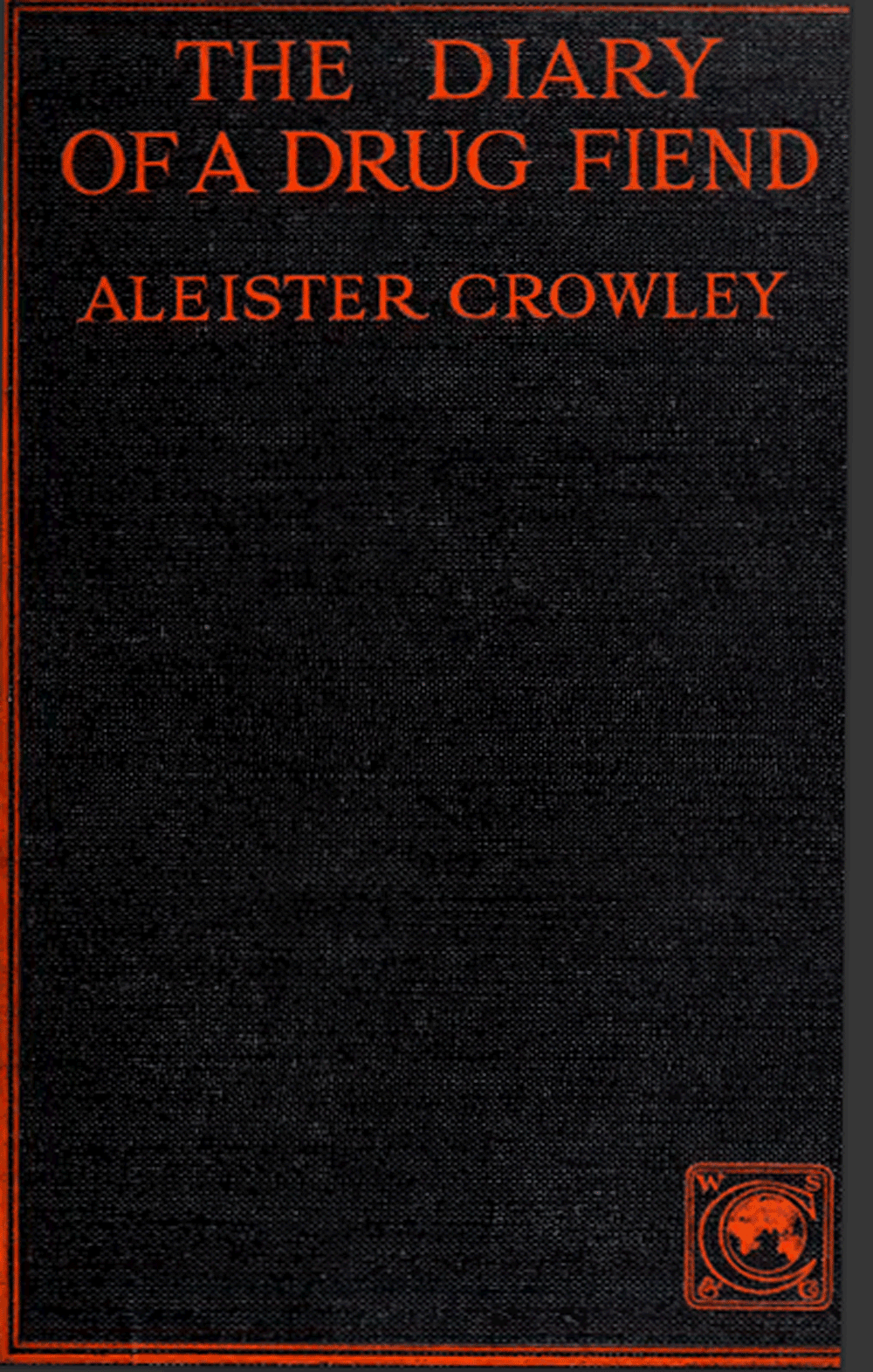
Diary of a Drug Fiend

This is the only full-cast recording of Aleister Crowley's 1922 classic paeon to common sense. It is the first book -- and so far almost the only book -- to stake out a philosophy of drug use that is compatible with human freedom, one in which we learn to use drugs as wisely as possible for the benefit of humanity. This recording was produced by the Drug War Philosopher and your purchases help support his effort to push back against the tragically counterproductive policy of drug prohibition, in the name of human freedom and of humanity's right to heal.

Purchase Your Copy


No cookies, no ads paid for by amoral and immoral billionaires (or trillionaires).


Unless otherwise indicated, no AI is used in the creation of site content. These essays represent the original ideas of their author and not the ideas that the author SHOULD have based on an algorithmic parsing of existing data. For more on this subject, consider the AI-related viewpoints to which the author subscribes as delineated in the New York Times opinion piece entitled "What 370,000 College Essays Tell Us About A.I.’s Effects on Creativity" by Rebecca Winthrop of the Brookings Institution.

The Partnership for a Death Free America is a proud sponsor of The Drug War Philosopher website @ abolishthedea.com.


Copyright 2026, Brian Ballard Quass Contact: quass@quass.com

tombstone for American Democracy, 1776-2024, RIP (up)