





Homepage of the Drug War Philosopher, Brian Quass
blog icon orange rss icon with stylized radio waves bird icon for twitter bird icon for twitter substack icon


back navigation arrow


How drug prohibition has turned the search for God into a felony

and turned our scientists into gatekeepers for human transcendence

by Brian Ballard Quass, the Drug War Philosopher

September 17, 2026


I was going to write an essay this morning about the mind-bending world of DMT experiences as reported by users. DMT is the so-called "spirit molecule" that tends to inspire users with a belief in divinity, typically with the help of a cast of characters that makes Tim Burton look like a realist. This is heady stuff, no pun intended. The cavalcade of characters (or character types) that has been encountered by today's mostly anonymous psychonauts after inhaling this naturally occurring substance suggests that there is a method to the DMT madness, albeit one that might turn out to be well beyond the power of Homo sapiens to discriminate, let alone to understand. This is the sort of discovery that would have delighted and astonished William James. It will be remembered that the Harvard psychologist urged his fellow philosophers to undertake the study of what today we might call "altered states." Or perhaps it will not be remembered. Philosophy and psychology departments are uncomfortable with that aspect of James' work, preferring to focus instead on his functionalist theories about human behavior. Those latter theories can be squared with evolutionary theory and materialist dogma in general; whereas God knows what a would-be "hard" science like psychology can make of altered states and alternate forms of consciousness. Indeed, James' philosophical experiments with anesthetics are not even mentioned in his online biography1 on the homepage of the Harvard Psychology Department which he founded, this despite the fact that James made it clear, both in "The Varieties of Religious Experience" and "Some Problems in Philosophy," that he has a far from materialist viewpoint when it comes to what philosophers call ontology, the nature of reality.

The whole drift of my education goes to persuade me that the world of our present consciousness is only one out of many worlds of consciousness that exist, and that those other worlds must contain experiences which have a meaning for our life also; and that although in the main their experiences and those of this world keep discrete, yet the two become continuous at certain points, and higher energies filter in. 2
William James, The Varieties of Religious Experience: A Study In Human Nature

I say I was going to write about DMT experiences, but I changed my mind after going through the research notes that I had amassed on this subject yesterday. In doing so, I realized that I was not particularly excited about writing a piece about the DMT experience today. And so I asked myself, "Why not? You were excited enough about this topic yesterday, Brian. What's changed?" Then I realized what the problem was. I was upset about the way that DMT studies were being undertaken in the west these days. Better writers than myself have already described the DMT world and the characters that it seems to contain -- the jester, the alien, the demon, the insect (especially the praying mantis), and above all the "machine elves" of which Terence McKenna first wrote in 1993 in "True Hallucinations" 3. But no one seems to have critiqued the whole basis upon which this DMT research is being performed today and how such an approach biases the conclusions that we are likely to draw as a society on the subject. So thinking, I continued writing as follows.

I read over a dozen articles on this topic from various sources yesterday (which see below), and yet not one of those authors expressed any indignation whatsoever with the fact that the mere possession of DMT (which we're told resides throughout nature and even inside the human body itself) is a felony and can land one in prison, both in the United States and the United Kingdom. Not one. Has everyone been made to cower in fealty to Drug War ideology? Literally everyone? The authors of many online articles on the subject of drugs will go out of their way to kowtow to Drug War sensibilities by insisting that they are not giving medical advice (oh, no no no no!), but nobody will stand up to the Drug Warriors and politely invite them to go to hell for passing drug laws that outlaw academic freedom while making the use of natural substances enormously dangerous.

This roaring silence is helping to normalize drug prohibition. I understand that academics -- including those at Johns Hopkins in Baltimore and the Imperial College in London -- have to obey the law, but they are under no obligation to like it. I understand that there are real consequences to being honest in the age of drug prohibition, but those who are in a position to speak up should be doing so. Retirees with enough money to survive on their own should leave their jobs at such institutions by speaking truth to power, going out with a blaze of civic-minded glory by publicly slamming drug prohibition for the fact that it has outlawed academic freedom.

The closest thing that I could find to a protest in my research text was the following line from a 2011 paper by UK researcher David Luke published in the Journal of the Society for Psychical Research:

By the early 1970s, DMT had become a scheduled drug in the severest category, despite demonstrating little potential for abuse, and so scientific research ceased. 4
Discarnate entities and dimethyltryptamine (DMT): Psychopharmacology, phenomenology and ontology

This is an implicit rebuke of sorts, but it's more like a brief history lesson than a protest. It is far from the red banner text alert that we should expect on the top of every academic webpage about drugs saying "Restore academic freedom now: end drug prohibition." But then drug prohibition is a universal solvent: it erodes democratic freedoms everywhere it goes, not just the notion of academic freedom but the notion of religious liberty and the freedom from unreasonable search as well. Apparently this solvent destroys not just those freedoms themselves, however, but also our expectation that such freedoms should even exist. It is a corrosive that eats down to the heart of its victims and changes their ideas about what Thomas Paine called "the rights of man." The victim of this caustic policy will still tell us that they live in a free world, but they will only be able to support that claim with the use of newspeak, or with such Christian Science bromides as "One can only be free when one is high on Jesus Christ -- er, I mean sunshine, of course."

But the real problem here is that scientists have an interest in accepting this despotic status quo. Drug prohibition has dubbed them experts on drugs, after all, if only by default. Drug prohibition ensures that scientists alone will have the potential to get their mitts on psychoactive substances, albeit only after giving materialist justifications for such access and filling out forms in triplicate and hiring armed guards to ensure that no more people than necessary will ever benefit from the use of the drugs in question. In this way, America has placed passion-free materialists in charge of deciding whether substances like DMT have any positive uses for human beings -- and this is an outrageous category error. In a recent DMT study at Johns Hopkins, "58 percent of respondents said tripping on DMT had triggered a belief in divine beings and powerful supernatural entities."5 Imagine making passion-free scientists the gatekeepers for a medicine with such religious potential. The existence of such a status quo makes a mockery of the First Amendment to the US Constitution.

But scientists are more than ready to accept the role of arbiter as to who qualifies for undergoing religious experiences in America. Such work pays well, after all. Imagine how many clinical trials they will have to undertake before they can definitively tell us if religious experiences have any benefits for us laypeople. They'll have to run tests on all sorts of demographics with all sorts of theological credos. It may take some time to figure out if these people are "really" having a religious experience or not. But only scientists can tell us that; only scientists can decide if a religion is "really" real or not. There's no telling exactly how long such studies could take, but we do know at least one thing for sure: the trials cannot stop until all the principal investigators in the case have paid off their mortgages on their McMansions in the suburbs.

But, of course, hardcore materialists, like the white young western males who write our Wikipedia articles for us, have already figured things out. "Relax, everybody," they cry. "We know that you're all excited by these strange entities, but trust us, there's nothing to see here. Now sit back and learn as we show you how the rational mindset and the scientific method can make ontological mincemeat out of your so-called transcendental experiences. Ha! It's called rationality, folks; it's what sets us apart from the savages, i.e. those Luddites with an experiential epistemology rather than a rational one. By the way, we'll be available after class today if anybody wants us to pick apart their religious beliefs and tell them why they're nonsense."

If you're in need of a good laugh, join me in the following thought experiment.

Imagine an Amazonian tribesperson growing up with a scientific mindset thanks to some freak of genetics. Wouldn't he or she be the laugh of the town? While the tribe is collectively viewing vast historical vistas with the help of DMT-containing plants, seeing their modest but crucial place in the universe as if looking down from outer space on an obscure and tiny planet, the drug-free junior is standing aloof, scratching his head, wondering about the ontological status of these so-called "visions," speculating about how much of the effects might be due to the spirit of communality, how much to cultural expectations, how much to the darkness of the night and the relentless beating of the drums, and how much to the specific chemical makeup of the substances themselves as they stew away over the fire in a rustic clay pot. Junior believes that he can tear the experience apart in this way, like a child removing the wings of a fly, and find out what makes it tick, when in reality he kills the living-breathing experience by doing so, just as the child kills the fly. The participants ignore him for the most part, except to regale him on occasion with a bemused look of pity. "Poor child," they think to themselves; "does he not see that he has assumed a mindset that renders him forever impervious to the transcendent?" But junior is unmoved. He thinks a substance should work in and of itself; he shouldn't have to believe in anything at all. So there. "Where have I encountered that mindset before?" ask the tribespeople. "Oh, yes, of course: in the United States of America!" This is the mindset of the Francisco Pizarros of the world. The difference in this case being that westerners are today's victim of that mindset rather than the Incan people of Peru; we are the ones who are being denied our right to religious liberty because of this scientific mindset that is dogmatically incapable of understanding holistic medicine.

It will be objected that this is a caricature, that scientists are not like this, that they try to take account of the biases mentioned above, and of course this is true. Scientists can be goodhearted people just like anyone else. But in that case, we are not talking about scientists qua scientists; we are talking instead about human beings who are willing to put aside their materialist assumptions about reality, at least long enough to avoid saying or doing things that would be justifiably censored in our politically correct age, as when they explicitly assert the supremacy of the western way of looking at the world over that of the ancient cultures that they have hitherto uprooted in fealty to imperialist objectives. My point is that the materialist mindset prevails in the western world in spite of these rearguard corrective actions by broadminded researchers. The positivist mindset of "just the facts, ma'am" continues to triumph at the end of the day. This is clear from the fact that scientists qua scientists still claim (both tacitly and otherwise) to find no psychological and religious benefits whatsoever for the use of drugs that have been considered godsends since the time of Galen. It consists most obviously in the fact that scientists qua scientists cannot tell us definitively that laughing gas has any beneficial uses for the depressed. Laughing gas! A child knows that laughing gas could help the depressed; the only people who do not realize this today are med school graduates. But then this is a convenient blind spot to have in the age of drug prohibition. It excuse the student from the moral imperative of pushing back against the policy of drug prohibition. Why fight for the re-legalization of substances that you have been taught since grade school are the devil incarnate, with no positive uses for anybody, anywhere, ever?

This is why I was bothered today by my research into DMT. It reminds me that the studies being performed on this substance are being undertaken by glacially advancing scientists -- scientists with big mortgages that they're trying to pay off with the help of literally endless clinical trials -- the same scientists who clearly lack all common sense when it comes to drugs. These are the same scientists who are helping to normalize my healthcare disempowerment by pretending that the vast pharmacopoeia of Mother Nature from which government has barred me has no positive uses for me whatsoever. And yet I can hear those scientists now, complaining as follows: "Not so fast, Brian! These substances that you mention may indeed have positive uses for you, but we will not know that for sure until we scientists have done exhaustive studies on each and every one of those drugs, being sure to perform a variety of different studies for all manner of different demographics and conditions: young people, various ethnicities, the depressed, etc. I'll tell you what, Brian, why don't you check back with us in a hundred years? By then we may have even created a study in which we can allow you personally to participate, given that we have so far barred you on the grounds that you're taking an antidepressant and therefore would run the exquisitely tiny risk of contracting serotonin syndrome. Remember, Brian, our number-one goal as scientists is to ensure that you live forever, no matter how shitty you may feel about your life. Risk is to be avoided at all costs."

It's interesting how our scientists in the medical establishment discuss serotonin syndrome6, by the way. I can't even find statistics for the syndrome online, no one seems to have "officially" died from the syndrome, yet our poobahs with the PhDs never tire of telling me how dangerous it is. "There may be no listed deaths for the syndrome," say these experts, "but that's only because the syndrome is underreported and often undiagnosed." And so I am turned down for clinical trials and ayahuasca getaways faster than you can say "justice for med-dependent patients." There is no consideration that the status quo of a given "patient" might make a small risk like serotonin syndrome worthwhile. None whatsoever. But then Drug Warriors have always been statistically challenged: they are horrified by even the possibility of a drug downside while they are totally indifferent to all the actual death and bloodshed brought about by drug prohibition. This subject is relevant, by the way, not just for myself, but for all med-dependent patients. Think of the irony: the one demographic that is not eligible for psychoactive drug trials is the very demographic that needs those drugs the most: we need substances that can take the place of the dependence-causing meds that we are on for life. This is the double-whammy of antidepressants: they not only make you drug dependent for life, but they debar you from using the kinds of drugs that could take their place, at least in the time of drug prohibition, when those drugs can only be doled out by a medical establishment that is wary of lawsuits. This is just another reason why scientists need to butt out when it comes to psychoactive medicine. I do not need them deciding what risks I should take in life. But then I do not need them deciding what religious and philosophical inspiration I should be able to access, either. The only thing I need from scientists is for them to finally care enough about my well-being to stand up for my right to heal. How? By demanding an immediate end to drug prohibition.

There! Having gotten that out of my system, I am now free to devote future essays to the subject that I had hoped to cover today, that of the ontological status of the truly bizarre entities encountered in a DMT trip.


REFERENCES


  • Why Do We Encounter DMT Jesters and How to Understand Their Significance – a Jungian Perspective 19


    Notes for essay entitled How drug prohibition has turned the search for God into a felony: and turned our scientists into gatekeepers for human transcendence:

    1: Harvard University. 2019. “William James.” Harvard.Edu. 2019. https://psychology.fas.harvard.edu/people/william-james. (up)
    2: “The Varieties of Religious Experience : William James : Free Download, Borrow, and Streaming : Internet Archive.” 2021. Internet Archive. 2021. https://archive.org/details/the-varieties-of-religious-experience_202109. (up)
    3: McKenna, Terence. 1993. “True Hallucinations.” Archive.Org. various. 1993. https://archive.org/stream/pdfy-lcL1Fj40AGH7cqhY/McKenna%2C%20Terence%20-%20True%20Hallucinations_djvu.txt. (up)
    4: Luke, David. 2011. “Discarnate Entities and Dimethyltryptamine (DMT): Psychopharmacology, Phenomenology and Ontology.” Journal of the Society for Psychical Research. 2011. https://www.academia.edu/1010502/Discarnate_entities_and_dimethyltryptamine _DMT_Ps (up)
    5: Farah, Troy. 2020. “It’s Official: DMT Makes You Believe in God.” VICE. May 20, 2020. https://www.vice.com/en/article/its-official-dmt-makes-you-believe-in-god/. (up)
    6: Serotonin Syndrome Simon, Leslie V., NIH National Library of Medicine: National Center for Biotechnology Information, 2023 (up)
    7: Luke, David. 2011. “Discarnate Entities and Dimethyltryptamine (DMT): Psychopharmacology, Phenomenology and Ontology.” Journal of the Society for Psychical Research. 2011. https://www.academia.edu/1010502/Discarnate_entities_and_dimethyltryptamine _DMT_Ps (up)
    8: Lopez, Raul. 2023. “DMT Entities.” Psychonaut Dream. August 24, 2023. https://psychonautdream.com/dmt-entities/. (up)
    9: Reality Sandwich. 2020. “Guide to Machine Elves and Other DMT Entities.” Reality Sandwich. May 6, 2020. https://realitysandwich.com/machine-elves-dmt-entities/. (up)
    10: Farah, Troy. 2020. “It’s Official: DMT Makes You Believe in God.” VICE. May 20, 2020. https://www.vice.com/en/article/its-official-dmt-makes-you-believe-in-god/. (up)
    11: Kins, Josie. 2021. “JosieKins.Xyz.” JosieKins.Xyz. 2021. https://josiekins.xyz/. (up)
    12: Zeus Tipado. 2023. “No, DMT Aliens Aren’t Real.” DoubleBlind Mag. December 19, 2023. https://doubleblindmag.com/no-dmt-entities-arent-real/. (up)
    13: “David Luke: Synesthesia, Hallucinations, & Telepathy with DMT - Third Wave Podcast.” 2020. Third Wave. May 3, 2020. https://thethirdwave.co/podcast/episode-80-synesthesia-shared-hallucinations-telepathy-with-dmt/. (up)
    14: “The Entities · The DMT Atlas.” 2021. Dmtatlas.Com. 2021. https://dmtatlas.com/entities/. (up)
    15: McKenna, Terence. 1993. “True Hallucinations.” Archive.Org. various. 1993. https://archive.org/stream/pdfy-lcL1Fj40AGH7cqhY/McKenna%2C%20Terence%20-%20True%20Hallucinations_djvu.txt. (up)
    16: lee, d. 2024. “Understanding the Two Types of DMT—N,N-DMT and 5-MeO-DMT.” Psychedelics In RecoveryTM. September 10, 2024. https://www.psychedelicsinrecovery.org/understanding-the-two-types-of-dmt-nn-dmt-and-5-meo-dmt/. (up)
    17: Cooke, Justin. 2021. “What Are DMT Machine Elves? 8 Theories Explained - Tripsitter.” Tripsitter. August 21, 2021. https://tripsitter.com/dmt/machine-elves/. (up)
    18: Harvard University. 2019. “William James.” Harvard.Edu. 2019. https://psychology.fas.harvard.edu/people/william-james. (up)
    19: Holyanova, Maria. 2023. “Why Do We Encounter DMT Jesters and How to Understand Their Significance – a Jungian Perspective.” Psychedelic Spotlight. July 25, 2023. https://psychedelicspotlight.com/why-do-we-encounter-dmt-jesters-and-how-to-understand-their- (up)


    read more essays here


    Ten Tweets

    against the hateful war on US


    Attempts to improve one's mind and mood are not crimes. The attempt to stop people from doing so is the crime.

    If our loved ones should experience severe depression and visit an emergency room for treatment, they will be started on a regime of dependence-causing Big Pharma drugs. They will not be given any drugs that elate and inspire.

    Properly speaking, MDMA has killed no one at all. Prohibitionists were delighted when Leah Betts died because they were sure it was BECAUSE of MDMA/Ecstasy. Whereas it was because of the fact that prohibitionists refuse to teach safe use.

    Even fans of sacred medicine have been brainwashed to believe that we do not know if such drugs "really" work: they want microscopic proof. But that's a western bias, used strategically by drug warriors to make the psychotropic drug approval process as glacial as possible.

    Materialist puritans do not want to create any drug that elates. So they go on a fool's errand to find reductionist cures for "depression itself," as if the vast array of human sadness could (or should) be treated with a one-size-fits-all readjustment of brain chemicals.

    Many psychonauts (like Terence McKenna) praise psychedelics while demonizing other psychoactive substances. No substance is bad in itself. All substances have some use at some dose for some reason for some people in some circumstance.

    It is a truism to say that we cannot change the world and that therefore we have to change ourselves -- but the drug war outlaws even this latter option.

    The best harm-reduction strategy is to re-legalize drugs.

    There would be almost no relapses for those trying to get off drugs if all drugs were legal. Then we could use a vast variety of drugs to get us through those few hours of late-night angst that are the bane of the recidivist.

    Americans were always free to take care of their own health -- until drug warriors handed doctors a monopoly on providing mind and mood medicine.


    Click here to see All Tweets against the hateful War on Us


    back navigation arrow
    Book Cover

    Break the ice with a sledgehammer: place this book on your coffee table.

    This book features 150 annotated images, designed to force brainwashed Americans to confront the fact that drug prohibition is wrong. Here is what author Richard Parrish II says of the book's compiler: "The drug prohibition philosopher provides first-hand, principled, persuasive, and insightful arguments against the current drug prohibition regime..."

    Purchase Your Copy
    Book Cover

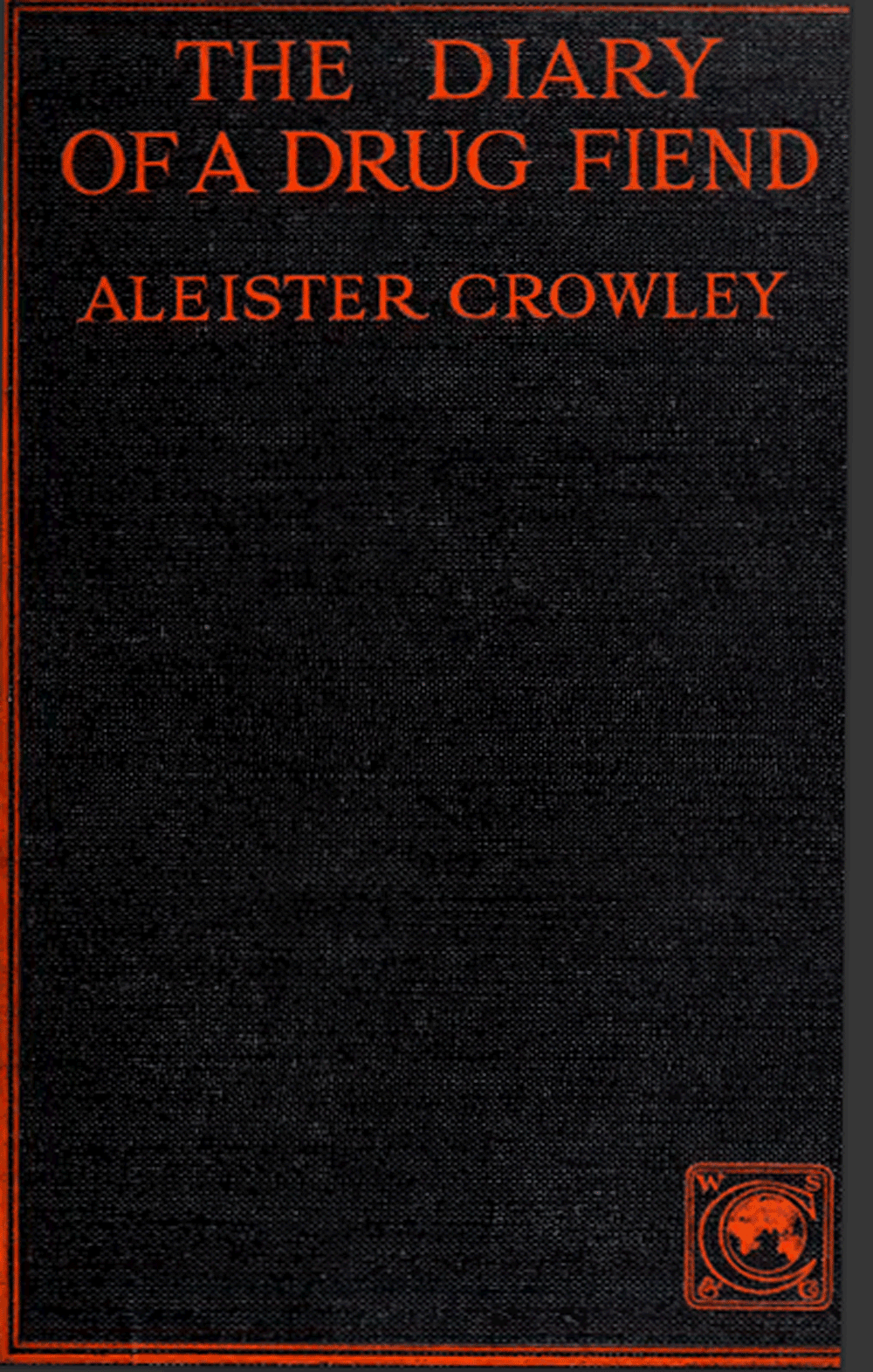
    Diary of a Drug Fiend

    This is the only full-cast recording of Aleister Crowley's 1922 classic paeon to common sense. It is the first book -- and so far almost the only book -- to stake out a philosophy of drug use that is compatible with human freedom, one in which we learn to use drugs as wisely as possible for the benefit of humanity. This recording was produced by the Drug War Philosopher and your purchases help support his effort to push back against the tragically counterproductive policy of drug prohibition, in the name of human freedom and of humanity's right to heal.

    Purchase Your Copy


    No cookies, no ads paid for by amoral and immoral billionaires (or trillionaires).


    Unless otherwise indicated, no AI is used in the creation of site content. These essays represent the original ideas of their author and not the ideas that the author SHOULD have based on an algorithmic parsing of existing data. For more on this subject, consider the AI-related viewpoints to which the author subscribes as delineated in the New York Times opinion piece entitled "What 370,000 College Essays Tell Us About A.I.’s Effects on Creativity" by Rebecca Winthrop of the Brookings Institution.

    The Partnership for a Death Free America is a proud sponsor of The Drug War Philosopher website @ abolishthedea.com.


    Copyright 2026, Brian Ballard Quass Contact: quass@quass.com

    tombstone for American Democracy, 1776-2024, RIP (up)