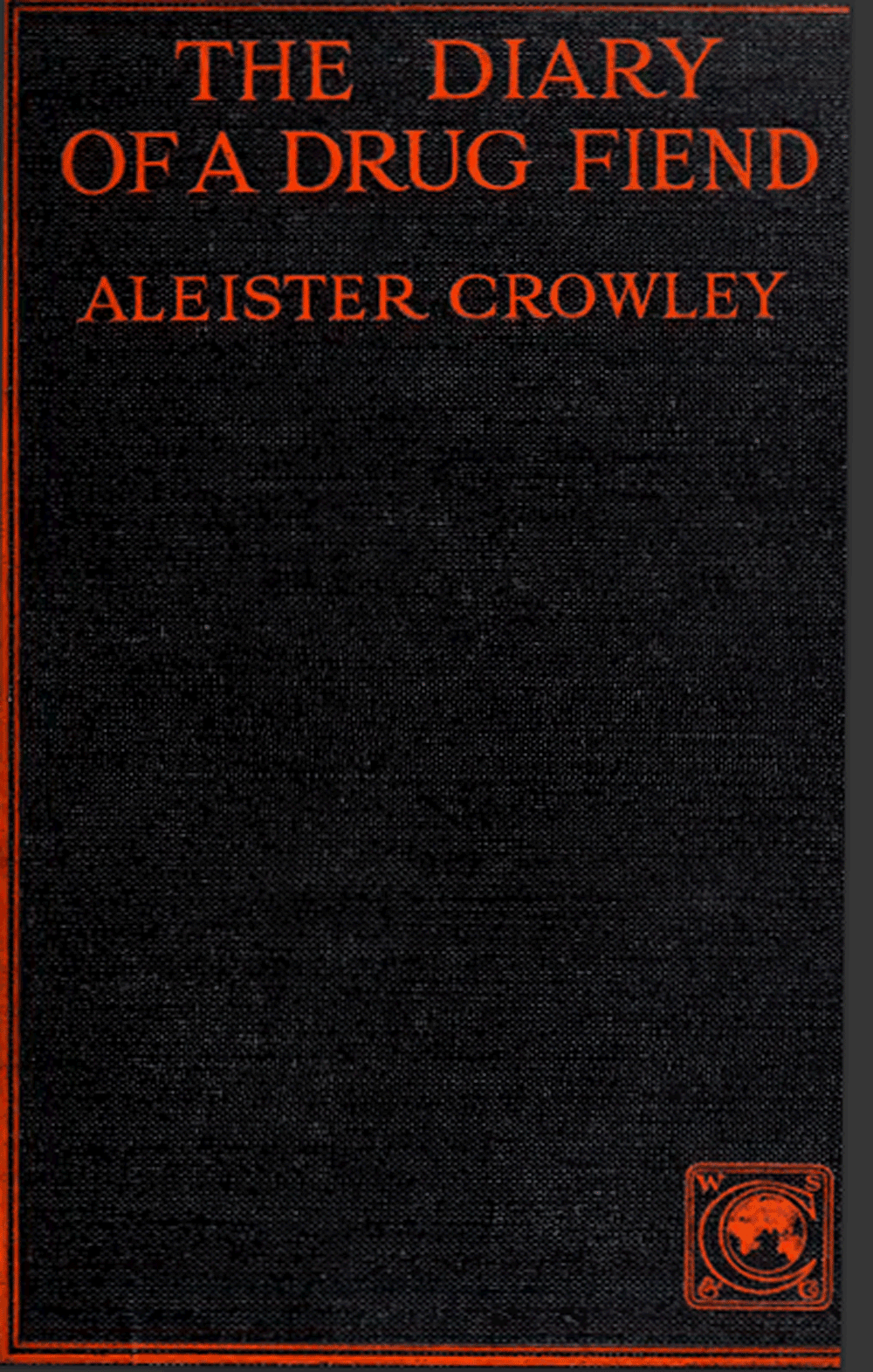
Faithful readers of this site, should there be such, will have discovered that I have little patience with the many drug pundits who drastically underestimate the downsides of drug prohibition -- and that means just about everybody these days, rock-star authors included (like Michael Pollan 1 and Rick Strassman 2 , for just two of many examples). Some of the very leaders in the drug-law reform movement still believe in the propriety of the demonstrably deadly policy of drug prohibition. Even those who favor the re-legalization of psychoactive medicine fail to appreciate the full evil of drug prohibition. This is because, like the Drug Warriors themselves, they never think of the hundreds of millions of people who go without godsend medicines thanks to our lopsided focus on the well-being of our apparently poor, defenseless white children, whom we refuse to educate about drugs. They never think of the children in hospice 34 who go without morphine 5 thanks to the demonizing of that drug. They never think of the minority communities around the globe that have been devastated by the gun violence brought about by drug prohibition. 6
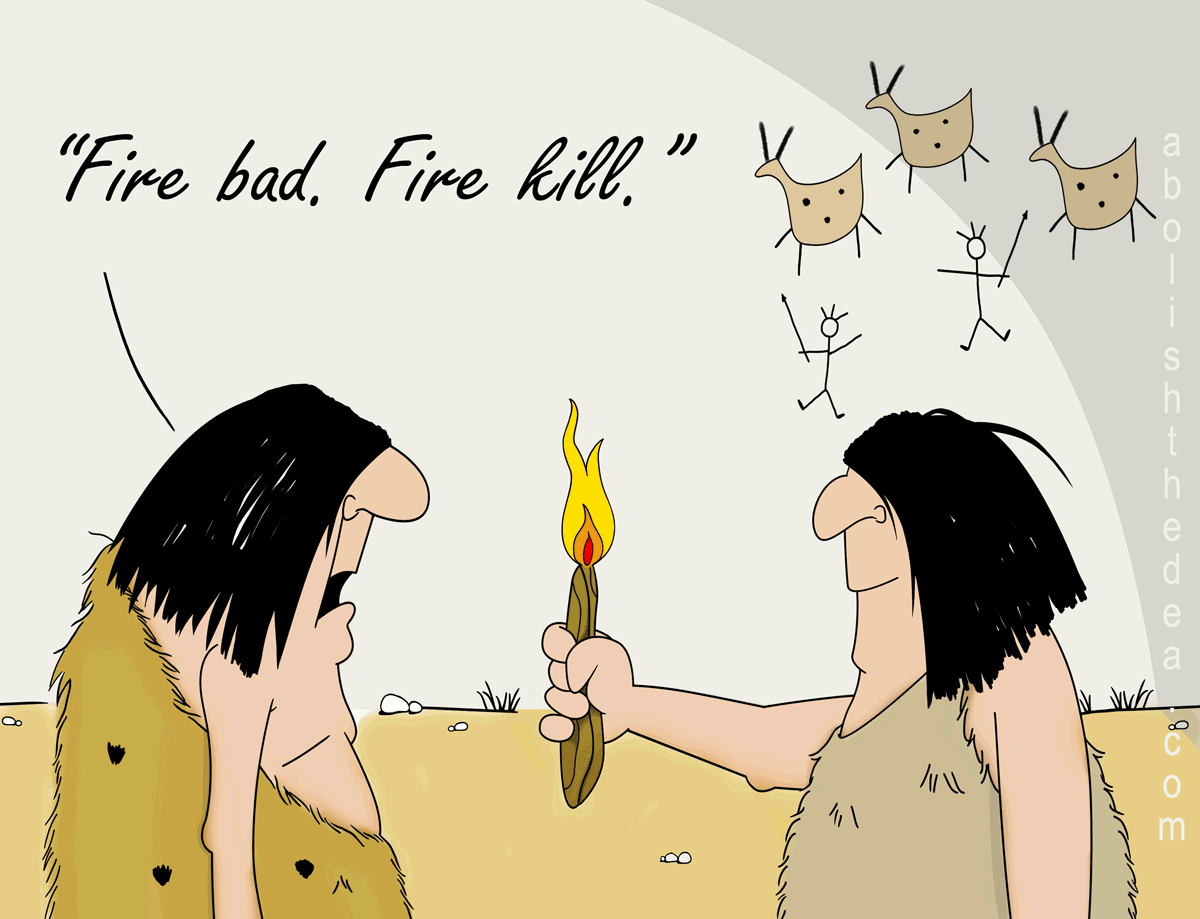
Saying things like 'Fentanyl kills' is philosophically equivalent to saying 'Fire bad'. Both statements would have us fear dangerous substances rather than to learn how to use them wisely for the benefit of human beings.
Bill Clinton's attitude 7 , for instance, seems to have been the following: If the prohibition of cocaine could save his brother Roger from himself, then who cares about the hundreds of millions of depressed who will have to go without a panacea and will thereby be shunted off onto Big Pharma drugs that are harder to kick than heroin? 8 Who cares about the young people in inner cities who will be mowed down by the gun violence created by drug prohibition? 9 Who cares about the end of the rule of law in Latin America? 10 Who cares about the abrogation of the Fourth Amendment to the Constitution? 11 Who cares that the police can now confiscate entire estates based on the discovery of one illegal drug on-site -- even if the owner of the property had nothing to do with placing that drug there? 12 Who cares if prohibition throws enough minorities in jail to ensure the election of a fascist? 1314
This is why the Drug War is inherently imperialistic. Americans want to make their own personal world safe by outsourcing despair and death to disempowered communities around the globe. It is crass immorality.
If Bill wanted to save his brother, he would have outlawed liquor and guns -- and hang-gliding and javelin throwing, for that matter. Instead, he hypocritically limited his actions on behalf of his brother to climbing aboard the bandwagon of drug prohibition, that anti-scientific and illogical policy which is based on the following absurd and inhumane algorithm: namely, that a substance that can be misused, even in theory, by a white young person, must not be used by anyone, anywhere, at any dose, for any reason. In other words, drug prohibition represents the outlawing of human progress. And so Americans have been taught since childhood to say silly things like "Fentanyl kills! 15 ", failing to realize that such statements are philosophically equivalent to shouting, "Fire bad!" Such utterances would have us fear dangerous substances rather than to learn how to use them as wisely as possible for humanity.
But these are all issues that I have raised repeatedly in many other essays. My focus today is to reveal yet another downside of prohibition about which almost ALL drug pundits seem to be clueless, and that is the way that drug prohibition has turned psychiatric patients into children. Actually, the situation is worse than that: The medical field CREATED these patients in the first place by demonizing the panacea known as cocaine 161718 -- based on their lopsided focus on the rare human beings who had problems with it. This was exactly as if they had evaluated the utility of alcohol by focusing only on alcoholics. No one asked the depressed how they felt about cocaine. The medical establishment demonized the drug so that THEY could be in charge of curing human sadness, thank us very much! Dollar signs were in their eyes! They were to be the experts in treating depression. Of course, the corollary to this power grab is that the depressed were henceforth to be considered children. And this is exactly what has happened.
I am a 67-year-old "patient" who was shunted off onto a drug that is far harder to kick than heroin -- in fact, a drug that is impossible to kick, but please read my other essays on that topic. 19 I have been using the drug in question for 30 years. You might think that I was old enough now to be trusted to use the drug on my own. But not a bit of it! Every three months, I am required to answer humiliating questions like the following, for the privilege of being allowed to purchase yet another supply of psychiatry's dependence-causing pills:
Do you find it hard to talk about your feelings? Why?
Do you use alcohol to excess?
When was the last time you felt truly happy?
Have you ever ignored your emotions?
Have you considered suicide within the last two weeks?
I want to answer that last question as follows: Yes, I consider suicide every time I think of how drug prohibition has turned me into an eternal child! After 30 years of this infantilization, one wants to shout at the psychiatrist: NONE OF YOUR DAMN BUSINESS! If I am to answer such questions for my psychiatrist as a 67-year-old, then the psychiatrist (who is likely half my age) should be required to answer them for me as well. Does HE or SHE find it hard to talk about feelings? Does HE or SHE use alcohol to excess? Does HE or SHE ignore emotions? When was the last time that my psychiatrist felt truly happy? Was it, perhaps, the last time they were lording it over their infantilized patient?
I do not want to hate psychiatrists, so I have pledged not to bottle up my resentment. I have therefore been letting these people know up front that I want to be treated like an adult. I have been amazed to see, however, that this honesty on my part is typically met with a blank stare. Psychiatrists have clearly gotten used to treating their clients as "patients" -- and patients are children when it comes to psychiatry. Why? Because drug law requires it! Drug law stipulates that I must be seen every three months -- to guarantee that I can still "handle" the drugs -- despite my 30 years' of experience in doing just that. My age and my experience count for nothing. True, they say that my blood pressure may become problematic, and/or my weight. But God in heaven, I can take my own damn blood pressure and I can calculate my own damn weight! I am not a child!
Now, maybe, the reader can see why I am so impatient with almost all Drug War pundits, for even the best of them fail to recognize downsides of this kind! They seem to think that the only stakeholders are our poor little white children who may misuse drugs, the precious babes! This is why I published this site, in the hope that someday a freedom-loving people will take up these arguments and run with them.
It amazes me that nobody sees my situation as a problem. A 67-year-old man is required to be a child when it comes to drugs, and no one sees that as a problem. Surely, that fact is a huge indictment of drug prohibition, which brought about this disempowerment in the first place by outlawing time-honored godsends like cocaine. But then to admit that would be to admit that drug prohibition is wrong, and brainwashed Americans clearly have a prior commitment to the drug-demonizing ideology of substance prohibition.
This is why I do not apologize for the sometimes terse exclamations on this website. If I am unfair in any given case, I will attempt to eventually backtrack and qualify my statements as necessary, but I am not going to apologize for being furious about a hateful status quo just because almost everyone else in America has been rendered blind to it by lifelong brainwashing.
Any self-respecting mycologist should denounce the criminalization of mushrooms.
Two of the biggest promoters of the psychedelic renaissance shuffle their feet when you ask them about substance prohibition. Michael Pollan and Rick Strassman just don't get it: prohibition kills.
"Like Christians burning mosques and temples to spread the word of Jesus, modem drugabuseologists burn crops to spread the use of alcohol." -- Ceremonial Chemistry, p. 48
One merely has to look at any issue of Psychology Today to see articles in which the author reckons without the Drug War, in which they pretend that banned substances do not exist and so fail to incorporate any topic-related insights that might otherwise come from user reports.
If religious liberty existed, we would be able to use the inspiring phenethylamines created by Alexander Shulgin in the same way and for the same reasons as the Vedic people of India used soma.
There's a run of addiction movies out there, like "Craving!" wherein they actually personify addiction as a screaming skeleton. Funny, drug warriors never call for a Manhattan Project to end addiction. Addiction is their golden goose.
So he writes about the mindset of the deeply depressed, reifying the condition as if it were some great "type" inevitably to be encountered in humanity. No. It's the "type" to be found in a post-Christian society that has turned up its scientific nose at psychoactive medicine.
Had we really wanted to "help" users, we would have used the endless godsends of Mother Nature and related synthetics to provide spirit-lifting alternatives to problem use. But no one wanted to treat users as normal humans. They wanted to pathologize and moralize their use.
Being a lifetime patient is not the issue: that could make perfect sense in certain cases. But if I am to be "using" for life, I demand the drug of MY CHOICE, not that of Big Pharma and mainstream psychiatry, who are dogmatically deaf to the benefits of hated substances.
Researchers say that the New York Times has been flooding the world with Drug War agitprop.
Unless otherwise indicated, no AI is used in the creation of site content. These essays represent the original ideas of their author and not the ideas that the author SHOULD have based on an algorithmic parsing of existing data. For more on this subject, consider the AI-related viewpoints to which the author subscribes as delineated in the New York Times opinion piece entitled "What 370,000 College Essays Tell Us About A.I.’s Effects on Creativity" by Rebecca Winthrop of the Brookings Institution.