






Homepage of the Drug War Philosopher, Brian Quass
blog icon orange rss icon with stylized radio waves bird icon for twitter bird icon for twitter substack icon


back navigation arrow forward navigation arrow


Legalizing Opiates

Some Thoughts about the Formal Recommendation for drug policy changes by Harm Reduction Specialists

by Brian Ballard Quass, the Drug War Philosopher

March 14, 2024


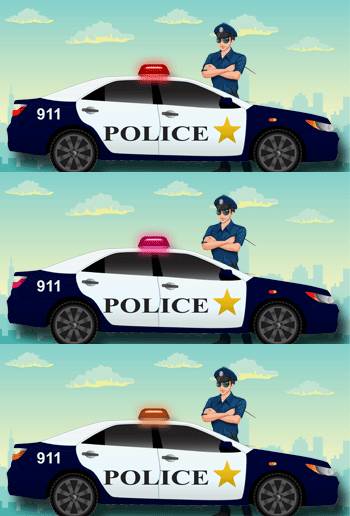
cartoon police officer standing behind police car with flashing red lights
Pull over to the side of the web page!

You're probably wondering why I stopped you? Well, according to Google Analytics, we are getting a lot of bouncers at this web address and so we've launched a campaign to crack down on such traffic. Yes, of course, you have a right to bounce away from any page that you like, or that you don't like for that matter, but you might at least stop and listen to what you're going to miss by doing so.

This page makes some great points, after all. Of course, if you think you already know all this stuff, fine, but the least you can do is check out our discussion questions at the bottom of this page to make sure that you truly have the requisite understanding.

Now then, how about I check your car for drugs? You glove compartment, maybe? How about your trunk -- or boot, as the Brits would have it. I want to make sure that you are not using any godsend medicines from the Inca, for instance. I mean, Coca-Cola may have the legal right to use the coca leaf, but mere mortals like you can be slammed in the pokey for having truck with that naughty plant.

What's that, I can't search your car for drugs? Oh, so then you have something to HIDE, do you?

I'm just playing with ya, dude! Oh, I love my job in the age of drug prohibition! I just love making people squirm!

The Essay proper

man straightening bowtie for his tuxedo

For some specific ideas on creating safe supply for opiates, check out this Formal Recommendation from Harm Reduction Specialists of Philadelphia, PA.

I agree with the plan1 entirely. I love the idea of the economic impact that legalization would have on neighborhoods previously penalized by drug laws. But I do have a few caveats. These are not so much criticisms as they are "riffs" on the various topics broached in the document.

1) This document is presented as a strategy in "harm reduction," which is understandable given the current accepted narrative, according to which there is no rational reason for "drug use." Therefore we have to have harm reduction strategies in place to help save users from at least the worst possible consequences of their bad decisions2. This, of course, represents a Christian Science attitude toward drug use, however; therefore I hope that we can eventually transcend this way of framing the situation and begin talking about "benefit creation" of drug use, for drug use can actually have benefits, despite the fact that we have been indoctrinated since grade school to believe the opposite. As William Brereton notes in "The Truth About Opium,"3 nightly smokers of the drug have long lives, steady jobs, and they do not beat their wives. These are benefits.

2) This brings up a corollary issue: the document also calls for educating children in non-use. Now, that's fine if we are talking about non-use by children, but I do not think that our goal should be to make sure that children grow up as abstainers. It's one thing to worry about the safety of kids; it's another to impose our philosophical and religious principles upon those kids as adults. The fact is that smoking opium can be done safely, despite the endless lies of the Drug Warrior, and that such use does have benefits, of a poetic and temperamental kind -- real benefits -- especially when compared to the opiate derivatives which were created in response to the outlawing of opium. Moreover, we are a society in which 25% of American women take one or more Big Pharma 4 5 meds every day of their life6. It is strange that we should think that this is fine -- indeed it is their medical duty -- while yet telling them to keep away from opium, a drug that medical men from Avicenna to Galen to Paracelsus considered to be a panacea.

3) I am also leery of the "prescription requirements for higher potency opioids," which essentially means the continued criminalization of the same. I think the take-home message of America's drug problems is that criminalization is the problem, so I see no need for this exception. This does not mean that we need to make higher potency opioids available on every street corner, but we need to finally learn the lesson that prohibition causes far more problems than it solves -- and so such an exception to the idea of legalization is going to have its own downsides, downsides that we never seem to take into account when we make such caveats.

4) This leads naturally to my next concern, that we have to consciously start thinking of all the many Drug War DOWNSIDES whenever we contemplate the subject of legalization 7 versus criminalization. We cannot simply calculate the number of white American kids whom we think will or will not be "saved" by our drug laws: we must also think of the many stakeholders that we always seem to ignore. Our current opioid policy has had a ruinous effect on healthcare in India, where most hospitals no longer carry morphine 8 . Why? Because fearmongers in the States have so demonized such drugs that hospitals have been burdened with red tape and expenses whenever they wish to use them. And so we ignore the needs of pain patients around the world when we outlaw drugs in the states9. Other stakeholders include the artists who would like to benefit from opiate insights. Another stakeholder is the philosopher, whom William James himself told us should investigate altered states. In other words, when we criminalize drugs, we think that we're just "saving junior," whereas we are actually inflicting pain and censorship on the rest of the world. But, alas, in Congress, no one can hear them scream.

5) By the way, punishing people for using drugs should be recognized as the non-sequitur that it is. We may as well harass people and remove them from the workforce for failing to follow a government approved diet.

6) We also need to limit employee drug testing 10 to the goal of finding impairment, rather than it being a fishing expedition in search of demonized substances. It will do little good to legalize opiates if we continue to deny people jobs for actually using opiates.

7) One of the best ways to stop UNNECESSARY or FRIVOLOUS use of opiates would be by providing alternatives, and so we should legalize drugs like MDMA 11 and laughing gas 12 as part of our opiate program. For if opiates are the only way available for people to achieve self-transcendence in life, we should not be surprised if a lot of those people choose opiates.


Kindly old cartoon professor, looking like Albert Einstein, points at blackboard featuring the words 'Drug War 101'.
Discuss the issues raised in this essay about the hateful policy of drug prohibition.


1) Explain why prohibition is the problem and not drugs.

2) Explain why saying "Fentanyl kills" is the philosophical equivalent of saying "Fire Bad".

3) Everybody wants to judge drugs out of context and come up with their own list of substances that we should outlaw. Harm Reduction folk have less items than most on their list, but they have still fallen for the idea that we must use prohibition for some substances. Americans have to learn that prohibition is the problem, not drugs. Societies from the caveman days to the 20th century have survived without telling people which substances they can ingest. It is amazing that the one country founded on individual freedom should be the first country to insist that we change that status quo all over the world -- and so in our attempt to save a relative handful of young white Americans, we throw the freedom and healthcare of every other citizen of the planet under the bus. Explain.

4) Cocaine could end the chronic depression of millions in a trice -- as Sigmund Freud well knew -- but self-interested doctors demonized the drug based on rare misuse, never even asking the depressed what they thought about the drug. The medical industry is a beneficiary of drug prohibition and apparently likes it, given its refusal to protest the policy on behalf of the millions that it turns into wards of the healthcare state. Explain. Discuss. Protest. Make this point of view known so that I am not the only person on the damned planet who even recognizes these issues.


Notes for essay entitled Legalizing Opiates: Some Thoughts about the Formal Recommendation for drug policy changes by Harm Reduction Specialists:

1: Formal Recommendation My Safe Supply: Harm Reduction Specialists, Philadelphia, PA, 2024 (up)
2: I do not mean to suggest that Harm Reduction Specialists holds these views, merely that these views are the accepted narrative about drug use. (up)
3: The Truth About Opium by William H. Brereton DWP (up)
4: Seife, Charles. 2012. “Is Drug Research Trustworthy?” Scientific American 307 (6): 56–63. https://doi.org/10.1038/scientificamerican1212-56. (up)
5: LaMattina, John. n.d. “Why Is Biopharma Paying 75% of the FDA’s Drug Division Budget?” Forbes. https://www.forbes.com/sites/johnlamattina/2022/09/22/why-is-biopharma-paying-75-of-the-fdas-drug-division-budget/. (up)
6: Speaking Truth to Big Pharma DWP (up)
7: “National Coalition for Drug Legalization.” n.d. National Coalition for Drug Legalization. https://www.nationalcoalitionfordruglegalization.org/. (up)
8: Three takeaway lessons from the use of morphine by William Halsted, co-founder of Johns Hopkins Medical School DWP (up)
9: Children of the Drug War: Perspectives on the Impact of Drug Policies on Young People Barrett, Damon, IDEBATE Press, 2011 (up)
10: Drug Testing and the Christian Science Inquisition DWP (up)
11: How the Drug War killed Leah Betts DWP (up)
12: Forbes Magazine's Laughable Article about Nitrous Oxide DWP (up)


read more essays here


Ten Tweets

against the hateful war on US


Folks like Sabet accuse folks like myself of ignoring the "facts." No, it is Sabet who is ignoring the facts -- facts about dangerous horses and free climbing. He's also ignoring all the downsides of prohibition, whose laws lead to the election of tyrants.

Americans love to blame drugs for all their problems. Young people were not dying in the streets when opiates were legal. The prohibition mindset is the problem, not drugs.

Many psychonauts (like Terence McKenna) praise psychedelics while demonizing other psychoactive substances. No substance is bad in itself. All substances have some use at some dose for some reason for some people in some circumstance.

"All these anti-opium articles... are based upon the same model. They assume certain statements as existing and acknowledged facts which have never been proved to be such, and then proceed to draw deductions from those alleged facts." --William Brereton

The U.S. government created violence out of whole cloth in America's inner cities with drug prohibition -- and now it is using that violence as an excuse to kick the people that they themselves have knocked down.

"Just ONE HORSE took the life of my daughter." This message brought to you by the Partnership for a Death Free America.

"If England [were to] revert to pre-war conditions, when any responsible person, by signing his name in a book, could buy drugs at a fair profit on cost price... the whole underground traffic would disappear like a bad dream." -- Aleister Crowley

The Drug War brought guns to the "hoods," thereby incentivizing violence in the name of enormous profits. Any site featuring victims of gun violence should therefore be rebranded as a site featuring victims of the drug war.

The term "hard" is just our modern term for the kinds of drugs that doctors of yore used to call panaceas

The drug war tells us that certain drugs have no potential uses and then turns that into a self-fulfilling prophecy by outlawing these drugs. This is insanely anti-scientific and anti-progress. We should never give up on looking for positive uses for ANY substance.


Click here to see All Tweets against the hateful War on Us


back navigation arrow forward navigation arrow
Book Cover

Break the ice with a sledgehammer: place this book on your coffee table.

This book features 150 annotated images, designed to force brainwashed Americans to confront the fact that drug prohibition is wrong. Here is what author Richard Parrish II says of the book's compiler: "The drug prohibition philosopher provides first-hand, principled, persuasive, and insightful arguments against the current drug prohibition regime..."

Purchase Your Copy
Book Cover

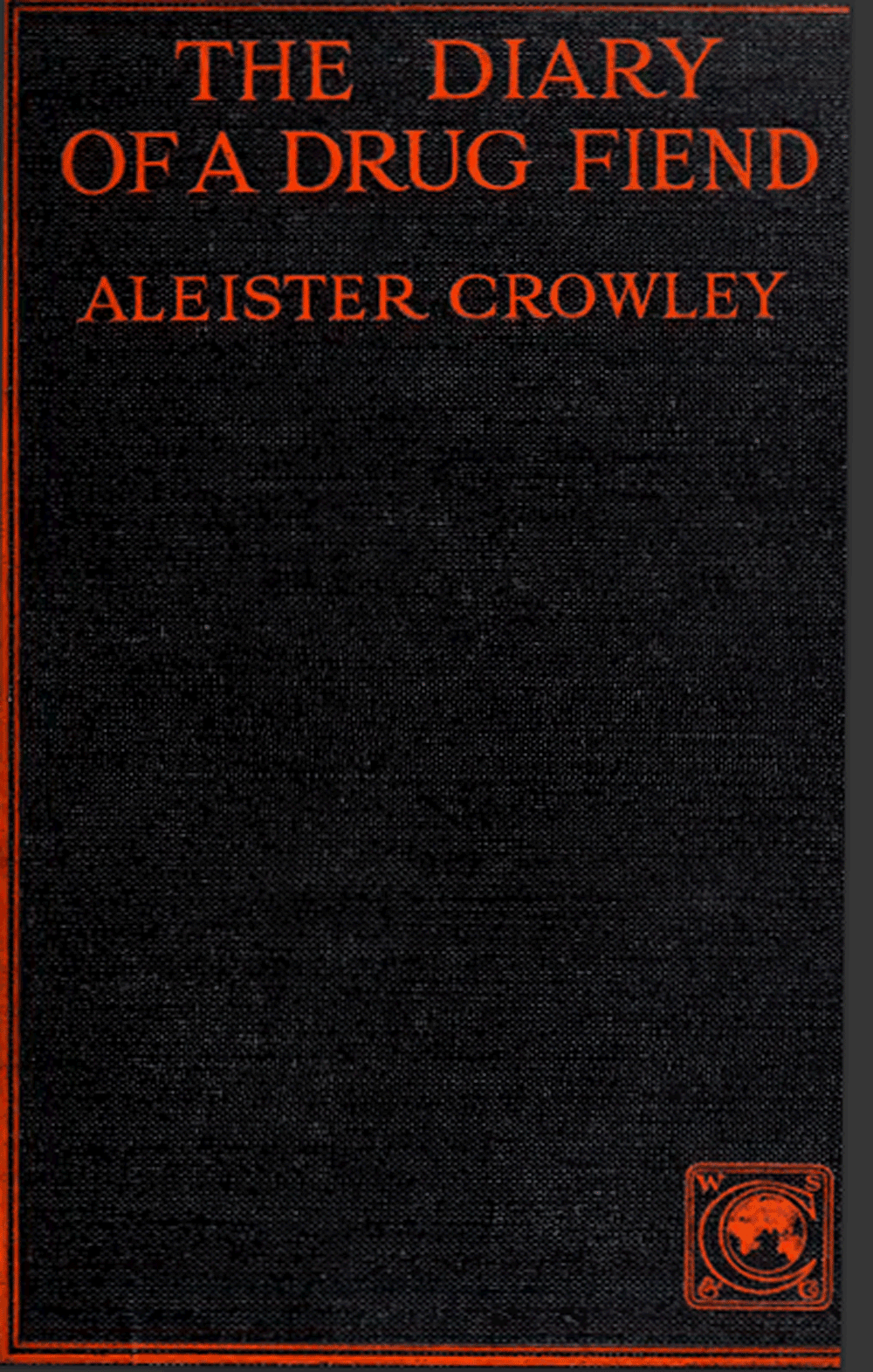
Diary of a Drug Fiend

This is the only full-cast recording of Aleister Crowley's 1922 classic paeon to common sense. It is the first book -- and so far almost the only book -- to stake out a philosophy of drug use that is compatible with human freedom, one in which we learn to use drugs as wisely as possible for the benefit of humanity. This recording was produced by the Drug War Philosopher and your purchases help support his effort to push back against the tragically counterproductive policy of drug prohibition, in the name of human freedom and of humanity's right to heal.

Purchase Your Copy


No cookies, no ads paid for by amoral and immoral billionaires (or trillionaires).


Unless otherwise indicated, no AI is used in the creation of site content. These essays represent the original ideas of their author and not the ideas that the author SHOULD have based on an algorithmic parsing of existing data. For more on this subject, consider the AI-related viewpoints to which the author subscribes as delineated in the New York Times opinion piece entitled "What 370,000 College Essays Tell Us About A.I.’s Effects on Creativity" by Rebecca Winthrop of the Brookings Institution.

The Partnership for a Death Free America is a proud sponsor of The Drug War Philosopher website @ abolishthedea.com.


Copyright 2026, Brian Ballard Quass Contact: quass@quass.com

tombstone for American Democracy, 1776-2024, RIP (up)

