




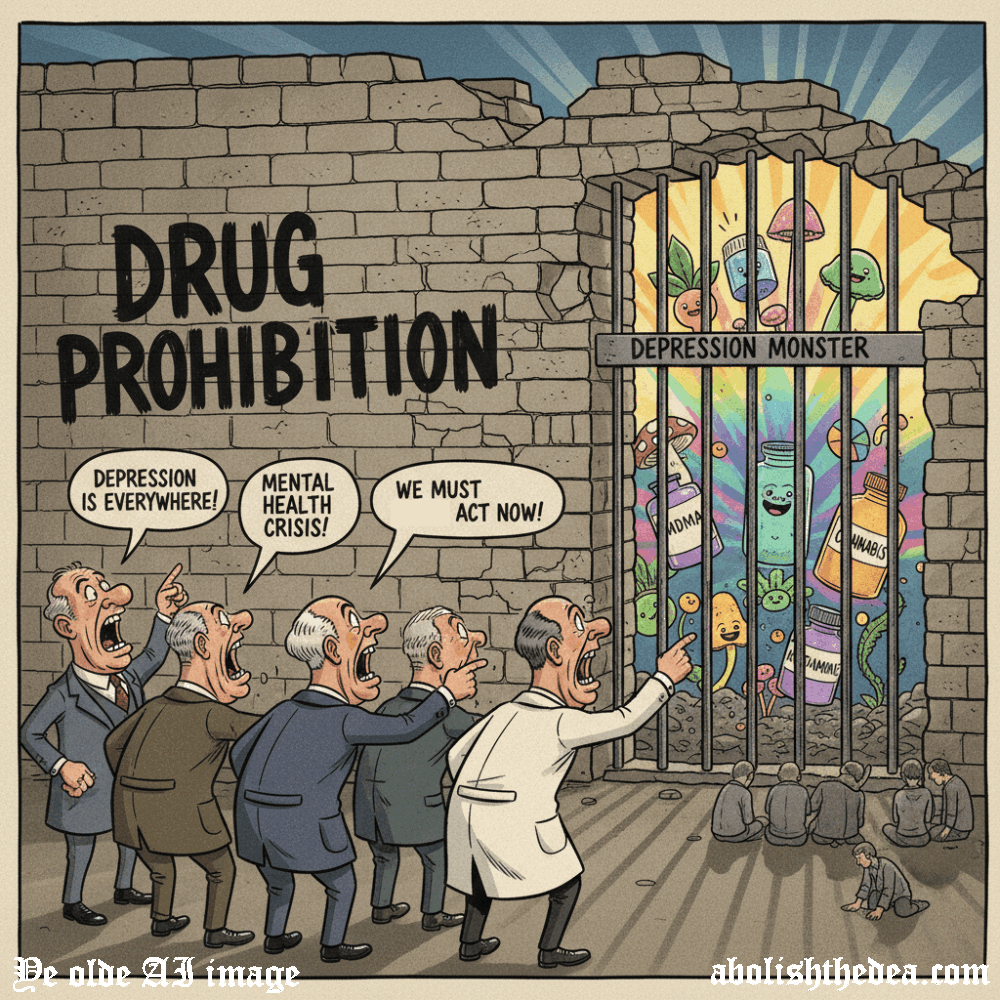
Why Mad in America is not mad enough when it comes to the disempowerment of the depressed in Drug War America
by Brian Ballard Quass, the Drug War Philosopher
June 26, 2026
If I had a little more guts and a lot more money, I would have named my Substack "Madder in America," to succinctly express my frustration with organizations like "Mad in America" 1 which purport to speak for me as a depressed patient. The "Mad in America" website and organization, for those who may not know, was created by reporter Robert Whitaker, author of the eponymous 2010 bestseller, "to serve as a catalyst for rethinking psychiatric care in the United States (and abroad)." Or so says the non-profit's mission statement. A close look at their website, however, reveals that Robert and his group of "experts" on my depression actually have definite limits to the kinds of rethinking that they are prepared to catalyze. A more honest mission statement would read: "to serve as a catalyst for rethinking psychiatric care in the United States (and abroad) in ways that do not question the status quo according to which all uplifting drugs have been outlawed and self-interested academics and doctors have been dubbed the experts on the minds and moods of strangers."
The actual mission statement goes on to affirm that: "We believe that the current drug-based paradigm of care has failed our society, and that scientific research, as well as the lived experience of those who have been diagnosed with a psychiatric disorder, calls for profound change." Yes, but not TOO much change, apparently. A more honest mission statement would warn the reader that this "lived experience" counts for nothing if the pathologized individual fails to believe in two doctrines that Robert takes for granted: that outlawed substances have no obvious uses for the depressed and that doctors, academics and bestselling authors are the experts on what the depressed really need in order to live full and meaningful lives.
As a 67-year-old depressive who has been on antidepressants for over 45 years, you might think that I would be one of the grizzled old experts to whom Robert and his highly credentialed academics would defer if not positively genuflect, and yet MIA refuses to publish either my first-person life story or my essays on the all-too-timely topic of "assisted suicide for the depressed." 23 So much for my "lived experience." Their reason for banning me basically amounts to this: that they believe that talking honestly about drugs is the same thing as giving medical advice. And so, what is MY "lived experience"? My lived experience is that everyone -- from those who write Google algorithms 4 to Robert himself -- are basically telling me to shut up and take my meds, if not in a literal sense, then in the sense of listening to my betters when it comes to what I "really" need as a depressed human being.
And to whom should we be turning for medical advice? Why, the very doctors who got us started on dependence-causing meds in the first place. Of course MIA is trying to replace those doctors with new Christian Science doctors, but with all due respect to these highly credentialed do-gooders, the depressed do not need doctors of any kind, nor sermons about the joys of a hypocritically defined "sobriety." Their needs are far more simple: they simply require the re-legalization of Mother Nature's bounty, which, as Colleen Cowles reminds us in "War On Us," 5 was never justifiably taken from them in the first place, as nothing in the U.S. Constitution can be read to sanction such an enormous and unprecedented power grab by government.
Robert's entire organization would not exist if the depressed were simply allowed to use medicines that grow at their feet. Besides, the problem with the case of the chronically depressed Claire Brosseau is that no one is brave enough to GIVE her honest medical advice. Claire is on a campaign to qualify for state-assisted suicide in Canada, yet none of the principals and pundits in her case -- not Claire's psychiatrists, not Claire's Libertarian supporters, not even medical ethicists at our most prestigious thinktanks -- will point out that there are a vast array of outlawed substances whose wise and strategic use could make Claire wish to live! Anyone who denies that fact is simply not familiar with 21st-century pharmacology, ethnobotany -- or even with psychological common sense, for that matter. Even in the bizarre event that we could find nothing in a free world that "worked" for Claire according to her definition of that term, we could certainly boost her mood to the point that we would be justified in demanding that she "buck up" like the rest of us and cease championing a "right" whose legal establishment would set an insidious precedent for depressed human beings around the world.
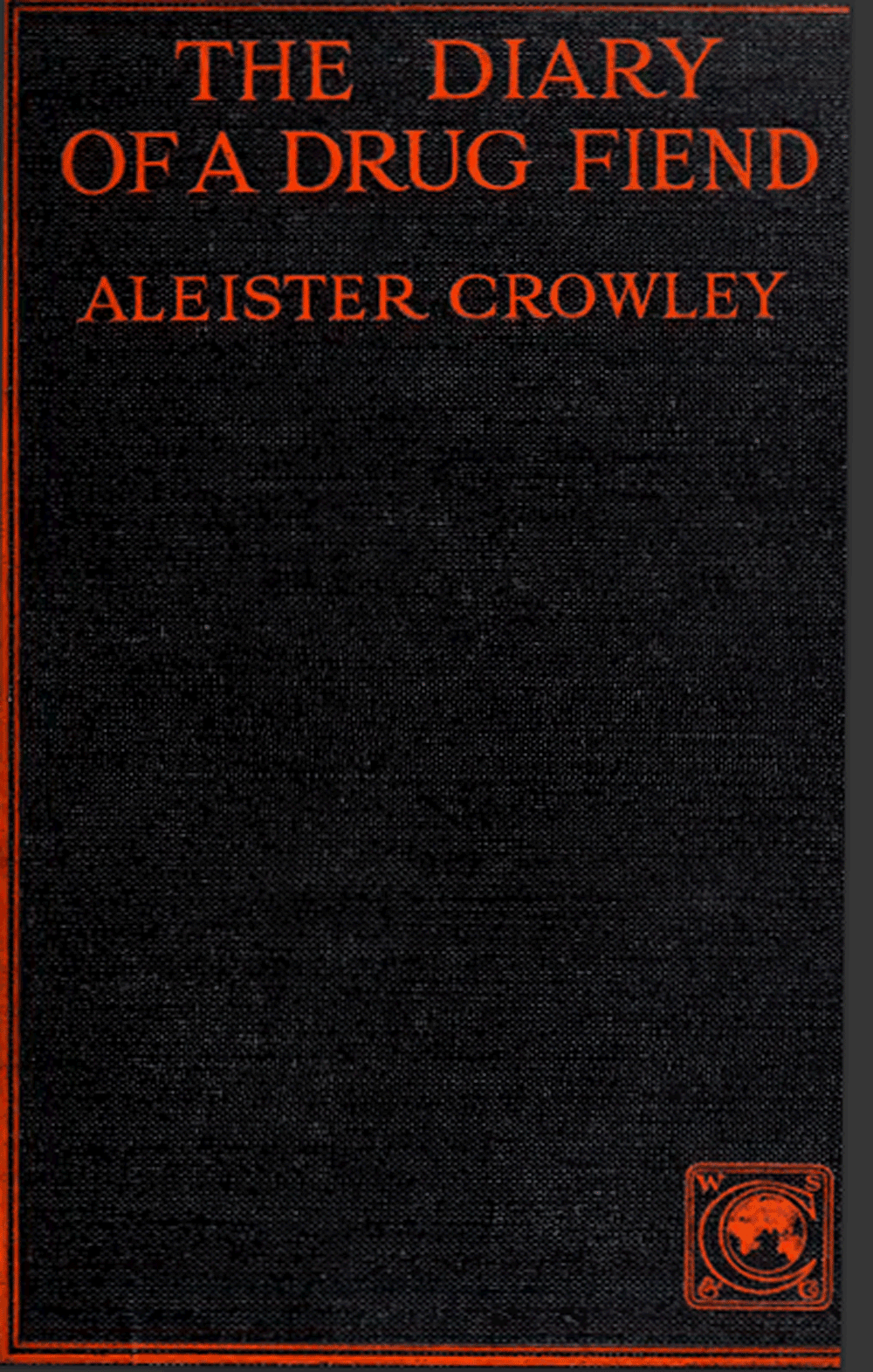
Of course, I would be on shaky legal ground were I to name my Substack "Madder in America," but the risk of a lawsuit would be well worth it. In fact, a lawsuit would be to my benefit, were I only rich enough to afford it. It would give me a public forum in which to dispute Robert's seeming "ownership" of the one politically acceptable niche for pushing back against the complete medicalization of human behavior, a niche that purports to speak for the depressed who have been disempowered by the psychiatric pill mill and its expensive, underperforming and mendaciously promoted "meds." For I could prove that I am literally Madder in America than is Robert Whitaker, that the Mad in America community is not mad enough because they, like all groups that purport to help the depressed, ignore the way that drug prohibition has outlawed our right to heal. Otherwise they would be pointing out the inconvenient truth that drug prohibition has outlawed all naturally occurring medicines that could cheer me up in a trice and so render Robert's whole organization completely irrelevant. As Aleister Crowley wrote of his first use of cocaine:
The depression lifted from my mind like the sun coming out of the clouds. 6
Aleister Crowley -- The Diary of a Drug Fiend
In employing such quotes, I must remember that most Americans have a kind of PTSD when it comes to drug honesty. The minute one speaks common sense about drugs, most Americans will have flashbacks to their childhood when they were bribed with teddy bears and merit badges for "just saying no" to Mother Nature's psychoactive medicines; they will have flashbacks to all the throwaway drug-bashing lines that they have heard in their life in movies and sitcoms (some of them written by the White House itself 7); they will have flashbacks to the defeatist mantra of the Drug Warrior that has been instilled in them in countless ways since infancy, that we are all children when it comes to drugs and that we never will be able to use them wisely for the benefit of humanity. They may even have a sort of "negative flashback," when they recall, so to speak, all the documentaries and newspaper articles that they have NOT seen in their lifetime about the wise and beneficial use of poppies8, the wise and beneficial use of coca9, the wise and beneficial use of huachuma cactus10, the wise and beneficial use of peyote11, the wise and beneficial use of phenethylamines12, the wise and beneficial use of tryptamines13, and even the wise and beneficial use of nitrous oxide 1415 (the substance whose use changed William James' mind about the nature of human consciousness and of reality writ large).
WARNING: Teachers must learn to recognize the signs of PPSD, Post Propaganda Stress Disorder. After adducing politically incorrect quotes like the above in a classroom in the age of drug-bashing sensitivities, the prudent teacher will look around the room for signs of hyperventilation, rush deskside to the most flagrantly affected students, pat them on their no-doubt tense shoulders and remind them that the world will not come to an end merely because we are being honest about drugs.
I believe that the bias of Mad in America against Mother Nature's plant medicines (i.e., drugs) is clear given the fact that they will not even publish my "lived experience" as a med-dependent patient. Yet if the reader desire more proof of that bias, they have only to run their mouse cursor over the heading of "Drugs" at the top of the MIA homepage 16. They will find that the "drugs" to which that heading refers are all pharmaceutical drugs. When constructing this website, the organization's founders clearly took it as an article of faith that outlawed medicines have no potential uses for the depressed. Of course, it might be argued that they were just being practical: that they knew that all drugs that actually "work" in any way have been outlawed and so there was no need to even mention them. But by remaining silent about such drugs, Robert's organization is helping to normalize the disempowering policy of drug prohibition. The best we can say of the founders, then, is that they were creating their organization based on Christian Science presuppositions about what constitutes the good life, that they were not in fact simply protesting the problems with Big Pharma meds for the depressed, but that they were really protesting the use of drugs of all kinds whatsoever -- except, perhaps, for a rare subset of drugs that have been proven (after meticulous and expensive trials involving well-credentialed scientists) to work to the satisfaction of reductive materialism -- or in other words, drugs whose efficacy is determined, not by their actual effects in the real world, but by how their molecules are seen to behave when viewed under a microscope.
After Robert and his team elected not to publish my article about the case of Claire Brosseau and the fact that no one was noticing its obvious connection with the choice-limiting effects of drug prohibition, Robert and I got into a bit of a shouting match via email. Neither of us employed the argumentum ad hominem, I'm pleased to report, but I concluded my part of the harangue by telling Robert that I did not object to his disagreeing with me. Everybody does. What I objected to was the fact that he was basically declaring victory in our debate insofar as he was keeping it off-line. Rather than starting an online debate on these topics from which his depressed followers might have learned something, he was basically going to pretend that my ideas on the subject did not even exist, and that in my case, my 45-plus-years of "lived experience" as a med-dependent patient and the ideas derived therefrom counted for nothing.
This is why I believe that I could have won any suppositious lawsuit brought about by my use of the name "Madder in America" for my Substack. If the matter had gone to court, I could have convinced the judge that I was "Madder in America" than Robert was, and with good reason, when it comes to the unprecedented disempowerment of med-dependent depressed "patients" in the age of drug prohibition.
The addiction gene should be called the prohibition gene: it renders one vulnerable to prohibition lies and limitations: like the lack of safe supply, the lack of choices, and the lack of information. We should pathologize the prohibitionists, not their victims.
I knew all along that Measure 110 in Oregon was going to be blamed for the problems that the drug war causes. Drug warriors never take responsibility, despite all the blood that they have on their hands.
How would we even KNOW that outlawed drugs have no positive uses? We first have to incorporate them in a sane, empathic and creative way to find that out, and the drug war makes such a sensible approach absolutely impossible.
The DEA outlawed MDMA in 1985, thereby depriving soldiers of a godsend treatment for PTSD. Apparently, the DEA staff slept well at night in the early 2000s as American soldiers were having their lives destroyed by IEDs.
There would be almost no relapses for those trying to get off drugs if all drugs were legal. Then we could use a vast variety of drugs to get us through those few hours of late-night angst that are the bane of the recidivist.
If we can go overseas to burn poppy plants, then Islamic countries should be free to come to the United States to burn our grape vines.
The Hindu religion was created thanks to the use of a drug that inspired and elated. It is therefore a crime against religious liberty to outlaw substances that inspire and elate.
If there were no other problem with antidepressants, they would be wrong for the simple reason that they make a user dependent for life -- not as a bug (as in drugs like opium) but rather as a feature: that's how they "work," by being administered daily for a lifetime.
Prohibitionists will me that we're all children when it comes to drugs, and can never -- but never -- use them wisely. That's like saying that we could never ride horses wisely. Or mountain climb. Or skateboard.
The drug war has created a whole film genre with the same tired plots: drug-dealing scumbags and their dupes being put in their place by the white Anglo-Saxon establishment, which has nothing but contempt for altered states.
Unless otherwise indicated, no AI is used in the creation of site content. These essays represent the original ideas of their author and not the ideas that the author SHOULD have based on an algorithmic parsing of existing data. For more on this subject, consider the AI-related viewpoints to which the author subscribes as delineated in the New York Times opinion piece entitled "What 370,000 College Essays Tell Us About A.I.’s Effects on Creativity" by Rebecca Winthrop of the Brookings Institution.