









 Daily opium use is no more outrageous than daily antidepressant use. In fact, it's less outrageous. It's a time-honored practice and can be stopped with a little effort and ingenuity, whereas it is almost impossible to get off some antidepressants because they alter brain chemistry.
"The Oprah Winfrey Fallacy": the idea that a statistically insignificant number of cases constitutes a crisis, provided ONLY that the villain of the piece is something that racist politicians have demonized as a "drug."
In a sane world, we would learn to strategically fight drugs with drugs.
Scientists hold holistically working drugs to reductionist standards, thereby practicing a sort of pharmacological colonialsm.
The Drug War is a religion. The "addict" is a sinner who has to come home to the true faith of Christian Science. In reality, neither physical nor psychological addiction need be a problem if all drugs were legal and we used them creatively to counter problematic use.
The FDA says that MindMed's LSD drug works. But this is the agency that has not been able to decide for decades now if coca "works," or if laughing gas "works." It's not just science going on at the FDA, it's materialist presuppositions about what constitutes evidence.
The New York Times gets it wrong again. Yes, kratom, like all drugs, has downsides. The problem is not kratom, it's drug prohibition which limits choice. Nor are young people the only stakeholders in the debate, as the Times always assumes.
Two of the biggest promoters of the psychedelic renaissance shuffle their feet when you ask them about substance prohibition. Michael Pollan and Rick Strassman just don't get it: prohibition kills.
When psychiatrists write about heroin, they characterize dependency as enslavement. When they write about antidepressants, they characterize dependency as a medical duty.
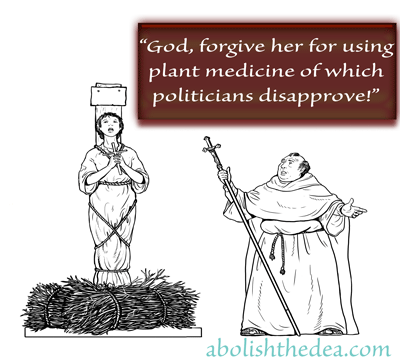
"My faith votes and strives to outlaw religions that use substances of which politicians disapprove."
Daily opium use is no more outrageous than daily antidepressant use. In fact, it's less outrageous. It's a time-honored practice and can be stopped with a little effort and ingenuity, whereas it is almost impossible to get off some antidepressants because they alter brain chemistry.
"The Oprah Winfrey Fallacy": the idea that a statistically insignificant number of cases constitutes a crisis, provided ONLY that the villain of the piece is something that racist politicians have demonized as a "drug."
In a sane world, we would learn to strategically fight drugs with drugs.
Scientists hold holistically working drugs to reductionist standards, thereby practicing a sort of pharmacological colonialsm.
The Drug War is a religion. The "addict" is a sinner who has to come home to the true faith of Christian Science. In reality, neither physical nor psychological addiction need be a problem if all drugs were legal and we used them creatively to counter problematic use.
The FDA says that MindMed's LSD drug works. But this is the agency that has not been able to decide for decades now if coca "works," or if laughing gas "works." It's not just science going on at the FDA, it's materialist presuppositions about what constitutes evidence.
The New York Times gets it wrong again. Yes, kratom, like all drugs, has downsides. The problem is not kratom, it's drug prohibition which limits choice. Nor are young people the only stakeholders in the debate, as the Times always assumes.
Two of the biggest promoters of the psychedelic renaissance shuffle their feet when you ask them about substance prohibition. Michael Pollan and Rick Strassman just don't get it: prohibition kills.
When psychiatrists write about heroin, they characterize dependency as enslavement. When they write about antidepressants, they characterize dependency as a medical duty.
"My faith votes and strives to outlaw religions that use substances of which politicians disapprove."


 (up)
(up)