




Homepage of the Drug War Philosopher, Brian Quass
blog icon orange rss icon with stylized radio waves bird icon for twitter bird icon for twitter substack icon


back navigation arrow


Prohibition in the United States of Amnesia

If at first you don't succeed, try again and again and again and again and again and again and again and again...

by Brian Ballard Quass, the Drug War Philosopher (Substack version)

November 24, 2026


EMCEE: Ladies and gentlemen, the Drug War Philosopher of the United States of America.

DWP: I will make a brief statement, and then I will take your questions. As you know, I have been criticized for my failure to publish stories about the progress currently being made in the approval of psychedelics and MDMA for therapeutic purposes. I wish to point out multiple reasons why I have no interest in dealing with such matters in any detail whatsoever, besides the obvious fact that this is a philosophy website rather than a medical journal. Reason 1. Mother Nature should never have been outlawed in the 1st place1, so I cannot help but resent the idea that anyone should set themselves up as the gatekeeper for my access to Mother Nature's bounty, especially when I know that their grudging approvals of use will come with strings attached. I know that I will be required to pay dearly, both to big pharma and to psychiatrists for the privilege of benefiting from any godsend medicines which are eventually approved for use by scientists. Reason 2. The FDA and its scientists have no expertise when it comes to deciding whether a drug has beneficial uses for me. None. It is impossible for them to do an unbiased cost-benefit analysis of psychoactive drug use. This is because the benefits of drug use are subjective in nature. They can only be hinted at in user reports, such as:

The colors of the market-place, of all the fresh foods, constituted a beautiful mosaic. Nothing practical, simply a real treasure to be used with individual intention and enjoyment. Everything was seen with new eyes, new meanings, faces, figures, the colors of the rainbow subconsciously individually applied. 2


DWP: How do you do a cost-benefit analysis on an experience that is priceless? It is impossible. The outcome of any such analysis will not depend on science at all. It will depend on the values of the individual or organization performing the risk-benefit analysis, on the importance that they place on such things as human transcendence and spiritual healing. This is why it was madness to outlaw psychoactive drugs in the first place. Only God him or herself could advisedly make the kinds of decisions that we have placed in the hands of our materialist scientists. Questions?

REPORTER: Aren't you also concerned that the new focus on psychedelic benefits misses the point, that drug prohibition is the problem, not drugs?

DWP: Exactly. It has been proven over and over again that prohibition causes violence and corruption without cutting down on irresponsible use.

REPORTER: You're no doubt referring to the fact that liquor prohibition was first practiced on a state level before the attempt to inflict it on the country nationwide with the help of billions of dollars from the Rockefellers and Carnegies of the world.

DWP: Correct! It's almost a truism to say that liquor prohibition failed, but what is seldom mentioned is that it failed as a state law first, long before the memory-impaired American people decided to try it on the national level. As Joseph Debar wrote in Prohibition in America:

In 1853, Rhode Island adopted prohibition and for ten years gave it the fairest trial possible. In 1863, the results had been so injurious that the law was repealed. 3


Debar goes on to explain how this pattern was repeated over and over again in state after state: in New York, Connecticut, Maryland, Pennsylvania, Delaware, Ohio, Michigan, Indiana, North Carolina, South Dakota, etc. Each state enacted liquor prohibition, some of them twice, only to revoke it within a generation after growing tired of all the downsides that it brought about. The fact that liquor prohibition was later established on the national level, in spite of this history of failure, shows that Gore Vidal was right. America is indeed the United States of Amnesia.4

REPORTER: And what were those downsides?

DWP: I'm glad you asked. A civil rights pioneer by the name of Lulu Whiteman summed up the downsides as follows in her 1916 pamphlet entitled The Menace of Prohibition:

The testimony is quite overwhelming that prohibition in government corrupts courts, encourages false oaths, intimidates legislators, causes public officials to be double-faced and mercenary, makes sneaks, liars, and hypocrites out of men, increases bribery, opens the way for illegal traffic, and fosters an immoral negligence of law and order. And in addition to all this, it lessens drunkenness not a whit, but, on the contrary, increases intemperance, making it more possible and perhaps more inviting to those unable to curb the appetite.5


DWP: And guess what, people? Every single one of these downsides applies "in spades" to drug prohibition.

REPORTER: Wait a minute. So you're saying that...

DWP: Exactly. America never ended prohibition. To the contrary, it continued it on an epic scale. It just gave a big fat mulligan to the one substance that the policy of prohibition was meant to outlaw in the first place, namely liquor.

REPORTER: Why then do people like Rick Strassman6 7 and Michael Pollan8 9 support drug prohibition to this day, hemming and hawing and, as it were, equivocating every time the subject comes up? Why do they refuse to unequivocally come out and say that they are in favor of drug re-legalization?

DWP: The answer is simple. When Rick and Michael worry about the outcome of re-legalization, they are not worried about the overall effect of re-legalizing drugs. They are smart people, after all. They have to know that a policy of education and substance regulation would drastically cut down on violence and on death from misuse since the USA would then be spending $51 billion a year on educating users rather than arresting them. Cartels would disappear, instead of causing the disappearance of tens of thousands of young people while destroying the rule of law in Latin America. They know this. Their thoughts are elsewhere. They are worried about PR. They are worried about how the biased media will seize upon just one single drug-related death, especially that of a talented young white person, and turn it into a heart-wrenching piece of Drug War agitprop to be aired on prime-time television on such shows as Oprah and 48 Hours, with plenty of personal details about that oh-so-promising youngster who was killed by evil rotten drugs. They know that the New York Times healthcare reporters -- who, given their coverage, clearly know nothing about drugs except what their government tells them -- will do their bit to scapegoat the substance in question, in the hopes of winning a Pulitzer Prize.

In other words, Rick and Michael are worried about appearances, not health. They know the biased media coverage of drug-related incidents would make them look like rats for supporting drug re-legalization, and rats do not get their books on the New York Times Bestseller List. Mind you, I'm being generous here. I'm assuming that these guys are smart enough to recognize the downsides of drug prohibition in their heart of hearts. To be honest, that is not really the impression I get from reading either of them. Strassman, in his latest book, seems to be unaware of the deaths in Mexico, the destruction of inner cities, and the end of democratic freedoms that drug prohibition has brought about. All he sees is a nutty teenager misusing a substance that we refuse to teach him or her about. So I'm really giving Strassman the benefit of the doubt here. Pollan, too, given the fact that he never once mentions the downsides of drug prohibition when he frets over re-legalizing Mother Nature in his far too popular book about changing one's mind. I wish Michael would change his mind and realize that prohibition is and has always been the problem, not drugs.

To be honest, Michael Pollan really burns me up when he makes the following highly hypocritical statement about psychedelics on page 405 of the hardback version of How to Change Your Mind.

Does that mean I think these drugs should simply be legalized? No.10


Oh, I get it. So I should just shut up and take my meds, right, Michael? Michael can use psychedelics because he is a big celebrity writer who goes on national talk shows. We mere mortals have to wait for our doctors to deliver Mother Nature to us in a way that will enrich Big Pharma and keep us from getting a "booboo." Thanks, Daddy. Incidentally, I will never understand how a self-styled botanist can be in favor of outlawing Mother Nature, especially when they know or should know the death that such insane laws end up bringing about. Does Michael not know that prohibition policies have been tried time and time again and failed every single time while bringing about corruption and violence and wholesale death in the process? The Botanical Society of America should give Michael Pollan an honorary membership just so that they can revoke it in disgust.

REPORTER: Harsh.

DWP: I know, I know. But I'm sick and tired of the powers that be telling me in one way or another to shut up and take my meds. I'm still smarting from the fact that Robert Whitaker of Mad in America11 will not even publish my views about drug prohibition, despite the fact that he purports to speak for the depressed. Like all Americans today, he wants to help the depressed, not listen to them, unless they toe the party line, according to which only medical science can tell us if Mother Nature's medicines are good for us to use. It's galling that a reporter should set himself up as the expert on my condition, and then refuse to publish my 40 plus years of first-hand experience, because he insists that scientists know best, that they are the experts on my situation. Insanity. So I have to wait for scientists to decide if I'm allowed to feel better and when. Thanks for nothing, Robert. Or should I say, thanks so much for quote-unquote helping me.

Robert actually thinks that suicide is better than drug use. This follows from the fact that he sees no connection between the discussion of assisted suicide for the depressed and drug prohibition. Either that or he knows nothing about drugs but what his government has told him via our Christian Science media, which refuses to publish stories about drug benefits of any kind.

[pause]

What? Somebody's got to get upset about this injustice, and since I seem to be the only one who even notices it, well, it makes me want to shout, as the Isley brothers would say. Any further questions? I promise I won't bite.

REPORTER: Didn't you just visit a website entitled Psychedelic States of America 12

DWP: Yes, I was attracted thither by a strange headline entitled DEA Boosts Psychedelic Production Quotas for 2027. I actually thought that I was reading a headline from The Onion when I first saw that blurb. That's just how out of touch I am with the ongoing attempts to re-baptize psychedelics as being scientific.

REPORTER: What do you think of that website in particular, the website of Psychedelic States of America?

DWP: Well, I probably should not say anything since I've only glanced at the site once or twice. Let me say, however, that I am leery of all such sites in general, since for me, their focus on the latest scientific findings begs the question: Why have we been such fools as to place decisions about spiritual medicines in the hands of materialist scientists, scientists who pride themselves on being as detached and as dispassionate as possible?

REPORTER: Gotcha.

DWP: Then you are a reporter after my own heart. I wish that more people would, as you say, get me. I will be inspecting the site soon, but I'm worried.

REPORTER: About what?

DWP: I fear that I will be inspired to write a letter to their editors, knowing full well, of course, that they will ignore me as per usual. Who am I, after all? Answer: a ward of the healthcare state who should shut up and take his pills. Because do you know what?

REPORTER: No, I don't.

DWP: I suspect that the party line at PSA is going to be the idea that science "has got this" when it comes to psychedelics, and that is not my idea at all. That conclusion reflects an imperialist mindset, in fact, one that assumes the ontological supremacy of reductive materialism.

REPORTER: Reductive materialism being the idea that parts matter, the smaller the better, and that we don't have to look at people as a whole, let alone as being connected to the entire universe.

DWP: Well, to be fair, no one asked YOU, but that is correct, as it turns out. Materialists are inherently unable to do a fair analysis of drugs that purport to work from an holistic point of view. They are constitutionally incapable of doing so. They wouldn't know a transcendent experience if it walked up and bit them in their pie chart.

REPORTER: Their pie chart?

DWP: Yes, the pie chart. In Scientists, it is located somewhere between the thorax and the chalkboard.

REPORTER: Changing the subject, but wasn't this the week in which you had an epiphany about the outlawing of Mother Nature?

DWP: Oh yes, thanks for reminding me. It occurred to me last night that outlawing Mother Nature is wrong for the same reason that patenting Mother Nature is wrong. Mother Nature belongs to all human beings by dint of their having been born on planet Earth, and so cannot be justifiably taken from us for either monetary or political reasons.

REPORTER: Didn't you also visit a website entitled Psychedelic TLDR this week13?

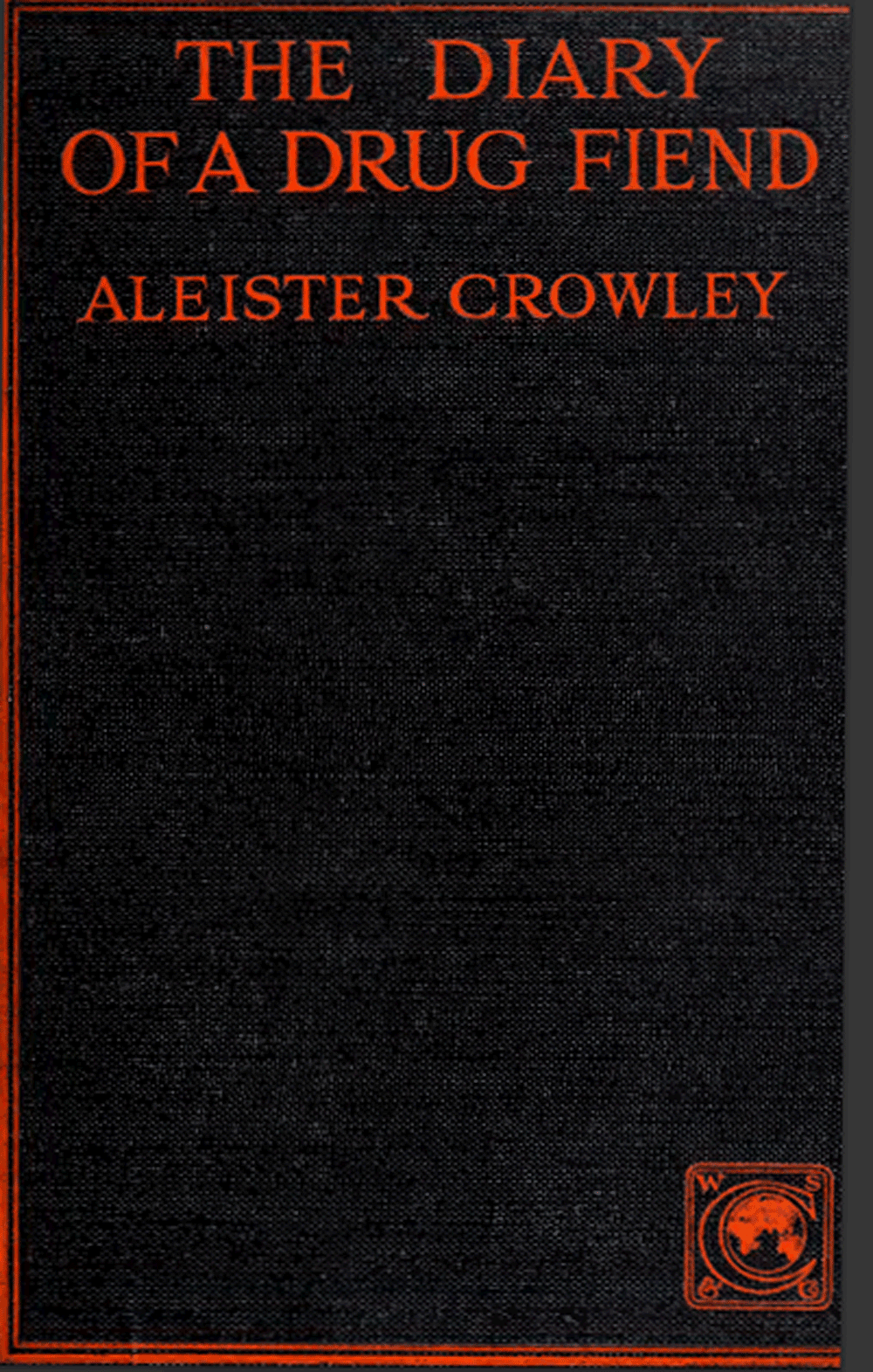
DWP: Yes, indeed. That is another website that focuses on the scientific details of drug reapproval. One of the headlines caught my eye in particular. It read: "No drug has ever been approved for cocaine addiction." Now, cocaine addiction is mainly a psychological thing, as Aleister Crowley pointed out in Diary of a Drug Fiend14 15. It therefore follows that any drug that diverts or calms the mind could help one stay off the drug. This is just another problem with putting scientists in charge of mind and mood medicine. They ignore everything that really matters in life. They ignore psychological common sense, which tells us that motivating substances can be leveraged to produce virtuous circles of behavior. Nor would even daily use of cocaine be wrong in and of itself. That is a Drug War piety with which Freud himself disagreed.16 One in four American women take a big pharma drug every day of their life17. We have no business worrying about daily use, only use that is truly problematic, not just problematic in the eyes of a stealth Christian Scientist or a reductive materialist.

Of course, here's where the medical experts, jealous of their monopoly, will tell me, "Oh, but cocaine would be terrible for this or that person," which is a complete distortion of the whole subject matter. Of course, specific drugs will be contraindicated in various cases, but it is folly and presumptuous to outlaw a substance just because it might be contraindicated in specific cases. This is the problem with the whole attitude of drug prohibition. It encourages us to make judgments about substances in the abstract, which is completely pointless. As if I were to say, "My friend died after using such and such a drug, and therefore no one else should ever use it on pain of arrest." I say nothing here of the non-addictive psychedelics, whose only apparent downside is that they bother people who think it's wrong to improve one's mind. As who should say:

My family has always been plum stupid, before we even set foot in America. Ain't no modern Timothy O'Leary going to help me improve MY mind. Say it loud. I'm dumb and I'm proud!


REPORTER: So, let me get this straight. You're saying that common sense tells us that one could keep their mind off of cocaine with the wise and strategic use of a wide variety of other substances. A wide variety of other substances that racist politicians do not even want us to know about. A wide variety of other substances that can inspire and elate and even give us new ways of looking at the world.

DWP: I call it the Psychopharmacological Obfuscation Protocol, or POP.

REPORTER: POP!

DWP: By the way, I want to be recognized when the penny finally drops in America.

REPORTER: Recognized for what, pray?

DWP: I want to be recognized as the guy who explicitly connected the dots between scientific materialism and drug prohibition -- nay, between scientific materialism and all of our modern problems with so-called drugs.

REPORTER: Aha! So what you're saying is that we need to do more than to re-legalize Mother Nature here in the States. We need a whole new way of looking at the world, one that sees the world as an interconnected cosmos. Human beings, animals, the globe, nay, the universe itself.

DWP: Bingo! There's a word for that mindset, by the way. It's called the Cosmovision of the Andes18.

REPORTER: Let me just get that down here. "The Cosmovision of the Andes." There. Do you have any final words before you stop imagining this colloquy and go downstairs to eat your supper, which my sources tell me will involve the frying of a matsutake mushroom?

DWP: Yes, I wanted to close by saying something positive about the progress that psychedelics seem to be making on the scientific front, notwithstanding the fact that scientists should have never called "dibs" on the subject in the first place.

REPORTER: Sermon on, my wayward friend.

DWP: My hope is that an increased use of psychedelics will take place so as to change minds. Not just to change one single mind, but to change minds in general in the States. Maybe then a majority of otherwise intelligent human beings will finally understand as a people that drugs have never been a problem in America. That the problem is, and has always been, drug prohibition.

REPORTER: But, Mr. Philosopher.

DWP: I'm sorry, no further questions.

REPORTER: Aww!

DWP: Oh, and I don't know where you get your information, but I'll be cooking filet mignon tonight, not matsutake mushrooms.

REPORTER: Oh.

DWP: LAST night was mushroom night.


keywords: drug attitudes, drug philosophy, drug prohibition, drugs, philosophy of drugs


Notes for essay entitled Prohibition in the United States of Amnesia: If at first you don't succeed, try again and again and again and again and again and again and again and again...:

1: Substack. n.d. “Decriminalize Nature Pataskala | Substack.” Substack.Com. Accessed November 24, 2026. https://substack.com/@decriminalizenaturepataskala. (up)
2: “Home - UC Berkeley Center for the Science of Psychedelics.” 2026. UC Berkeley Center for the Science of Psychedelics. May 13, 2026. https://psychedelics.berkeley.edu/. (up)
3: Debar, Joseph. 1910. Prohibition : Its Relation to Temperance, Good Morals and Sound Government. Cincinnati, OH: [s.n. https://archive.org/details/prohibitionitsre00deba. (up)
4: Gore, Vidal. 2005. Imperial America : Reflections on the United States of Amnesia. New York, N.Y. : Nation Books : [Berkeley, Calif.]: Distributed by Publishers Group West. https://archive.org/details/imperialamerica00gore. (up)
5: Wightman, Lulu. 1916. The Menace of Prohibition. Los Angeles Printing Co. https://archive.org/details/menaceprohibiti00wighgoog. (up)
6: Noble, Barnes. 2023. “The Psychedelic Handbook: A Practical Guide to Psilocybin, LSD, Ketamine, MDMA, and Ayahuasca.” Barnes & Noble. July 25, 2023. https://www.barnesandnoble.com/w/the-psychedelic-handbook-rick-strassman-md/1140862210. (up)
7: Five problems with The Psychedelic Handbook by Rick Strassman DWP (up)
8: Michael Pollan. 2018. “How to Change Your Mind: What the New Science of Psychedelics Teaches Us About Consciousness, Dying, Addiction, Depression, and Transcendence.” Internet Archive. 2018. https://archive.org/details/MichaelPollanHowToChangeYourMind. (up)
9: The Problem with Michael Pollan DWP (up)
10: Michael Pollan. 2018. “How to Change Your Mind: What the New Science of Psychedelics Teaches Us About Consciousness, Dying, Addiction, Depression, and Transcendence.” Internet Archive. 2018. https://archive.org/details/MichaelPollanHowToChangeYourMind. (up)
11: Madder in America DWP (up)
12: Psychedelic State(s) of America. 2026. “Psychedelic News, Policy & Research — PSA.” Psychedelic State(S) of America. November 23, 2026. https://psychedelicamericas.org. (up)
13: Duddy, Nick. n.d. “Psychedelics TL;DR | Nick Duddy | Substack.” Substack.Com. Accessed November 23, 2026. https://psychedelicstldr.substack.com/. (up)
14: “Diary of a Drug Fiend by Aleister Crowley.” 2026. Payhip. 2026. https://payhip.com/b/srNvV. (up)
15: Arthur Crowley. “Full Text of ‘the Diary of a Drug Fiend.’” 1922. Archive.org. 2017. https://archive.org/stream/b29826433/b29826433_djvu.txt. (up)
16: “Freud on Cocaine : Freud, Sigmund, 1856-1939 : Free Download, Borrow, and Streaming : Internet Archive.” 2023. Internet Archive. 2023. https://archive.org/details/freudoncocaine0000freu/page/n5/mode/2up?view=theater. (up)
17: Richard Louis Miller. 2017. Psychedelic Medicine : The Healing Powers of LSD, MDMA, Psilocybin, and Ayahuasca. Rochester, Vermont: Park Street Press. (up)
18: tous, Notre affaire à. 2021. “The Andean Cosmovision as a Philosophical Foundation of the Rights of Nature.” Notre Affaire À Tous. June 16, 2021. https://notreaffaireatous.org/the-andean-cosmovision -as-a-philosophical-foundation-of-the-rights-of-nature/. (up)


read more essays here


Ten Tweets

against the hateful war on US


And where did politicians get the idea that irresponsible white American young people are the only stakeholders when it comes to the question of re-legalizing drugs??? There are hundreds of millions of other stakeholders: philosophers, pain patients, the depressed.

My impression has been that the use of cocaine over a long time can bring about lasting improvement..." --Sigmund Freud, On Cocaine, 1884

Some fat cat should treat the entire Supreme Court to a vacation at San Jose del Pacifico in Mexico, where they can partake of the magic mushroom in a ceremony led by a Zapotec guide.

New article in Scientific American: "New hope for pain relief," that ignores the fact that we have outlawed the time-honored panacea. Scientists want a drug that won't run the risk of inspiring us.

Americans believe scientists when they say that drugs like MDMA are not proven effective. That's false. They are super effective and obviously so. It's just that science holds entheogenic medicines to the standards of reductive materialism. That's unfair and inappropriate.

No imaginable downside could persuade westerners that guns and alcohol were too dangerous. Yet the DEA lies about almost all psychoactive drugs, saying there are no good uses.

Opium is a godsend, as folks like Galen, Avicenna and Paracelsus knew. The drug war has facilitated a nightmare by outlawing peaceable use at home and making safe use almost impossible.

Scientists are responsible for endless incarcerations in America. Why? Because they fail to denounce the DEA lie that psychoactive substances have no positive medical uses. This is so obviously wrong that only an academic in an Ivory Tower could believe it.

To oppose the Drug War philosophically, one has to highlight its connections to both materialism and the psychiatric pill mill. And that's a problem, because almost everyone is either a Drug Warrior or a materialist these days and has a vested interest in the continuation of the psychiatric pill mill.

This hysterical reaction to rare negative events actually creates more rare negative events. This is why the DEA publicizes "drug problems," because by making them well known, they make the problems more prevalent and can thereby justify their huge budget.
Click here to see All Tweets against the hateful War on Us


back navigation arrow

DRUG WAR RECORDS

Book Cover

Diary of a Drug Fiend

This is the only full-cast recording of Aleister Crowley's 1922 classic paeon to common sense. It is the first book -- and so far almost the only book -- to stake out a philosophy of drug use that is compatible with human freedom, one in which we learn to use drugs as wisely as possible for the benefit of humanity. This recording was produced by the Drug War Philosopher and your purchases help support his effort to push back against the tragically counterproductive policy of drug prohibition, in the name of human freedom and of humanity's right to heal.

Purchase Your Copy


No cookies, no ads paid for by amoral and immoral billionaires (or trillionaires).


Unless otherwise indicated, no AI is used in the creation of site content.

substack icon
The Partnership for a Death Free America is a proud sponsor of The Drug War Philosopher website @ abolishthedea.com.


Copyright 2026, Brian Ballard Quass Contact: quass@quass.com

tombstone for American Democracy, 1776-2024, RIP (up)