an open letter to Doctors James Knoll and Mantosh Dewan
by Brian Ballard Quass, the Drug War Philosopher
May 30, 2026
Thanks again, Dr. Knoll1 and Dr. Dewan2, for giving me the chance to speak and for recognizing me as a stakeholder with some standing in the drug debate. You truly stand out in this regard as friends of intellectual freedom. It is the rare venue indeed that does not dismiss my arguments out of hand, not simply for my heretical views on drug prohibition and my lack of accreditation, but because of my refusal to acknowledge scientists as the experts on questions of mind and mood. I'm glad a "mere" patient like myself can still have a say! So many other academics have ghosted me over the last seven years, essentially telling me thereby to "shut up and take your meds."
I enjoyed the session, and especially the feedback. Such questions and comments help me to refine my own arguments and to better understand the often unspoken concerns of my audience, such as it is in a world in which Google will not even index my essays (a fact which brings up a host of philosophical questions about a world in which one single company calls the shots on who can participate in the public discourse about controversial social topics3). Unfortunately, however, the session was too short for me to touch on even half the points that I was hoping to raise yesterday. This surprised even myself, because I had initially feared that I might spastically blurt out the full store of my knowledge in a few minutes and suddenly be left in embarrassing silence with nothing to say. Instead, I found that my very first comments required such clarification and elaboration as to obviate my need for the four-page outline that I had created for the day. I found that I was going "off-script" from word one.
I therefore invite you to read the remainder of this essay, where I will address said feedback in more detail, while briefly highlighting some of the additional points that I had been hoping to make.
NOT A LIBERTARIAN
It is a common misconception that I am a libertarian when it comes to drugs. This is not the case, however. My guess is that people arrive at that conclusion by constructing the following syllogism in their mind.
P1: He favors drug re-legalization.
P2: Drug re-legalization would cause chaos and suffering.
Conclusion: He is one of those libertarians who places abstract rights over human suffering.
This is not my position at all. Most libertarians, in my view, would perform a utilitarian analysis of drug prohibition, concluding that the benefits of drug freedom outweigh the downsides. (I would agree with that result, but I see no need to argue in that way. I see it rather as a concession to prohibitionists to even conceive of the question in that way, a concession that drugs have no particular positive -- let alone essential -- uses.) I find, moreover, that most libertarians argue on the back foot about drugs, considering them pointless, perhaps, but not worth writing laws against. Even Jeffrey Singer, in "Your Body, Your Health Care," basically condemns drugs with faint praise (except for government-approved drugs, that is)4. Even Milton Friedman opined in the 1970s that there were sensible arguments on both sides of the drug prohibition debate5, a conclusion which I believe can be reached only by someone without skin in the game, someone who personally sees no need for the vast pharmacopoeia of psychoactive medicines that are outlawed by drug prohibition. He saw no significance in the fact that drug prohibition outlaws precisely the kind of drugs whose use has inspired the creation of entire religions, as Soma juice inspired the Vedic religion -- drugs that could therefore keep depressed people like Claire Brosseau from availing themselves of their "right" to assisted suicide for the depressed 67. Speaking of which, I have to ask: How can a depressed person have a "recherché" and unprecedented right to assisted suicide while yet being denied a basic right that everyone has always had since the beginning of recorded time: namely, the right to take care of their own health?
I, on the other hand, call for drug re-legalization based on first principles, not just the right to religious liberty, but our right to take care of our own health and the right to use Mother Nature and the right to heal, all of which are implicit in the Lockean theory upon which Jefferson founded America89. Locke wrote that a human being naturally has a right "to the use of the land and all that lies therein."10 I agree, moreover, with Thomas Szasz when he wrote that "the right to chew or smoke a plant that grows wild in nature... is anterior to and more basic than the right to vote.11" A despot could plausibly maintain that freedom of speech causes human suffering, but it would be wrong to even evaluate the propriety of freedom of speech on such a basis: to do so is to suggest that citizens have no basic or "given" rights except those which their monarch sees fit to give them. That concession would, in turn, mean the repudiation of the hard-earned progress that humans have made against government tyranny ever since the signing of the Magna Carta in 1215. The same argument applies when we evaluate our right to take care of our health (or our right to access Mother Nature) based on the potential suffering that the exercising of this right might cause for others. That suppositious suffering is beside the point when it comes to fundamental rights whose existence constitutes the very condition for describing a society as "free."
KILLER POLICY
Even if we accept the un-American assumption that basic freedoms can be taken from us in the name of expediency (a temptation that the Bill of Rights was created -- alas, in vain -- to frustrate), there is no question that drug prohibition kills far more than would die from drug re-legalization, whatever challenges we would encounter under that latter policy. The difference would be in the demographics that are affected. Drug prohibition is all about outsourcing the dangers of drugs to other communities than those of suburban whites -- under the demonstrably false idea that people in a democratic world will eventually renounce their very desire for self-transcendence, if we only crack down on drug use long enough. As Colleen Cowles reports, 164,000 Mexicans were killed by violence generated by the Drug War south of the border between 2007 and 2014 alone12. The BBC reports that 60,000 were disappeared during this same time13. When volunteers conducted a well-publicized search for the bodies of these victims in 2024, Mexican President Andrés Obrador dismissed the searchers as "necrophiliacs."14 Such Trump-like displays of inhumanity remind us that Drug Warriors are not acting out of any concern for public health nor on behalf of that subset of the population that science deems to be particularly prone to addiction (which brings up another fraught subject which I cover in more detail below). Meanwhile, back in the States, around 13,000 were being killed every year by gun violence in our inner cities, violence that was incentivized by drug prohibition15 which brought guns to the streets in the first place.
Let's look, however, at the kinds of statistics that prohibitionists will adduce when they wish to justify drug prohibition. They may cite Colleen Cowles to the following effect from her book "War On Us" (even though Colleen herself is actually an advocate of drug re-legalization):
The Vital Statistics study showed that, in 2011, oxycodone was the number one killer with 5,587 overdose deaths, but that cocaine, heroin and methamphetamine, all illegal substances, killed a total of over 11,000.
Note: This is problematic phraseology given the political nature of the drugs debate: substances are inanimate objects and, properly speaking, do not kill anybody; it is their misuse as brought about by bad social policy that kills.
Or they might cite the following CDC statistics as published by the Drug Policy Alliance website:
In 2024, 80,000 people died from an accidental overdose in the U.S. 16
A cursory glance at these numbers might suggest that drugs are a huge problem.
But the real culprit is drug policy, not drugs. No one was dying in the streets from opiates when opiates were legal in America, when Americans were allowed to smoke regulated opium peaceably at home at night in lieu of drinking alcohol. Most of these 21st-century deaths are the result of a lack of regulation, a lack of product purity, and a resultant inability to determine proper doses (or even to be sure of the actual identity of the substance or substances that one is ingesting). Amazingly, however, no one in our supposedly democratic countries seems to have faith in education (let alone drug regulation) to change these numbers; to the contrary, they demand that we lie to kids about drugs, telling them the increasingly untenable lie that drugs have no positive uses whatsoever, a "fact" that can only be maintained by those who are ignorant of, or dogmatically indifferent to, the state-of-the-art in the fields of pharmacology and ethnobotany, to say nothing of psychological common sense and world history, and especially the history of world religions and religious cults. The Drug Warriors mass all drugs into one big category of evil substances, a fact that eventually causes even the dullest kids in class to recognize that there is more than an interest in user safety going on here when they're told to say "no" to drugs.
A PIG IN A POKE
Speaking of drug dangers...
What is the main difference between MDMA and Ecstasy? It is the fact that MDMA is the pure laboratory stuff, while God knows what you're getting when a financially motivated dealer sells you Ecstasy. So the preponderance of the dangers encountered in using Ecstasy result from the fact that drug prohibition forces young people to basically "buy a pig in a poke" when it comes to the drug. Even with this drawback, Ecstasy has been associated with a mere handful of deaths, all of which can be attributed to a lack of information about safe use; whereas alcohol kills 178,000 a year in the U.S. alone 17. (I place the blame on the inanimate substance called alcohol insofar as turnabout is fair play in the highly political debate over supposed drug-related dangers.) But then what do we expect when we refuse to teach kids the truth about drugs? Instead of spending $50 billion a year to arrest drug users on behalf of our kids, we refuse to teach kids the facts about drugs: that adults in a free world WANT self-transcendence -- always have, always will -- and that decisions to "use" must be made by adults based on their own desires and goals in life. In such classes, kids would be taught that the only real evil about drug use is UNWANTED DEPENDENCY. This is an argument, however, that the mainstream cannot make with a straight face, because the entire mental health establishment is based on UNWANTED DEPENDENCY -- or rather it is based on the attempt to create a newspeak in which DEPENDENCY is considered to be a GOOD thing.
It's at this point that psychiatrists may invoke the difference between dependency and addiction, but this is a distinction without a difference from the point of view of a user. Take my own case as an Effexor-dependent "patient." The only reason I am not down and out on the street is because the pharmaceutical companies and psychiatry make sure that a refill is always waiting for me at the local drug store (after I've hopped through the appropriate expensive and humiliating hoops, of course). True, if I were forced to do without, I may not rob a bank. Instead, I would simply sit at home and wish I were dead, but I don't know how one goes about comparing relative hellish outcomes like that. And if unwanted dependency is actually beneficial, as our prescription policies imply, why don't we just let heroin users alone instead of trying to get them to switch to heroin replacements created by the government, the same government that outlawed opiates in the first place? As historian Richard Miller wrote in "Drug Warriors and Their Prey":
Through the 1980s, investigators repeatedly found heroin addicts leading ordinary lives while steadily employed at middle-class jobs.18
$50 BILLION FOR ARREST, NOT ONE PENNY FOR EDUCATION
For additional proof that I am not a libertarian, I would suggest that we spend at least some of the $50-plus billions 19 that we currently spend on Drug Enforcement on Drug Education instead, chiefly in the form of grade school lessons on responsibility, of which "drug-related responsibility" would just be one common-sense subset, and not some awesome topic about which we feel we have to lie and tell fairytales with a politically correct ending20. In other words, my response to the misnamed "drug problem" would be to accept reality: that people want to use drugs, whatever our personal views may be about the supposed need to do so, and that we make policy based on that reality, rather than hoping against hope that someday people will renounce their desire for self-transcendence -- which, at any rate, is not "a consummation devoutly to be wished" except for those living in a Christian Science theocracy. As Edgar Allan Poe wrote in his short story "The Imp of the Perverse":
It would have been wiser, it would have been safer to classify, (if classify we must), upon the basis of what man usually or occasionally did, and was always occasionally doing, rather than upon the basis of what we took it for granted the Deity intended him to do. 21
THE IRON LAW OF PROHIBITION
Then there is the iron law of drug prohibition22. We outlaw relatively benign and even potentially beneficial smoking of a plant, and then we find it has been replaced by opiates that have been designed with dealer profits in mind and so are more addictive and easier to use than ever.
And yet the penny has not dropped. Instead of ending drug prohibition and teaching proper drug-related attitudes in grade-school, Americans are now using all the downsides of drug prohibition as an excuse to crack down still further on "drugs." It's a vicious circle. This is another example of the point I was making, the fact that Americans never reckon with -- or even notice -- the downsides of drug prohibition. And so Trump now uses "drugs" as an excuse to invade sovereign countries and to send the military into our own inner cities -- which is just another attempt to overthrow democratic values in the name of the all-purpose wrecking ball of "fighting drugs." Francis Fukuyama demonstrated the perniciously purblind mindset at work here when he failed to even mention the negative effects of drug prohibition in his 2022 book "Liberalism and Its Discontents."23 But that did not keep him from denouncing the "Defund the Police" movement as counterproductive, essentially arguing that inner-city residents need the cops more than ever because of drug problems. Francis wants to invite the arsonist to come back to town to put out the fire that he himself helped to start. Surely, it's clear what's going on here: drug prohibition is being used as an alternate version of Jim Crow, to keep the inner cities disempowered.
DRUG PROHIBITION AS META INJUSTICE
I maintain, in fact, that drug prohibition is a meta injustice, because it places government in charge of deciding how and how much you can think and feel in this life. This is core stuff that affects me deeply before I so much as open my mouth! This makes the despots of yore seem like mere tyros by comparison. They sought only to censor the books that you could read and therefore the ideas that you could have. Today, we censor the very way you're allowed to think about those books and those ideas. Moreover, this new censorship, aka drug prohibition, is based on a religious and a metaphysical conviction: it is justified on the religious ideas of Mary Baker Eddy (that drugs are bad), and the metaphysical ideas of the materialists (that drugs produce nothing but nonsensical states that must be rejected by the rationalist mind) 24. Neither of these viewpoints is susceptible of logical proof; indeed, there is ample evidence that the materialist viewpoint is wrong, as William James demonstrated with his use of laughing gas25 and as staunch materialist Thomas Nagel himself reluctantly concluded in 2012 in "Mind and Cosmos."26 When I used peyote in Arizona at the Church of the Peyote Way in 2017 27, I saw a neon-green slide show of images seemingly taken out of a Mesoamerican codex. To dismiss the "ontological" status of such visions as random and meaningless nonsense is simple philosophical arrogance, a way for materialists and rationalist to proclaim the universal applicability of their Weltanschuung by simply ignoring contrary evidence.
If I had a libertarian mindset, I would approach the subject of drugs as a utilitarian, asking, "Which produces a better outcome, having drug prohibition or not having drug prohibition?" I would then start assigning quantitative values to various costs and benefits of keeping Mother Nature free. And this is the whole problem. Because no objective list of costs and benefits could be compiled. We think otherwise only because no one has ever appreciated all the costs and benefits that are relevant to such an analysis. We only consider a politically correct subset of costs and benefits, a list which is very short on benefits, indeed. If we study uncensored drug user reports (from such sources as Pihkal28, Tihkal29, Erowid30, or the "Psychedelic Explorer's Guide" of James Fadiman 31), we find that benefits of drug use include the ability to concentrate, the ability to appreciate a sunset for the first time in one's life, a feeling of "acceptance at long last, "a perceived ability to move mountains, etc. Our government is well-equipped to tell us all the downsides of drugs -- that's why we have a National Institute on Drug Abuse rather than a National Institute on Drug Use -- but it completely ignores all drug benefits, because of a dogmatic insistence that such benefits do not exist. When all else fails, we're told by psychiatrists that such benefits are not "real" benefits, but that is just a metaphysical claim that presupposes the ontological veracity of materialism.
So when we put the FDA in charge of approving mind and mood medicine, we are asking them to rate the benefits of "finally enjoying a sunset" against the potential dangers that children might face in a world in which Mother Nature was legal. Needless to say, FDA scientists have no expertise whatsoever in making such calls32. Any decisions that they make will depend on the philosophy of life of these bureaucrats, and this reminds us of why it was such folly to outlaw psychoactive medicine in the first place. As Jacob Sullum wrote, “One man's acid trip is another's spiritual awakening." It follows that when we ask the FDA to evaluate the propriety of using LSD, they must rate the value of religious insight against the perceived needs of protecting the community from substances, which, again, is a call that they have no qualifications to make. They can only operate, in fact, by making the obviously false assumption that a sane human being is one who places safety above every other consideration in life.
Here are just a few of the factors that the FDA never takes into account when deciding on the propriety of a given form of drug use.
The downsides of not approving a drug.
The downsides of incentivizing violence via criminalization of a desired substance.
The downsides of causing totally unnecessary drug overdoses.
The potentially endless upsides of using drugs wisely for common sense outcomes based on basic human psychology, like giving the severely depressed an experience of bliss and comfort with the help of any of hundreds of substances available for that purpose.
The FDA has got all the drug-bashing evidence down pat -- but they ignore factors that cry out in favor of drug approval.
CHEERLEADERS AND JEERLEADERS
In this connection, I would like to comment on The Psychedelic Handbook by Rick Strassman33. There's a revealing section in which Rick praises the reporting of Slate contributor Katie MacBride. Katie published an article in Slate in 2024 entitled: "No, the FDA Didn’t Reject MDMA Therapy Because of Big Pharma—It Was Because of Shoddy Science."34 In this piece, Katie implies that the MAPS organization35 is a cult, that they are cheerleaders when it comes to the perceived benefits of psychedelics. Strassman praises Katie for her perceptive analysis, and yet, in my view, Katie is not perceptive at all. Given the politicized climate over drugs, it is no surprise that MAPS has favorite "horses" in the race, but that possible bias "goes double" for the well-financed status quo as represented by the FDA. If MAPS are cheerleaders for MDMA, then the FDA are jeerleaders, since the first thing the FDA does in the evaluation of such drugs is to ignore all obvious benefits and ask, "Yes, but does it really help anybody based on a known biochemical mechanism?" This is a kind of pharmacological colonialism, where drugs that achieve results via holistic processes are held to the standards of reductive materialism.
If anyone is to be praised for their perceptivity, I nominate folks like myself for Rick's consideration, those rare individuals who are pointing out the inherent biases with which the FDA goes about opining on the supposed propriety of various substance use.
BIOCHEMICAL DETERMINISM
I do not dispute the science that suggests various degrees of biochemical propensities in human beings. But I do question the conclusions drawn from such findings. In the western world, we look for solitary answers to complex problems, we look for smoking guns. This gives the layperson a sense of empowerment -- finally, they know what is causing their problems in life -- meanwhile flattering scientists by giving them the impression that they are finding out the true answers about human behavior. But the very scientific method is based on the limitation of variables, thanks to which a study of human motivation can very quickly deteriorate into a study whose answers would only be applicable to a strawman. I maintain that the gluten-hating craze is an expression of this phenomenon.
I have numerous friends -- all of them female -- who are convinced because of "science" that gluten is the cause of all sorts of problems that were inexplicable to them prior to the discovery of this smoking gun. And yet I have questions. I find, for instance, that all of these people who hate gluten were initially vegetarians, that they often went on to become vegans, and that they are now convinced that removing the gluten from their lives is the answer to all of their remaining problems, i.e., those that have not been completely treated by the antidepressants which they inevitably take on a daily basis (usually at a very specific time of day) and special diets. I would suggest that an indigenous healer (at least as ideally conceived for the purposes of this argument) would see the situations of these women very differently from the way that they are seen in the States. If these healers were pressed to address the subject of gluten in particular, they would surely say something like: "Your negative response to gluten is just a symptom of a larger problem, a larger lack of meaning in your life, a failure to see your life as part of an interconnected whole, as part of a storyline, as involving the past and the present and ultimately even the entire cosmos."
The problem with saying that 4% of Americans are predisposed to misuse drugs is that such facts cannot be touted publicly without influencing behavior and thus creating a self-fulfilling prophecy. Also, when such statements are made as part of a defense of drug prohibition, it is once again a case of reckoning without the effects of that very drug prohibition. For in a free world where we based use on best practices, such predisposed users could be guided toward the use of a variety of substances whose strategically arranged consumption would make overuse difficult and even undesirable in their own minds. We ignore those facts only because, as Americans, we have a hard time thinking of a world in which all drugs were actually available for use for the benefit of humanity. Also, if these 4% were to grow up inside a Quechuan community in Peru, they would surely not be finding ways to misuse the coca leaf while everyone else honored it and used it wisely for personal and cultural benefit. To put this another way, the fact that these 4% have trouble in America with drugs tells us something about America, not about drugs.
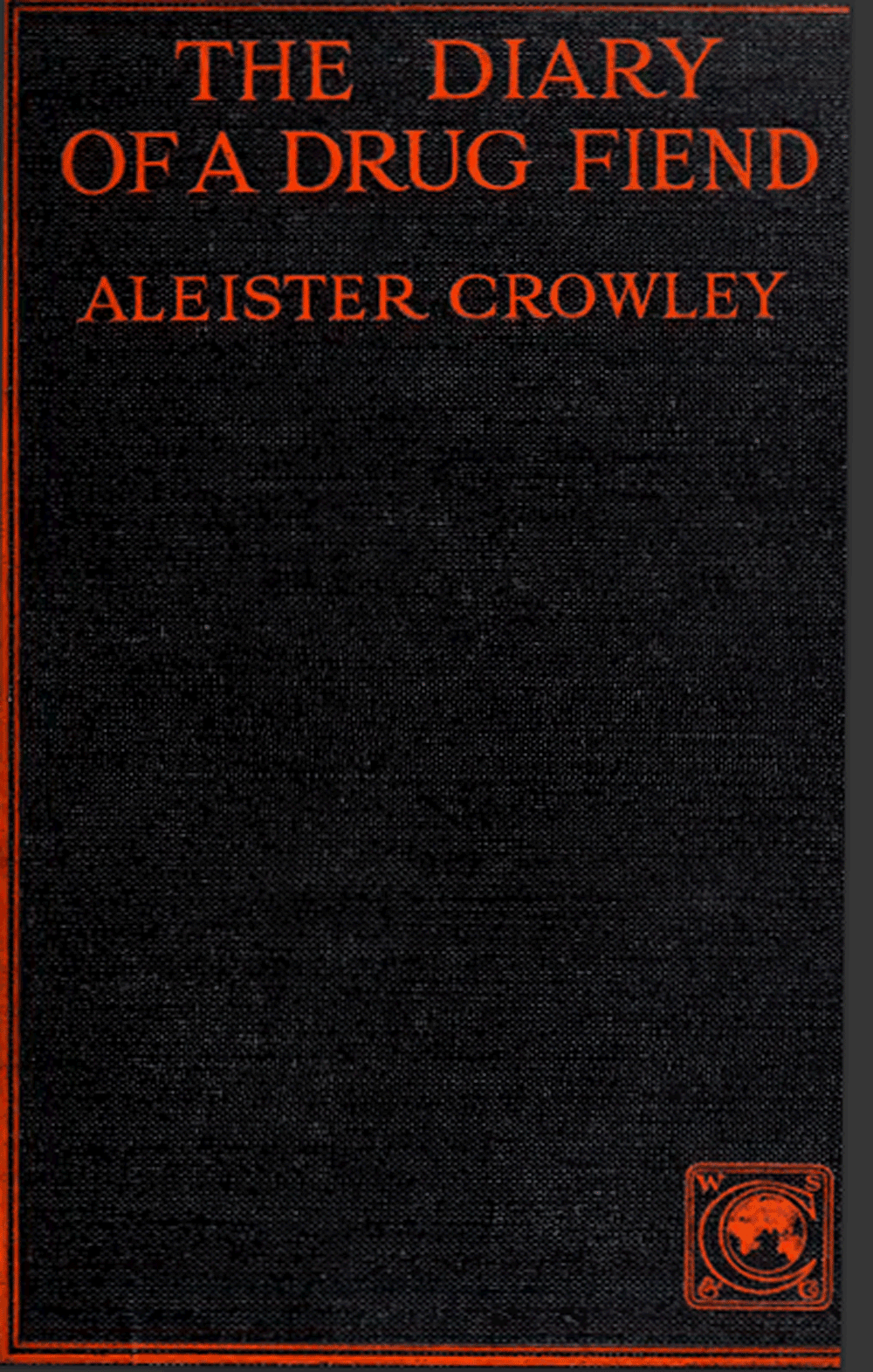
Of course, it is wrong to dismiss philosophical arguments based solely on the potential vested interests of the parties advancing them; yet it can be instructive to examine those interests. If billions are spent on the study of the brain during a time when biochemical determinism is an underlying assumption of modern science, then there will be much money to be made by researchers who find biochemical origins of behavior. There is also an obvious financial interest for the medical community in finding proof that a certain percentage of human beings cannot help but become slaves to psychoactive substances. Aleister Crowley complained about a related phenomenon in the early 20th century 36, when Brits, especially veterans of the disastrous Great War, were finding solace in the sort of opiates that were created to take the place of opium smoking, which had long been derided in the west as a habit of suspicious-looking "Orientals." Suddenly Aleister saw doctors popping up out of the woodwork to help those who misused opiates. All of these doctors preached the gospel of despair, that opiate addicts were slaves. Indeed, they might ALWAYS be slaves, said these charlatans, and hence they required the services of a doctor for a lifetime of help! Each of these doctors offered to "cure" the addict (at least temporarily, since one is always an addict) with some version of tough love combined with the systematized gnashing of teeth. King Lamus (who is the fictional incarnation of Crowley's sane drug counselor) argued instead on behalf of human freedom, on behalf of the ability of the imagination and human consciousness to transcend the cold scientific "givens" of a case. He also considered it fair to "use drugs to fight drugs" in cases of unwanted opiate dependence. He would not let his friends suffer unnecessarily during the withdrawal process but would give them other kinds oof drugs to make withdrawal livable, if not positively enjoyable on occasion.
And this was long before we were aware of the existence of a theoretically endless number of drugs that could be used in this way, to make the downsides of withdrawal palatable. I spent a year trying to get off Effexor and found it impossible after 11 months of successful withdrawal. There were suddenly huge psychological impacts. And yet I believe it is simple common sense that the wise use of laughing gas and cocaine and phenethylamines -- and even opium -- could have helped me to completely get off the drug -- unless, as I sometimes fear, there is some biochemical change wrought by the drug that can never be reversed. What is recidivism and relapse after all but the results of a few hours of intense psychological suffering -- and it is surely common sense that various drugs could get a withdrawing individual through such patches -- but it seems like there is a puritanical streak in Americans that makes us think that we need to suffer, that we need to superimpose a moral story on our drug use and, as it were, be made to "feel the error of our ways" when it comes to drugs.
Let's assume for a moment, however, that 4% of Americans have a high risk of abusing drugs in a free world, and that education about responsibility (beginning in grade school) will not help them. Let's also assume that we can't, as a society, convince such people to prefer drugs that will produce desired effects without causing unbeatable addictions. It is still not clear to me why we should set drug policy based on the potential downsides for this vulnerable demographic, when drug re-legalization could end the depression of 1 in 4 American women and help them to get off dependence-causing pharmaceuticals that they take on a daily basis and in so doing, end their expensive and disempowering status as "patients. Bill Clinton once claimed that if cocaine were legal, it would have killed his brother, but in my view, this is a very selfish (and racist) claim37. It ignores the fate of the inner-city children who will have to die from gunfire because Roger Clinton is irresponsible (or a misusing automaton, if we prefer). It ignores the fact that cocaine can be literal poison if it is not legal and hence not regulated. Besides, irresponsible people like Roger are already using such drugs in any case. Meanwhile, people like myself are completely off Bill's radar. He does not even consider that by supposedly saving Roger Clinton from himself, he is turning 1 in 4 American women 38 into patients for life and producing murderous drug cartels and gangs out of whole cloth.
So again, I don't deny that there are biochemical and genetic propensities, but my complaint is about the poor math skills of drug prohibitionists. As I mentioned in the class, Wade Davis wrote a piece on coca in which he implied that cocaine had been justifiably outlawed in the early 20th century in light of 400 confirmed cases worldwide of cocaine toxicity39. And yet aspirin is associated with 3,000 deaths a year in the U.K. alone. I don't deny Wade's facts; however, I deny Wade's belief that 400 is greater than 3,000, let alone that it is greater than the number of Americans who will become patients for life when we outlaw an obvious godsend for depression, and even all "runners-up" to cocaine in that psychoactive category. I get the feeling that my critics hold me responsible for the problems of the 400, or of the 4%; but, as I say, turnabout is fair play. If I am responsible for the fact that the latter demographic has problems with drugs, then my critics are equally responsible for the fact that 1 in 4 American women are wards of the healthcare state and that inner cities are shooting galleries and that there is no rule of law in Mexico.
Finally, a word about the infantilized nature of this drug-dependent status quo, bearing in mind that I myself am one of the millions of med-dependent patients thanks to the outlawing of drugs like cocaine. Consider the following thought experiment. We live in an age when coffee is a prescription drug. One morning, I decide I would like to consume an atypical second cup of coffee. I now have to explain (to a doctor one-third my age) why a second cup of coffee would be good for me. It is an absurd situation. The conversation might go something like this:
PATIENT: Well, you see, coffee kind of revs me up a bit and inspires me.
DOCTOR: I see that, but most people do not have a second cup, and there's no data that proves that more coffee helps. Indeed, it often can stress people out.
PATIENT: Trust me, I know.
DOCTOR: Scientists know. You THINK you know. We really have to start thinking about your heart rate -- and besides, we know that a caffeine high can be followed by a corresponding low.
PATIENT: But surely just my conviction alone that coffee could help me will have some power to make that assumption a self-fulfilling prophecy.
DOCTOR: What are you even talking about? Look, let's split the difference: you have a second HALF a cup of coffee this morning. If I find that you can handle that, we'll then talk about maybe adding a second HALF to that.
This sounds absurd, and yet it is precisely the infantilized position in which a "patient" is placed if they want to do something that doesn't tally with statistical expectations -- and hence would not pass muster with the prescription oversight department at the DEA.
ON A BRIGHTER NOTE
It is in this context that I am indeed happy about the advancement in treatment options of which you spoke (and of which Jeffery Singer and Colleen Cowles both write approvingly). It is heartening to see that we are willing to give the withdrawing individual drugs of some sort -- even if they are drugs provided by the government (which is so ironic, given that it was the government that would not let us use regulated opium peaceably at home in the first place). I hope that the penny will drop thanks to this new dispensation: that we will realize that we might as well let heroin users use daily with safe and regulated product rather than trying to destroy their lives and subject them to unnecessary overdoses. We have no foot to stand on in denying them this right, given the fact that 1 in 4 American women use a Big Pharma "med" every day of their life, and they are praised as good patients for doing so.
THANKS AGAIN
Thanks again for the opportunity to speak. If you think of any additional ways in which I can spread my Szaszian philosophy, please let me know! I say this not just for my own benefit, but because I seem to be the only philosopher who is approaching these topics from a Szaszian perspective, and I would like to see his ideas live on.
Jacob Sullum40 seems to check most of the right boxes, but I see no desire on his part to connect drug prohibition with the pill-popping paradigm and the subsequent disempowerment of the depressed in America41. I know of no drug pundits but myself who make the connection explicit. In fact, most well-known drug-law reformers defend the psychiatric status quo, both implicitly and explicitly. This includes Rick Doblin42, DJ Nutt43 and Andrew Weil44. Carl Hart makes it clear in his introduction to "Drug Use for Grown-Ups"45 that the drugs that he uses on a recreational basis are simply recreational drugs. If we "have" depression or anxiety, Carl tells us that we need to see our board-certified doctors (although he may have felt forced to make that disclaimer out of legal concerns). I think this explains why Carl was able to publish such a controversial book without damaging his reputation as a neuroscientist; he accomplishes this magic trick by making it clear in the opening to his book that he has no interest in starting a turf war with pharmaceutical companies or questioning the tenets of biochemical determinism and reductive materialism. As far as Carl is concerned, Big Pharma can keep taking care of psychological issues while Carl speaks solely for the rights of the healthy individual to have a little fun with drugs from time to time -- as if having fun, and hence relaxing, did not have any therapeutic potential in and of itself.
Best Wishes,
Brian Quass
abolishthedea.com
PS If you agree with me that 1) I am making thought-provoking Szaszian arguments and 2) the Szaszian viewpoint should be better represented in drug-related discussions online (where I would argue that it is currently not represented at ALL), I have a favor to ask of you. I would like you to consider adding a link to my essay site at abolishthedea.com on any websites where it might be possible for you to do so, especially on sites that end with the extension "edu." I know that making such a request is generally considered to be "bad form" in the online world, but I am, frankly, somewhat desperate. My seven-year-old site is not so much as indexed by Google, even though it contains hundreds of essays making points that literally no one else is making about American drug attitudes. My site is quite invisible online, although I do seem to have a small group of well-wishers from eastern Europe. I have never made such a request before, largely because I knew that it would be a waste of time for me to do so, but I thought I'd run the risk of placing you in an awkward position given your tolerance for, if not agreement with, the works of Thomas Szasz.
Let me make it clear, however, that my site is not just about sharing my own philosophy. I am not just trying to assuage my own ego by getting more "hits." Every one of my essays is followed by a comment form in which a reader can enter their own ideas, which I will then address publicly on the page in question. In other words, my site is about beginning a dialogue; it is not just about allowing myself to speak ex-cathedra from an unassailable throne. The site therefore can be used by university students, postgrads, and professors to take a deep dive into the issues that I am raising. Of course, no such dialogue exists so far on my website, but that is only because the site is, as it were, buried alive under thousands of other sites that Google considers to be far more authoritative -- like the seemingly endless academic papers that look at drugs only through the lens of potential misuse and abuse.
When psychiatrists write about heroin, they characterize dependency as enslavement. When they write about antidepressants, they characterize dependency as a medical duty.
The drug war is is a multi-billion-dollar campaign to enforce the attitude of the Francisco Pizarro's of the world when it comes to non-western medicine. It is the apotheosis of the colonialism that most Americans claim to hate.
His answer to political opposition is: "Lock them up!" That's Nazi speak, not American democracy.
The Drug War brought guns to the "hoods," thereby incentivizing violence in the name of enormous profits. Any site featuring victims of gun violence should therefore be rebranded as a site featuring victims of the drug war.
People are talking about re-scheduling psilocybin, but they miss the point. We need to DE-schedule everything. It's anti-scientific to conclude in advance that any drug has no uses -- and it's a lie too, of course. End drug scheduling altogether! It's childish and wrong.
There are plenty of "prima facie" reasons for believing that we could eliminate most problems with drug and alcohol withdrawal by chemically aided sleep cures combined with using "drugs" to fight "drugs." But drug warriors don't want a fix, they WANT drug use to be a problem.
We should no more arrest drug users than we arrest people for climbing sheer rock faces or for driving a car.
Harm Reduction is not enough. We need Benefit Production as well. The autistic should be able to use compassion-enhancing drugs; dementia patients should be able to use drugs that speed up and sharpen mental processes.
This is the problem with trusting science to tell us about drugs. Science means reductive materialism, whereas psychoactive drug use is all about mind and the human being as a whole. We need pharmacologically savvy shaman to guide us, not scientists.
Had the DEA been active in the Punjab and 1500 BCE, there would be no Hindu religion today.