




Homepage of the Drug War Philosopher, Brian Quass
blog icon orange rss icon with stylized radio waves bird icon for twitter bird icon for twitter substack icon


back navigation arrow forward navigation arrow


Tune In, Turn On, Opt Out

Why fans of psychedelic medicine should just say no to Surveillance Capitalism

by Brian Ballard Quass, the Drug War Philosopher

January 10, 2020


"Oh, Shoshana, now don't you cry for me, 'cause my latest Android cell phone has a long encrypted key"

Any psychonaut who is aware of the anti-democratic practices of Big Data companies (and of what those practices portend for a free society) has to ask themselves the following question:

Isn't it time for Americans to "Tune in, turn on, and opt out" (opt out of participating in the digital world that is, to the extent that such a thing is still even possible these days)?

Psychonauts who do not immediately answer "yes" to this query are hereby invited to read "The Age of Surveillance capitalism " by Shoshana Zuboff, a 2019 classic already considered by many to be "The Silent Spring" of the Digital Age. The book clearly reveals, in the words of the Silicon Valley uber-nerds themselves, the disdain for democratic processes that is implicit in and necessary for the triumph of Big Data companies, financial behemoths for whom human beings are commodities, mere sources of data to be analyzed for predictive purposes by businesses of every kind.

I got so spooked by reading the book last night that I turned off my location finder on my phone, having learned from Shoshana's research that potentially hundreds of companies have access to the data that I may be unwittingly sharing through the handful of apps that I use on my Android device.

Things got even spookier the next morning, however, when my weight-monitoring app refused to record my latest weigh-in, stating in a pop-up message that Google insists on knowing my location if I wish this particular health-related app to be fully functional.

Fortunately I had read Shoshana's book, so I knew immediately what Google was up to: they were out to find my current location by hook or crook, whether I wanted to supply it or no. "Fine," I thought to myself, "I'll just do without a graphic rendering of my daily weight, or else create one of my own, with good old-fashioned pencil and paper!"

I then settled down to some computer-based freelance work, forgetting all about Big Data's creepy inroads into my private life - or at least attempting to. But when I checked out my e-mail in-box, I discovered a message from Google Maps with the subject line: "Ballard, here's your 2019 Timeline update." Curious, but with a sense of foreboding (based on the morning's events), I opened the e-mail and clicked "Explore Timeline," only to discover an extensive annotated map clearly indicating everywhere I had been in the world for the last year. Without my knowledge or approval, Google had helped itself to my Android location data for 2019 and now was informing me of that fact by spitting out the data in a format that it supposed might seem useful to me. I felt kind of like a Mafia don had just thrown down the map in front of me and smiled a knowing smile, as if to say: "See? I know where you are whenever I need you."

Had the government sent me such a map, I would have been horrified. Why am I supposed to be pleased when the same information comes to me from a multi-billion-dollar company like Google?

The e-mail in question said that I was receiving this map because I had turned on "location history." But I had never knowingly done such a thing, and even if I had, it was probably because Google was holding an app's functionality hostage until I did so. In any case, I never was informed that Google would be monitoring my every move based on that one uninformed click that I may or may not have made, perhaps as a prerequisite for playing chess on my smart phone or browsing through a digital version of the periodic table of elements.

The inhuman metaphysics of Surveillance capitalism

But there's another reason that fans of the psychedelic revolution should "Tune in, Turn on, and Opt Out," and that is the inhuman metaphysics upon which Surveillance capitalism is based. Big Data posits a human being as a means to an end, and a strictly materialistic means at that, one from which all relevant data must be extracted to benefit the needs of business. The psychedelic vision, on the other hand, posits the human being as a precious and ineffable part of nature, with a mysterious inner life that needs to be examined and understood over the course of a lifetime. Why? Because the psychonaut believes with Socrates that the unexamined life is not worth living. The pushback against Surveillance capitalism should therefore be led by fans of psychedelic therapy, since they are the ones who know how much is to be lost when we consider human beings to be robots, mere cogs in an economic wheel, of value only insofar as they impart reliable data points to Big Data and its customers.


But what would it mean to "Tune in, turn on, and opt out"?

This obviously doesn't mean abandoning the Internet entirely, since the Net, just like LSD, is neither good nor bad, except in the way that it is used or abused. This new "Leary challenge" does mean, however, that we should "call" Big Data on its penchant for claiming our data through surreptitious means, such as withholding app functionality until we agree to their grasping terms, or burying their ambitious data grabs in lengthy unreadable disclosures. Meanwhile, those of us who don't consider ourselves to be robots should remind the Big Data companies of our point of view and put them on notice that our emotions and desires are off-limits to data mining, no matter how practical such an extraction may become in theory thanks to the increasing accuracy of digital mood detectors and the like.


Facebook's Zuckerberg and Google's Schmidt both insist that it's Manifest Destiny that our privacy rights are going to disappear, that the future will be one of ever-increasing efficiency, powered by a myriad of data-points supplied by obediently wired Netizens. It's inevitable they say, "so don't bother trying to stop us." But what about those of us who do not consider efficiency and profiteering to be the ultimate goals of life? Why should we play along in order to boost the profits of the most profitable companies in the world?

Fortunately, we champions of the human spirit can still opt out of this robotic dystopia that the Big Data companies are trying to foist upon us under the guise of its supposed inevitability. We can start by actually reading those disclosure and privacy notices and crying "foul" when they oblige us to part with privacy expectations that we have always taken for granted in analog life.

Meanwhile, we must realize that the Big Data end game is not simply to corner the market on our private information, but to use that data to change our behavior in accordance with the economic needs of its deep-pocketed clients. In this way, the goal of surveillance capitalism 1 dovetails with the interests of the Drug War: both are committed to keeping human beings as predictable as possible: one by rendering us more robotlike and programmable, the other by denying us the mind-expanding blessings of Mother Nature.


Notes for essay entitled Tune In, Turn On, Opt Out: Why fans of psychedelic medicine should just say no to Surveillance Capitalism:

1: What the drug war tells us about American capitalism DWP (up)


read more essays here


Ten Tweets

against the hateful war on US


Drug prohibition represents the biggest power grab by government in human history. It is the state control of pain relief and mental states.

Some fat cat should treat the entire Supreme Court to a vacation at San Jose del Pacifico in Mexico, where they can partake of the magic mushroom in a ceremony led by a Zapotec guide.

The Partnership for a Drug Free America should be put on trial for having blatantly lied to Americans in the 1980s about drugs, while using our taxpayer money to do so!

In Mexico, the same substance can be considered a "drug" or a "med," depending on where you are in the country. It's just another absurd result of the absurd policy of drug prohibition.

Freud found that cocaine CURED most people's depression and he "got off it" without trouble.

We should place prohibitionists on trial for destroying inner cities.

Americans have learned nothing but half-truths and lies about cocaine and opium thanks to the total censorship of drug benefits.

The DEA stomped onto Thomas Jefferson's estate in 1987 and confiscated the founding father's poppy plants in violation of everything he stood for, politically speaking. And the TJ Foundation helped them! They sold out Jefferson.

People say shrooms should not be used by those with a history of "mental illness." But that's one of the greatest potential benefits of shrooms! (They cured Stamets' teenage stuttering.) Some folks place safety first, but if I did that, I'd die long before using mother nature.

News flash: certain mushrooms can help you improve your life! It's the biggest story in the history of mycology! And yet you wouldn't know it from visiting the websites of most mushroom clubs.


Click here to see All Tweets against the hateful War on Us


back navigation arrow forward navigation arrow
Book Cover

Break the ice with a sledgehammer: place this book on your coffee table.

This book features 150 annotated images, designed to force brainwashed Americans to confront the fact that drug prohibition is wrong. Here is what author Richard Parrish II says of the book's compiler: "The drug prohibition philosopher provides first-hand, principled, persuasive, and insightful arguments against the current drug prohibition regime..."

Purchase Your Copy
Book Cover

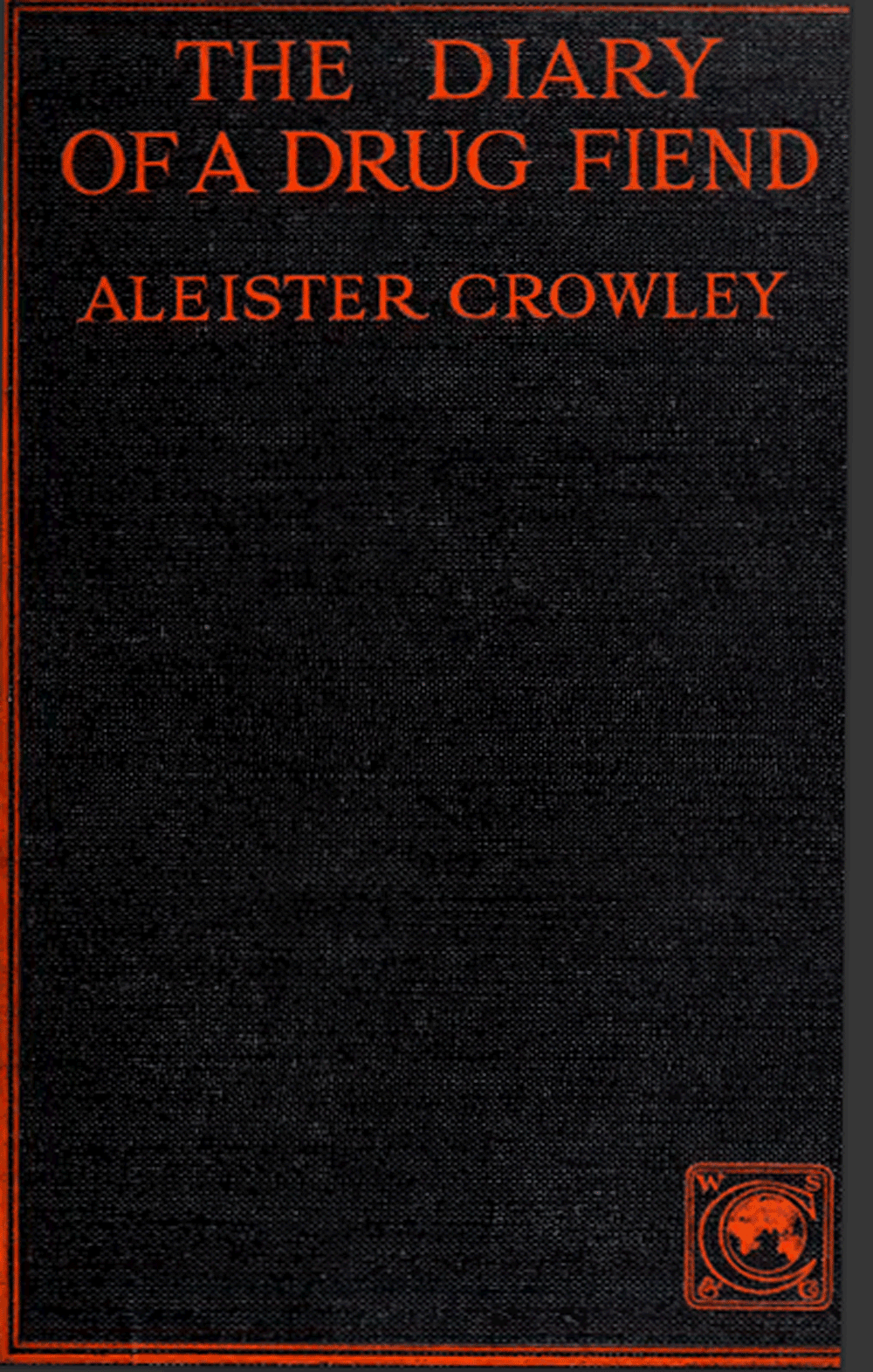
Diary of a Drug Fiend

This is the only full-cast recording of Aleister Crowley's 1922 classic paeon to common sense. It is the first book -- and so far almost the only book -- to stake out a philosophy of drug use that is compatible with human freedom, one in which we learn to use drugs as wisely as possible for the benefit of humanity. This recording was produced by the Drug War Philosopher and your purchases help support his effort to push back against the tragically counterproductive policy of drug prohibition, in the name of human freedom and of humanity's right to heal.

Purchase Your Copy


No cookies, no ads paid for by amoral and immoral billionaires (or trillionaires).


Unless otherwise indicated, no AI is used in the creation of site content. These essays represent the original ideas of their author and not the ideas that the author SHOULD have based on an algorithmic parsing of existing data. For more on this subject, consider the AI-related viewpoints to which the author subscribes as delineated in the New York Times opinion piece entitled "What 370,000 College Essays Tell Us About A.I.’s Effects on Creativity" by Rebecca Winthrop of the Brookings Institution.

The Partnership for a Death Free America is a proud sponsor of The Drug War Philosopher website @ abolishthedea.com.


Copyright 2026, Brian Ballard Quass Contact: quass@quass.com

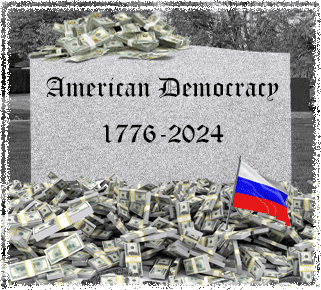
tombstone for American Democracy, 1776-2024, RIP (up)