








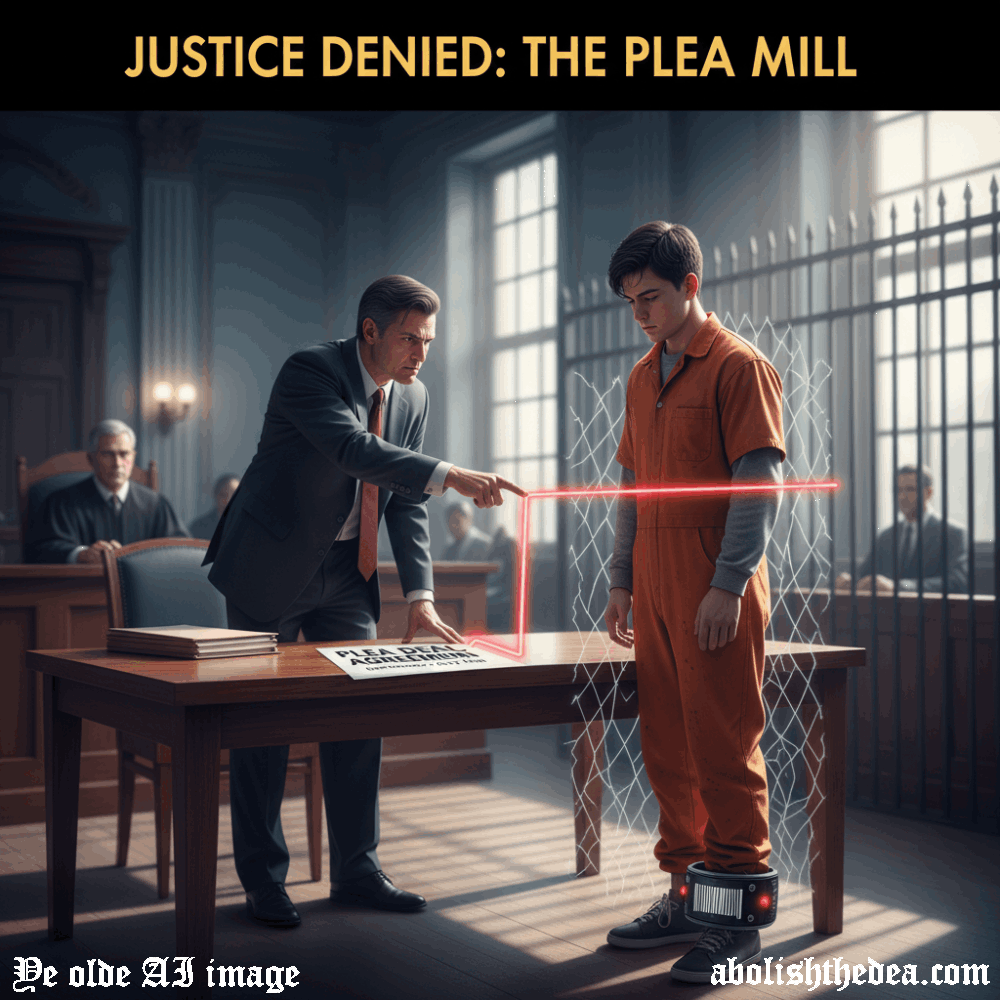
 I'm still wrapping my head around the Kafkaesque world faced by so-called drug offenders in America as detailed by Colleen Cowles in "War On Us."1 For merely possessing a few pills, Americans are being charged with felonies. Felonies! An estimated eight percent of Americans have felonies, according to a study cited by Cowles, and thirty-three percent of African Americans. 33%. This means far more than that they can be sent to prison for years. Once out, they can be denied educational loans, evicted from public housing, rendered ineligible for food stamps, and forced to submit to drug testing on demand. Even after they've completed years of harassing parole, the law seeks to prevent felons from getting on with their lives. As felons, they are barred from working in a host of jobs, which Colleen tells us include, but is by no means limited to: childcare worker, electrician, engineer, judge, nurse, manicurist, midwife, optometrist, psychologist, school-bus driver, social worker, teacher... even watchman. It makes you wonder what jobs they ARE allowed to hold: circus clown, perhaps? Ayurveda healer? Video game tester? (full-time pundit against the War on Drugs?)
"In 2018, the New York State Correctional Officers and Police Benevolent Association mounted an ad campaign against criminal justice reform in that state. The New York City Patrolmen's Benevolent Association campaigned against parole reform. The California Correctional Peace Officers Association spends approximately $8 million annually on lobbying to defeat criminal justice reform, ranging from opposition to reform of three strikes laws to prison expansion."
"First, police departments compete for federal anti drug grants with number of arrests and drug seizures strengthening their application for those grants. The grants also incentivize departments to pay for SWAT team armor and weapons, further militarizing our police forces. Secondly, the ability of police departments to pad their own budgets using civil forfeiture statutes makes drug arrests more lucrative than pursuing other types of arrests."
 When scientists refuse to report positive uses for drugs, they are not motivated by power lust, they are motivated by philosophical (non-empirical) notions about what counts as "the good life." This is why it's wrong to say that the drug war is JUST about power.
We might as well fight for justice for Christopher Reeves: he was killed because someone was peddling that junk that we call horses. The question is: who sold Christopher that horse?! Who encouraged him to ride it?!
Most substance withdrawal would be EASY if drugs were re-legalized and we could use any substance we wanted to mitigate negative psychological effects.
We live in a make-believe world in the US. We created it by outlawing all potentially helpful psychological meds, after which the number-one cause of arrest soon became "drugs." We then made movies to enjoy our crackdown on TV... after a tough day of being drug tested at work.
Endless drugs could help with depression. Any drug that inspires and elates is an antidepressant, partly by the effect itself and partly by the mood-elevation caused by anticipation of use (facts which are far too obvious for materialists and drug warriors to understand -- let alone materialist drug warriors!).
The press is having a field day with the Matthew Perry story. They love to have a nice occasion to demonize drugs. I wonder how many decades must pass before they realize that people are killed by ignorance and a corrupted drug supply, not by the drugs themselves.
The WHO says that depression will be the number-one cause of disability by 2030. What they don't say is that this is only because drug prohibition has outlawed all obvious treatments for depression.
The drug war normalizes the disdainful and self-righteous attitude that Columbus and Pizarro had about drug use in the New World.
Musk vies with his fellow materialists in his attempt to diss humans as insignificant. But we are not insignificant. The very term "insignificant" is a human creation. Consciousness rules. Indeed, consciousness makes the rules. Without us, there would only be inchoate particles.
Drug prohibition began as a racist attempt to prevent so-called "miscegenation." The racist's fear was not that a white woman would use opium or marijuana or cocaine, but that she might actually fall in love with a Chinese, Hispanic or Black person respectively.
When scientists refuse to report positive uses for drugs, they are not motivated by power lust, they are motivated by philosophical (non-empirical) notions about what counts as "the good life." This is why it's wrong to say that the drug war is JUST about power.
We might as well fight for justice for Christopher Reeves: he was killed because someone was peddling that junk that we call horses. The question is: who sold Christopher that horse?! Who encouraged him to ride it?!
Most substance withdrawal would be EASY if drugs were re-legalized and we could use any substance we wanted to mitigate negative psychological effects.
We live in a make-believe world in the US. We created it by outlawing all potentially helpful psychological meds, after which the number-one cause of arrest soon became "drugs." We then made movies to enjoy our crackdown on TV... after a tough day of being drug tested at work.
Endless drugs could help with depression. Any drug that inspires and elates is an antidepressant, partly by the effect itself and partly by the mood-elevation caused by anticipation of use (facts which are far too obvious for materialists and drug warriors to understand -- let alone materialist drug warriors!).
The press is having a field day with the Matthew Perry story. They love to have a nice occasion to demonize drugs. I wonder how many decades must pass before they realize that people are killed by ignorance and a corrupted drug supply, not by the drugs themselves.
The WHO says that depression will be the number-one cause of disability by 2030. What they don't say is that this is only because drug prohibition has outlawed all obvious treatments for depression.
The drug war normalizes the disdainful and self-righteous attitude that Columbus and Pizarro had about drug use in the New World.
Musk vies with his fellow materialists in his attempt to diss humans as insignificant. But we are not insignificant. The very term "insignificant" is a human creation. Consciousness rules. Indeed, consciousness makes the rules. Without us, there would only be inchoate particles.
Drug prohibition began as a racist attempt to prevent so-called "miscegenation." The racist's fear was not that a white woman would use opium or marijuana or cocaine, but that she might actually fall in love with a Chinese, Hispanic or Black person respectively.


 (up)
(up)