








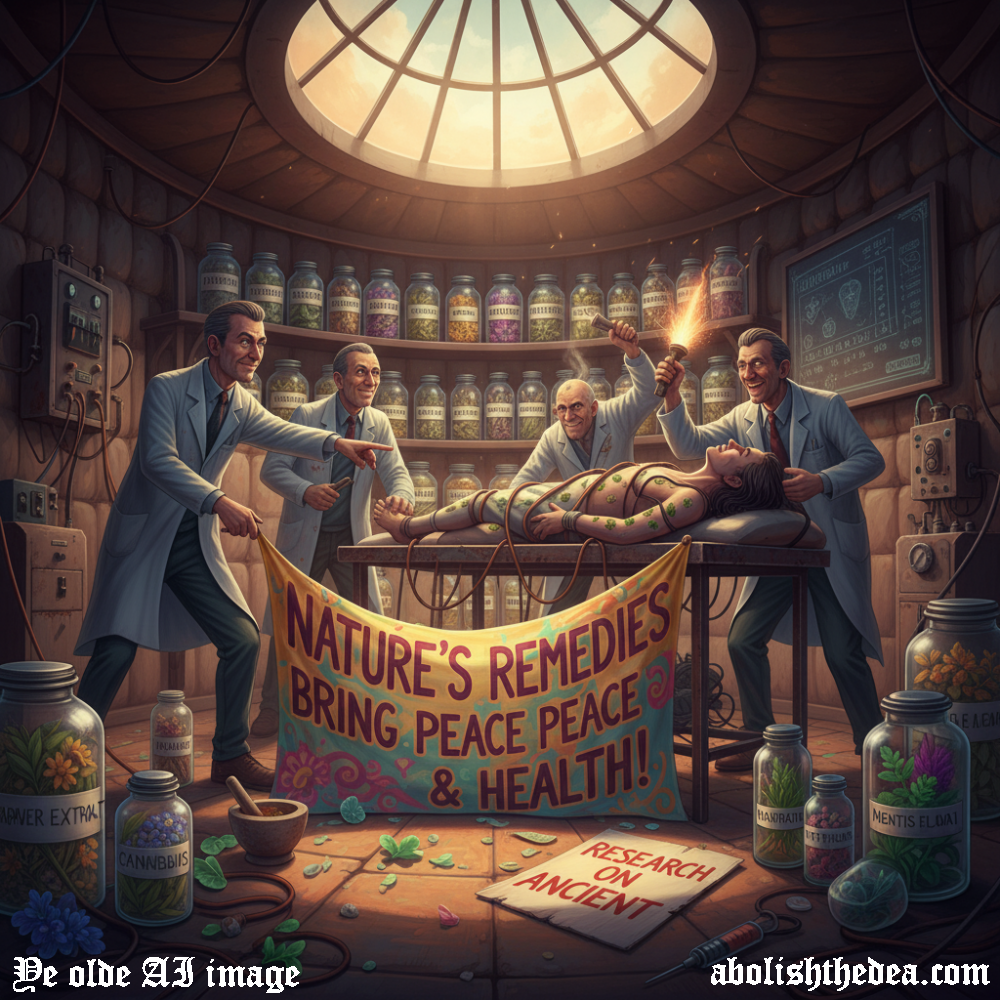
Back in late January of this year, I went on record as the only philosopher in the country to point out that assisted suicide for the depressed cannot be discussed ethically without also discussing the drug prohibition which makes it necessary, at least in the minds of the depressed1. In other words, I pointed out that you cannot talk ethically about assisted suicide for the depressed without at least mentioning the fact that our government outlaws all substances that inspire and elate. I was sharing this insight in response to a New York Times article by "global healthcare reporter" Stephanie Nolen about the attempts of depressed Canadian Claire Brosseau to qualify for state assisted suicide, a story in which nobody mentioned the fact that drug prohibition had outlawed drugs that could help make Brosseau wish to live2. Surely, I felt, I merely needed to point out this glaring omission on the part of the principals in Claire's case and they would speak out against drug prohibition as a violation of Claire's right to heal, the more so in that failing to do so could lead to Claire's unnecessary death by convincing her that she was truly out of hope.
In fact, I wrote to Claire herself, urging her to stop advocating for her totally unprecedented right to be killed by the state and to advocate instead for her time-honored right to heal, to advocate instead for her right to feel relief, to advocate instead for an end to drug prohibition.
Well, it's been a frustrating but eye-opening three months -- because I found that no one connected with Claire's case (not even Claire herself) saw any connection whatsoever between drug prohibition and assisted suicide for the depressed. I've written to at least 20 of the mainstream "players" in the online debate over assisted suicide for the depressed in the last three months, and I have been either ghosted or gaslighted by them all. And so I asked myself, where do I go from here? I was basically making the seemingly modest claim that drug use is better than dying, and yet people were disagreeing with me, if only implicitly. How am I supposed to argue after that? Do I have to start listing the downsides of being dead, with footnotes referencing academics who have done studies on the subject to support those conclusions? I really felt like the mainstream was gaslighting me on this topic. But I soon realized what the real take-home message was from this politically correct silence about my claims. I realized that Americans truly were brainwashed by Drug War propaganda into believing that drugs can have no positive uses -- otherwise they would cry "foul" when the state began killing people who might otherwise have been encouraged to live with the help of outlawed medicines.
It's a tough subject to write about. What do you say when the most powerful and obvious arguments fail to convince?
Fortunately, I have at least one option remaining to me. If I can't convince the "experts" to acknowledge common sense, at least I can play the role of a Socratic gadfly by posting some politically incorrect comments in response to their mainstream essays on sites like Mad in America. I say sites LIKE Mad in America, but actually this is the only site I know where I have the ability to post my comments prominently in response to brand-new mainstream essays. This ability came about after I purchased a year's subscription to the site under the mistaken belief that they would actually publish my essays on these topics. This was before site and organization founder Robert Whitaker started gaslighting me about the perfectly obvious relevance of drug prohibition to the case of Claire Brosseau, whom, if she dies, will have been sacrificed on the Christian Science altar of America's superstitious attitudes toward drugs. But I decided to keep the subscription as long as it guaranteed me the right to turn up the heat on the mainstream with some straight talk about drug benefits in the comments section.
By the way, this setup seems too good to be true, so I will try not to be surprised when my ability to comment has been restricted or withdrawn by Robert and company.
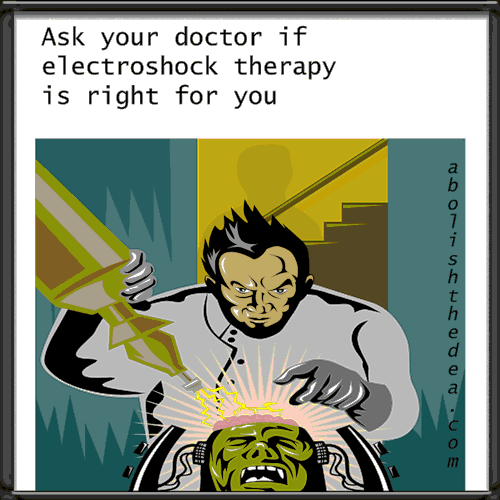
In the meantime, however, let's see how many chains I can rattle with the following comments posted today in response to a new MIA essay by Psychologist Richard Sears entitled “It Was Like They Crushed a Beautiful Flower”: Families Speak Out on the Harms of ECT.
 If I have no right to mother nature's bounty, then I surely have no right to manmade guns. If hysterical fearmongering justifies the eradication of the Fourth Amendment, then the Second Amendment should go as well.
At best, antidepressants make depression bearable. We need not settle for such drugs, especially when they are notorious for causing dependence. There are many drugs that elate and inspire. It is both cruel and criminal to outlaw them.
Any self-respecting mycologist should denounce the criminalization of mushrooms.
We might as well fight for justice for Christopher Reeves: he was killed because someone was peddling that junk that we call horses. The question is: who sold Christopher that horse?! Who encouraged him to ride it?!
If I want to use the kind of drugs that have inspired entire religions, fight depression, or follow up on the research of William James into altered states, I should not have to live in fear of the DEA crashing down my door and shouting: "GO! GO! GO!"
I've been told by many that I should have seen "my doctor" before withdrawing from Effexor. But, A) My doctor got me hooked on the junk in the first place, and, B) That doctor completely ignores the OBVIOUS benefits of indigenous meds and focuses only on theoretical downsides.
Prohibitionists have blood on their hands. People do not naturally die in the tens of thousands from opioid use, notwithstanding the lies of 19th-century missionaries in China. It takes bad drug policy to accomplish that.
In a compassionate world, we would give laughing gas kits to the suicidal just as we now give epi pens to those with severe allergies.
Orchestras will eventually use psychedelics to train conductors. When the successful candidate directs mood-fests like Mahler's 2nd, THEY will be the stars, channeling every known -- and some unknown -- human emotions. Think Simon Rattle on... well, on psychedelics.
Mad in America solicits personal stories about people trying to get off of antidepressants, but they will not publish your story if you want to use entheogenic medicines to help you. They're afraid their readers can't handle the truth.
If I have no right to mother nature's bounty, then I surely have no right to manmade guns. If hysterical fearmongering justifies the eradication of the Fourth Amendment, then the Second Amendment should go as well.
At best, antidepressants make depression bearable. We need not settle for such drugs, especially when they are notorious for causing dependence. There are many drugs that elate and inspire. It is both cruel and criminal to outlaw them.
Any self-respecting mycologist should denounce the criminalization of mushrooms.
We might as well fight for justice for Christopher Reeves: he was killed because someone was peddling that junk that we call horses. The question is: who sold Christopher that horse?! Who encouraged him to ride it?!
If I want to use the kind of drugs that have inspired entire religions, fight depression, or follow up on the research of William James into altered states, I should not have to live in fear of the DEA crashing down my door and shouting: "GO! GO! GO!"
I've been told by many that I should have seen "my doctor" before withdrawing from Effexor. But, A) My doctor got me hooked on the junk in the first place, and, B) That doctor completely ignores the OBVIOUS benefits of indigenous meds and focuses only on theoretical downsides.
Prohibitionists have blood on their hands. People do not naturally die in the tens of thousands from opioid use, notwithstanding the lies of 19th-century missionaries in China. It takes bad drug policy to accomplish that.
In a compassionate world, we would give laughing gas kits to the suicidal just as we now give epi pens to those with severe allergies.
Orchestras will eventually use psychedelics to train conductors. When the successful candidate directs mood-fests like Mahler's 2nd, THEY will be the stars, channeling every known -- and some unknown -- human emotions. Think Simon Rattle on... well, on psychedelics.
Mad in America solicits personal stories about people trying to get off of antidepressants, but they will not publish your story if you want to use entheogenic medicines to help you. They're afraid their readers can't handle the truth.


 (up)
(up)