








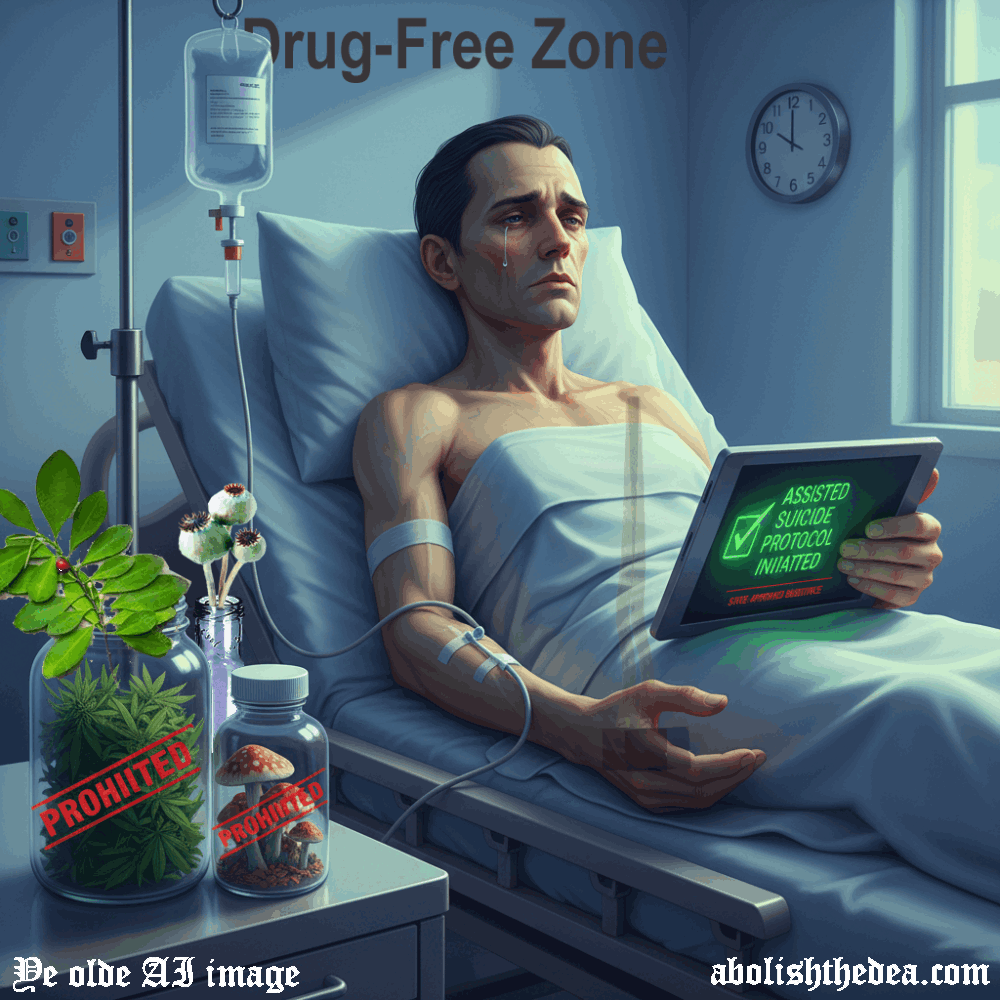
 When I first learned that North Americans like Claire Brosseau were demanding the right to assisted suicide on account of their depression, I was stunned. I simply could not understand how such westerners could "make that call" without realizing the obvious: namely, that it is drug prohibition which is keeping them from using drugs that could make them want to live! I could not understand how activists like Claire were not calling for an end to drug prohibition rather than demanding their right to die with the help of the state: the same state that was refusing to let them heal! Now that I am coming to my senses after that blow, like a boxer shaking off the effects of a left hook, I realize that assisted suicide for any reason is morally reprehensible insofar as the option is chosen in willful ignorance of the option-limiting policy of drug prohibition.
 My mind to me a kingdom is;
Such perfect joy therein I find
That it excels all other bliss
Which God or nature hath assign'd.
Prohibitionists think that they merely have to use the word "drugs" to win an argument.
Prohibition is a crime against humanity. It forces us to use shock therapy on the severely depressed since we've outlawed all viable alternatives. It denies medicines that could combat Alzheimer's and/or render it psychologically bearable.
"They have called thee Soma-lover: here is the pressed juice. Drink thereof for rapture." -Rig Veda
(There would be no Hindu religion today had the drug war been in effect in the Punjab 3,500 years ago.)
I don't have a problem with CBD. But I find that many people like it for the wrong reasons: they assume there is something slightly "dirty" about getting high and that all "cures" should be effected via direct materialist causes, not holistically a la time-honored tribal use.
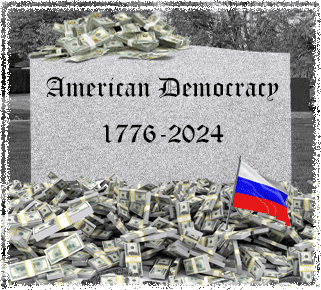
How else will they scare us enough to convince us to give up all our freedoms for the purpose of fighting horrible awful evil DRUGS? DRUGS is the sledgehammer with which they are destroying American democracy.
Kids should be taught in grade school that prohibition is wrong.
In fact, there are times when it is clearly WRONG to deny kids drugs (whatever the law may say). If your child is obsessed with school massacres, he or she is an excellent candidate for using empathogenic meds ASAP -- or do we prefer even school shootings to drug use???
We need a scheduling system for psychoactive drugs as much as we need a scheduling system for sports activities: i.e. NOT AT ALL. Some sports are VERY dangerous, but we do not outlaw them because we know that there are benefits both to sports and to freedom in general.
Prohibitionists have blood on their hands. People do not naturally die in the tens of thousands from opioid use, notwithstanding the lies of 19th-century missionaries in China. It takes bad drug policy to accomplish that.
In the 19th century, poets got together to use opium "in a series of magnificent quarterly carouses" (as per author Richard Middleton). When we outlaw drugs, we outlaw free expression.

 (up)
(up)