




Homepage of the Drug War Philosopher, Brian Quass
blog icon orange rss icon with stylized radio waves bird icon for twitter bird icon for twitter substack icon


back navigation arrow forward navigation arrow


Richard Rudgley condemns 'drugs' with faint praise

a philosophical review of The Encyclopedia of Psychoactive Substances

by Brian Ballard Quass, the Drug War Philosopher

November 7, 2022


Rudgley, Richard. The Encyclopedia of Psychoactive Substances. New York: Macmillan Publishers, 2014

"I do not condone the use of many of these substances and... I believe that some are socially and individually destructive..."--Richard Rudgley


Kudos to Rudgley for using the word "substances" in the title rather than "drugs," a label which is to psychoactive medicines as the label "scab" is to labor disputes: it's anything BUT objective. Still, Drug War propaganda has gotten to Rudgley, I'm afraid. In his introduction, he adopts the Drug Warrior habit of judging medicines in the abstract, telling us that some are "destructive." Really? In what circumstances are they so? In what doses? For what people? At what times? Or does he believe, like the Drug Warrior, that there are substances in the world that have no positive uses, ever, anywhere, at any time, for anybody? That's the anti-scientific lie that has kept academia off the trail of godsend cures for depression and Alzheimer's 1 for the last 40-plus years, as researchers shy away from studying what they consider to be "destructive" substances.

There are no "destructive" substances, Richard, only good uses and bad uses, informed use and uninformed use. Even deadly toxins like Botox and cyanide have legitimate medical uses, however "destructive" they may seem in the abstract. When we condemn drugs as "destructive," we turn those substances into scapegoats for the bad social policies that rendered them dangerous in the first place.

If Rudgley thinks there are no positive uses for some drugs (a typical Drug Warrior belief), he should remember that almost no one in academia has ever dared to LOOK for those positives. Take morphine , for instance: we're told implicitly by the Drug War that it has almost no positive uses whatsoever, but in reality, morphine can give one a profound appreciation of Mother Nature (see Poe's "Tale of the Ragged Mountains"). But today almost everyone would call that use destructive. Why? Because they believe the Drug Warrior lie that addictive drugs have to be USED addictively, that education will never work and that human beings will always be gullible infants when it comes to Mother Nature's medicines. And so when we "look at the science" about such substances, we will find that almost every scientist self-censors themselves on the topic. Just look at the papers on academia.edu and you will see thousands of papers about the misuse and abuse of "drugs," but almost none about their potential positive uses, as, for instance, how shrooms could help one appreciate music or MDMA 2 can help one love their fellow human being.

That's how thoroughly westerners have been duped by Drug War propaganda. Even the most sensible opponents of the Drug War, like Richard Rudgley, are influenced by Drug War lies without even recognizing that fact. In Richard's case, he has learned to believe the anti-scientific notion that substances can be bad in and of themselves. Wrong. Substances are amoral. They become "socially and individually destructive" only thanks to ignorance and social policies, chiefly the policy of substance prohibition itself. When we ignore that once-obvious fact, we make a scapegoat for all our social problems out of the politically created straw man called "drugs."

Author's Follow-up: January 5, 2023


It is, in fact, Richard's superstitious view of "drugs" which is "socially and individually disastrous." To see this, consider the use of shock therapy. The therapists tell us that it is only used as a last resort. But that is a lie. The fact is that there are hundreds of psychoactive substances that could help the depressed tolerate -- and even enjoy -- this life without frying their brain in order to accomplish that goal. This would be all too obvious in a world that wanted to profit from psychoactive medicine, but in a time in which Drug War ideology reigns, I have to "spell it out" for folks:

The severely depressed could be given what today we disparage as "feel good" medicines on a weekly basis, in such a routine as to avoid addiction when desirable (remembering that even addiction is surely preferable to frying one's brain). The depressed could be taken on guided psychoactive trips to examine their lives and hopefully identify and surmount the conceptual hurdles that depress them. We could pharmacologically let them experience happiness so that they know that such a thing exists. The only thing holding us back is the puritan ethos of the Drug War, which fanatically tells us that it's better to fry this person's brain than to let them use a so-called "crutch." And that is utter Christian Science nonsense. If people are severely handicapped, then they NEED crutches, but modern 'psychology' says we should kick such crutches out from under them -- and fry their brains into the bargain.

Let's hope that someday this ideology will be seen for the hateful and fanatical expression of Christian Science that it is -- the same attitude that keeps kids in hospice from getting adequate pain relief thanks to our ideologically fueled fear of prescribing morphine 3 -- and/or of prescribing it in the necessary dosage.


Notes:

1: What the Honey Trick Tells us about Drug Prohibition DWP (up)
2: How the Drug War killed Leah Betts DWP (up)
3: Three takeaway lessons from the use of morphine by William Halsted, co-founder of Johns Hopkins Medical School DWP (up)


read more essays here


Ten Tweets

against the hateful war on US


Imagine a world in which we were told about both the potential benefits AND the potential harms of drugs like cocaine and opium.

It is far better to "treat the symptoms" than to irreversibly modify brain chemistry in one particular way based on the theories of a financially-motivated biochemical determinist working for a pharmaceutical company.

The goal of drug-law reform should be to outlaw prohibition. Anything short of that, and our basic rights will always be subject to veto by fearmongers. Outlawing prohibition would restore the Natural Law of Jefferson, which the DEA scorned in 1987 with its raid on Monticello.

Psychiatrists prescribe drugs that muck about with a patient's biochemical baseline, making them chemically dependent and turning them into patients for life.

Here is a sample drug-use report from the book "Pihkal": "More than tranquil, I was completely at peace, in a beautiful, benign, and placid place." Prohibition is a crime against humanity for withholding such drug experiences from the depressed (and from everybody else).

If I have no right to mother nature's bounty, then I surely have no right to manmade guns. If hysterical fearmongering justifies the eradication of the Fourth Amendment, then the Second Amendment should go as well.

ME: "What are you gonna give me for my depression, doc? MDMA? Laughing gas? Occasional opium smoking? Chewing of the coca leaf?" DOC: "No, I thought we'd fry your brain with shock therapy instead."

I never said that getting off SSRIs should be done without supervision. If you're on Twitter for medical advice, you're in the wrong place.

Americans have learned nothing but half-truths and lies about cocaine and opium thanks to the total censorship of drug benefits.

Someday the world will realize that Freud's real achievement was his discovery of the depression-busting power of cocaine.


Click here to see All Tweets against the hateful War on Us


back navigation arrow forward navigation arrow
Book Cover

Break the ice with a sledgehammer: place this book on your coffee table.

This book features 150 annotated images, designed to force brainwashed Americans to confront the fact that drug prohibition is wrong. Here is what author Richard Parrish II says of the book's compiler: "The drug prohibition philosopher provides first-hand, principled, persuasive, and insightful arguments against the current drug prohibition regime..."

Purchase Your Copy
Book Cover

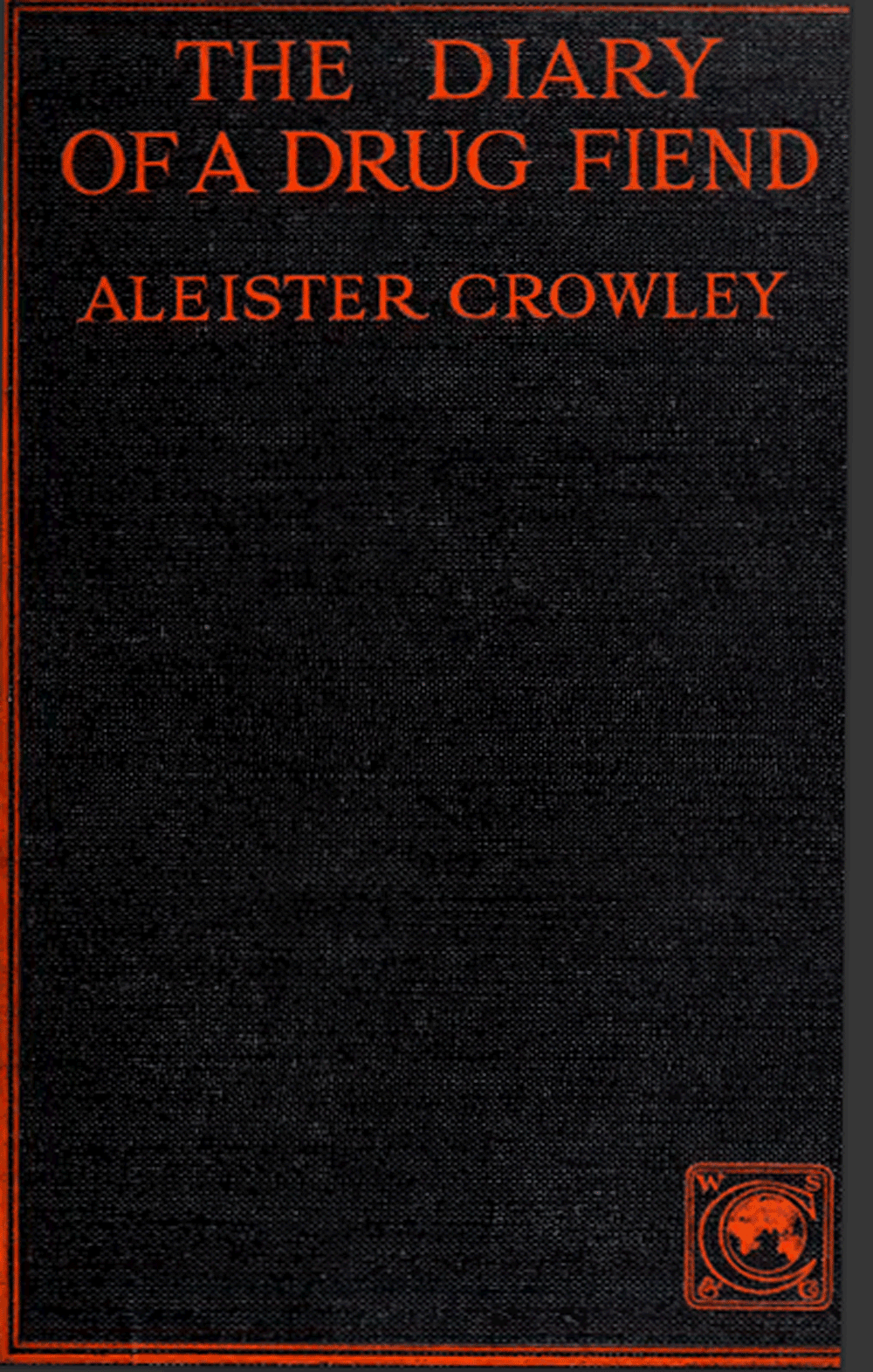
Diary of a Drug Fiend

This is the only full-cast recording of Aleister Crowley's 1922 classic paeon to common sense. It is the first book -- and so far almost the only book -- to stake out a philosophy of drug use that is compatible with human freedom, one in which we learn to use drugs as wisely as possible for the benefit of humanity. This recording was produced by the Drug War Philosopher and your purchases help support his effort to push back against the tragically counterproductive policy of drug prohibition, in the name of human freedom and of humanity's right to heal.

Purchase Your Copy


No cookies, no ads paid for by amoral and immoral billionaires (or trillionaires).


Unless otherwise indicated, no AI is used in the creation of site content. These essays represent the original ideas of their author and not the ideas that the author SHOULD have based on an algorithmic parsing of existing data. For more on this subject, consider the AI-related viewpoints to which the author subscribes as delineated in the New York Times opinion piece entitled "What 370,000 College Essays Tell Us About A.I.’s Effects on Creativity" by Rebecca Winthrop of the Brookings Institution.

The Partnership for a Death Free America is a proud sponsor of The Drug War Philosopher website @ abolishthedea.com.


Copyright 2026, Brian Ballard Quass Contact: quass@quass.com

tombstone for American Democracy, 1776-2024, RIP (up)