Homepage of the Drug War Philosopher, Brian Quass
blog icon orange rss icon with stylized radio waves bird icon for twitter bird icon for twitter substack icon


back navigation arrow forward navigation arrow


Even Howard Zinn Reckons without the Drug War

a philosophical review of 'A People's History of the United States'

by Brian Ballard Quass, the Drug War Philosopher

April 17, 2023


American authors are in denial about the Drug War. If anyone doubts this, they should check out the populist classic by historian Howard Zinn entitled "A People's History of the United States."

April 2025 Update

If any book might be expected to pan the War on Drugs, it should be this one, since that anti-scientific campaign against psychoactive medicine has militarized police forces around the world, caused civil wars in Latin America, destroyed the rule of law in Mexico, and killed and disenfranchised so many American blacks that racist fascists are now able to win presidential elections in the United States. And yet Howard Zinn, that dauntless unmasker of systemic wrongs, has absolutely nothing to say about the War on Drugs. Not a thing. True, he mentions "drugs" a handful of times in his lengthy tome, but only in an off-hand way which implies that the author shares the mendacious prejudices of our times according to which "drugs" are substances which have no valid uses for anyone, anywhere, at any time, for any reason, ever.

He writes of inner-city violence, of course, but only to link it to uncaring politicians who withhold money on social problems while beefing up the military to dangerous and unwieldy proportions. This is all too true, of course, but he misses the main point when it comes to inner-city violence: namely that it was first introduced into the 'hood by substance prohibition which gave massive financial incentives for the poor to start selling desired substances. Of course, the drug gangs thus created soon had to arm themselves to the teeth against both the police and their own inner-city turf rivals. That's why, as Heather Ann Thompson wrote in The Atlantic in 2014:


"Without the War on Drugs, the level of gun violence 1 that plagues so many poor inner-city neighborhoods today simply would not exist.2"


And yet the Drug War is off the radar of Howard Zinn. Like Lisa Ling, who produced an hour-long documentary on Chicago gun violence 3 without even mentioning the War on Drugs, Howard seems to think that city violence arose ex nihilo as a kind of passive-aggressive response to bad social policy in general, when the real villains of the piece were the huge financial incentives provided by substance prohibition.

I might have expected such blindness from other authors.

Science writers, for instance, have been ignoring the Drug War for many years now, giving us the latest materialist advice on fighting depression, anxiety and PTSD, but never pointing out the inconvenient truth (even via a footnoted disclaimer) that the government has outlawed almost all the psychoactive medicine with which one might have easily triumphed over these conditions in the past, or at least rendered their symptoms far less pernicious. In academia, in fact, it's commonplace to completely ignore the possibility that drugs can have good uses. Nor is the historian in a hurry to tell kids that Benjamin Franklin was a big fan of opium 4 or that Thomas Jefferson grew poppies on his estate - or that he rolled over in his grave the day that the DEA stomped onto Monticello 5 and confiscated those plants in violation of the natural law upon which Jefferson had founded America.

But Howard Zinn has no excuse for ignoring the Drug War. The fact that he does so makes me wonder if he ever bothered to read his own book. His entire thesis, after all, is that rich power brokers will go to great lengths to keep the lower classes fighting amongst themselves for what he calls the "leftovers" of exploitative capitalism 6 . In chapter 23, for instance, he quotes HL Mencken as saying:

The whole aim of popular politics is to keep the public alarmed by menacing it with an endless series of hobgoblins, all of them imaginary.


Surely "drugs" is the hobgoblin par excellence of American politics, and Howard, of all writers, should have recognized that fact.


Author's Follow-up:

April 11, 2025

picture of clock metaphorically suggesting a follow-up


Of course, there is something worse than ignoring the Drug War in a history book. In "The Birth of the Modern," Paul Johnson ignores the Drug War while also dissing drug use -- apparently ignorant of the fact that drug use inspired the Hindu religion and gave Socrates his view of the afterlife. Like most Drug Warriors, he libels the political category of "drugs" by only mentioning such substances in connection with abuse and misuse. This is like an author writing a history book in which all equestrian references concern horse-related accidents. We would rightly sense an agenda on their part. Just so, when Johnson mentions drugs only in connection with misuse and abuse, he clearly has his own agenda -- namely, to discredit drug use by associating it with downsides only. Moreover, his book should be completely disqualified from the history genre for his complete refusal to mention America's unprecedented wholesale drug prohibition, let alone the glaringly obvious (and yet somehow completely invisible) dystopia that it has brought about: including inner-city violence, the end of the rule of law in Latin America, unnecessary suicides, unnecessary school shootings, the end of due process and the outlawing of religions, and the creation of the biggest mass pharmacological dystopia of all time: the psychiatric pill mill 7 , thanks to which 1 in 4 American women are dependent upon Big Pharma 8 9 meds for life. How can a history of the 20th century ignore these things and not be laughed off of the book shelves? Answer? The government has brainwashed the public to pretend that the Drug War has no negative consequences whatsoever and is just a part of a normal life. Americans are clearly hypnotized into blindness when it comes to this 6,000-pound gorilla in the room.

If any of these charges advanced against the Drug War do not make sense to a reader, it can only be because the media has censored all such news from the public, as they have all reports of positive drug use. Take the outlawing of religion, for instance. The Hindu religion was inspired by the use of a drug that inspires and elates. From this fact alone, it follows that drug prohibition is the outlawing of religion since drug law criminalizes PRECISELY those drugs that inspire and elate.

Yet so-called historians fail to even notice that drug prohibition ever existed in America, let alone that it exists to this very day and has censored academia, to the point that most academics are scared to even mention the subject, to the point that science magazines publish endless scientific "conclusions" that only make sense when we pretend that wholesale drug criminalization provides a natural baseline from which to do research. See, for instance, the endless feel-good articles about depression in Psychology Today, whose authors totally ignore the fact that we have outlawed all the substances that could end depression in a heartbeat. Scientists are so cowed, however, by the double biases of Drug War propaganda and behaviorist theory that they refuse to recognize the obvious benefits of drugs. Of course, even by their own scientific standards, they should place a disclaimer after all articles about psychological matters -- and human consciousness, for that matter -- stating that the magazine is taking drug criminalization as a natural baseline for research -- that the magazine is, in effect, accepting the drug-scorning religion of Christian Science as gospel truth -- and yet the editors refrain from doing this, thus rendering their magazines completely non-scientific, even by their own scientific standards. The editors have a duty to announce their magazine's biases to the public. And what are their biases? Answer: their biases are the following: 1) the idea that psychoactive drugs do not exist (and that therefore the ramifications of their use can be ignored), and 2) the behaviorist idea that all that counts when it comes to mind and mood is what is quantifiable, that therefore all history and anecdote (and psychological common sense, for that matter) may be ignored when it comes to the beneficial use of "drugs."


Notes for essay entitled Even Howard Zinn Reckons without the Drug War: a philosophical review of 'A People's History of the United States':

1: Firearm Violence in the United States Center for Gun Violence Solutions, Johns Hopkins University (up)
2: Heather Ann Thompson. 2014. The Atlantic. The Atlantic. October 30, 2014. https://www.theatlantic.com/national/archive/2014/10/inner-city-violence-in-the-age-of-mass-incarceration/382154/. (up)
3: Firearm Violence in the United States Center for Gun Violence Solutions, Johns Hopkins University (up)
4: The Truth About Opium by William H. Brereton DWP (up)
5: The Dark Side of the Monticello Foundation DWP (up)
6: What the drug war tells us about American capitalism DWP (up)
7: Antidepressants and the War on Drugs DWP (up)
8: Seife, Charles. 2012. “Is Drug Research Trustworthy?” Scientific American 307 (6): 56–63. https://doi.org/10.1038/scientificamerican1212-56. (up)
9: LaMattina, John. n.d. “Why Is Biopharma Paying 75% of the FDA’s Drug Division Budget?” Forbes. https://www.forbes.com/sites/johnlamattina/2022/09/22/why-is-biopharma-paying-75-of-the-fdas-drug-division-budget/. (up)


read more essays here


Ten Tweets

against the hateful war on US


The front page of every mycology club page should feature a protest of drug laws that make the study of mycology illegal in the case of certain shrooms. But no one protests. Their silence makes them drug war collaborators because it serves to normalize prohibition.

Just saw a People's magazine article with the headline: "JUSTICE FOR MATTHEW PERRY." If there was true justice, their editorial staff would be in jail for promoting user ignorance and a contaminated drug supply. It's the prohibition, stupid!!!

The DEA is a Schedule I agency. It has no known positive uses.

Addiction thrives BECAUSE of prohibition, which limits drug choice and discourages education about psychoactive substances and how to use them wisely.

When Rick Strassman and Michael Pollan call for continued prohibition to protect young people, they ignore the ENORMOUS fact that prohibition has destroyed inner cities around the world. Wake up, guys! Prohibition is evil, not drugs! Ignorance is evil, not education!

The idea that "drugs" have no medical benefits is not science, it is philosophy, and bad philosophy at that. It is based on the idea that benefits must be molecularly demonstratable and not created from mere knock-on psychological effects of drug use, time-honored tho' they be.

Well, today's Oregon vote scuttles any ideas I might have entertained about retiring in Oregon.

It's just plain totalitarian nonsense to outlaw mother nature and to outlaw moods and mental states thru drug law. These truths can't be said enough by us "little people" because the people in power are simply not saying them.

Just saw a prosecutor gloating about the drug dealers she has taken down.How much is she getting paid to play whack-a-mole?

Drug prohibition is the biggest tyranny imaginable. It is the government control of pain relief. It is government telling us how and how much we are allowed to think and feel in this life.


Click here to see All Tweets against the hateful War on Us


back navigation arrow forward navigation arrow
Book Cover

Break the ice with a sledgehammer: place this book on your coffee table.

This book features 150 annotated images, designed to force brainwashed Americans to confront the fact that drug prohibition is wrong. Here is what author Richard Parrish II says of the book's compiler: "The drug prohibition philosopher provides first-hand, principled, persuasive, and insightful arguments against the current drug prohibition regime..."

Purchase Your Copy
Book Cover

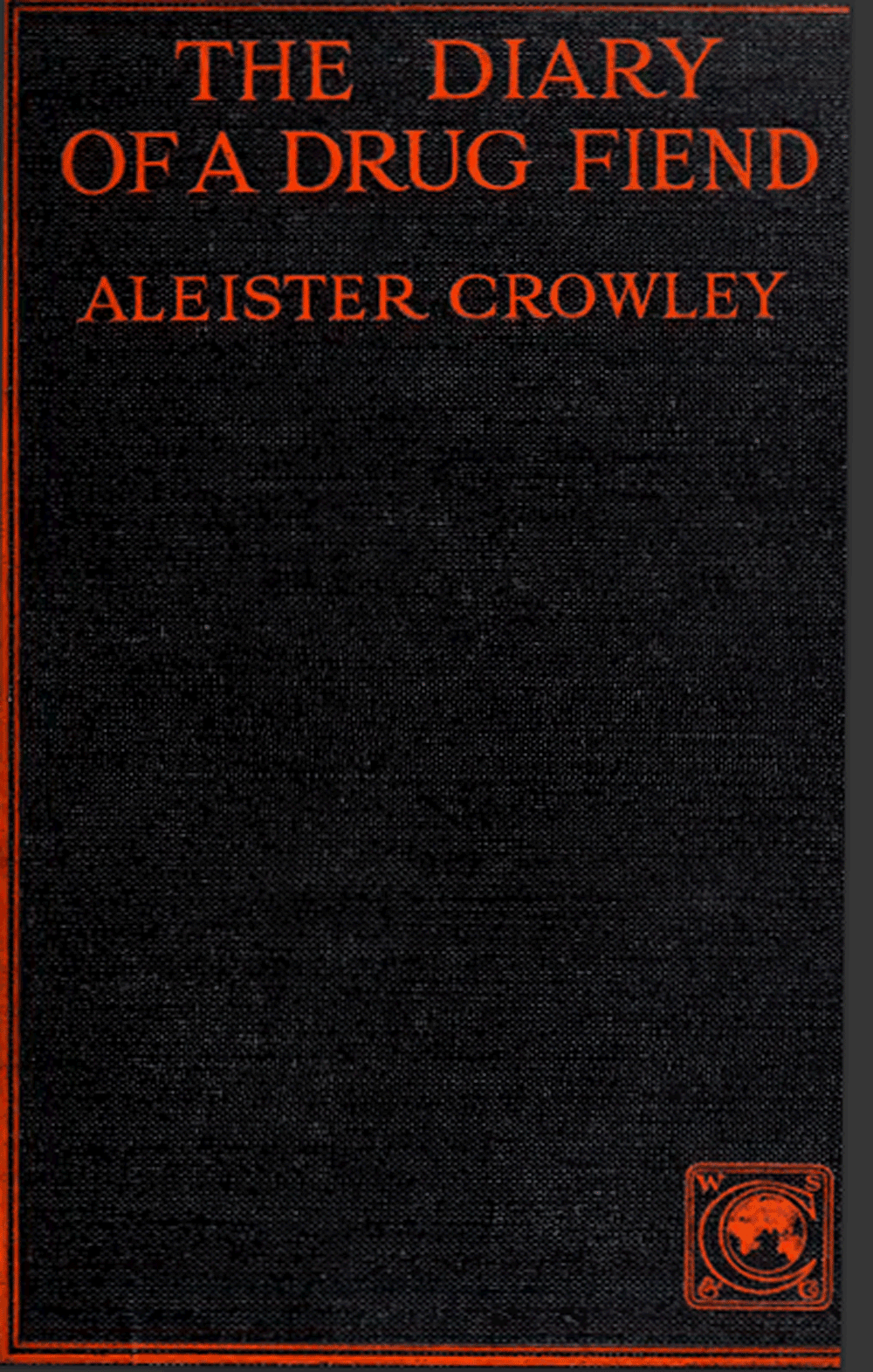
Diary of a Drug Fiend

This is the only full-cast recording of Aleister Crowley's 1922 classic paeon to common sense. It is the first book -- and so far almost the only book -- to stake out a philosophy of drug use that is compatible with human freedom, one in which we learn to use drugs as wisely as possible for the benefit of humanity. This recording was produced by the Drug War Philosopher and your purchases help support his effort to push back against the tragically counterproductive policy of drug prohibition, in the name of human freedom and of humanity's right to heal.

Purchase Your Copy


No cookies, no ads paid for by amoral and immoral billionaires (or trillionaires).


Unless otherwise indicated, no AI is used in the creation of site content. These essays represent the original ideas of their author and not the ideas that the author SHOULD have based on an algorithmic parsing of existing data. For more on this subject, consider the AI-related viewpoints to which the author subscribes as delineated in the New York Times opinion piece entitled "What 370,000 College Essays Tell Us About A.I.’s Effects on Creativity" by Rebecca Winthrop of the Brookings Institution.

The Partnership for a Death Free America is a proud sponsor of The Drug War Philosopher website @ abolishthedea.com.


Copyright 2026, Brian Ballard Quass Contact: quass@quass.com

tombstone for American Democracy, 1776-2024, RIP (up)