





Homepage of the Drug War Philosopher, Brian Quass
blog icon orange rss icon with stylized radio waves bird icon for twitter bird icon for twitter substack icon


back navigation arrow forward navigation arrow


I hope to use cocaine in 2025

and other confessions of a drug war heretic

by Brian Ballard Quass, the Drug War Philosopher

May 19, 2024


I just noticed the Twitter bio of a certain NYT writer who tells us that she "quit cocaine & heroin 1 in 1988." This got me thinking some heretical thoughts, which I formulated in the following Tweets, at the risk of a mass exodus of my five loyal followers... if five followers can be said to exit "en masse." But that's kind of like saying, "I was attacked by a horde of two, maybe three ruffians!" ... Er, but that's not important now.

Oh, and there's some notes to follow.


When people write "quit cocaine in 1988" in their bio, that's fine. That was a big moment for them given their psychological makeup and environment. For me, tho, the bio snippet would read: "Hopes to try cocaine in 2025." That makes as much sense since coke CAN be used wisely!


The problem is, many people who write that confession in their bio ("quit cocaine ") figure that they've discovered a universal law: that cocaine is necessarily wrong for everybody. That evinces an unimaginative view of the psychological diversity of human beings.


I "quit valium" in 1994, but I don't include that in my bio because I don't think it's a huge thing. The only reason that quitting was "a big ask" for me was because all better drugs were outlawed -- including many that are non-addictive.


Please, nobody take offense. I just believe that in a sane world, "quitting" a given drug would not be such an earth-shattering event. When all drugs are re-legalized and used wisely, we would not find occasion to obsess about or blame any one drug.


Focusing like that on any one drug as evil (heroin, cocaine , etc.) is just the flip side of what the Drug Warrior does in demonizing them -- blaming the drug instead of prohibition, which outlaws of all of the endless alternatives to a given use pattern.


Confessions like "I quit cocaine in 1988" -- at least when featured prominently in a tiny bio -- turn cocaine into a real colossus, giving it powers to destroy that it would never have in a free world -- one in which we seek to use all psychoactive substances as wisely as possible. Again, I recognize that I do not know the person behind this particular biographical snippet, but in general, such confessions smack of the way that Drug Warriors turn drug use into a morality play. It's just, in this case, the morality play has a happy ending2 -- but the assumption behind the snippet at least seems to be that the villain of the piece was cocaine or heroin -- whereas I believe it is our failure to be adults about drugs and to learn everything we can about safe use, meanwhile legalizing the seemingly endless substances that provide the transcendence of heroin without unwanted dependence.

I would go on to state why I want to use cocaine in 2025, but that rarely spoken resolution is bound to arouse so many mistaken assumptions in the average bamboozled reader that it would take me another entire essay to unpack them. Suffice it to say, my goal in using cocaine would be to think as clearly as possible and to be productive in my work. My goal is not to go gambling in Monte Carlo with a call girl on my lap and a pocket full of blood-stained dollar bills.

Author's Follow-up: May 18, 2024

picture of clock metaphorically suggesting a follow-up


I should have mentioned, this writer actually specializes in writing on drug-related topics. With this in mind, the confession in her bio seems to be signaling the following: "I too believe that drugs are the problem and I have experience in overcoming their evil, so listen to me." So as friendly as she may be to decriminalization, she is arguing on the back foot, tacitly expressing the stubborn beliefs of the Drug War that the problem "is drugs," not prohibition and our failure to be adults and learn about substances and to use them wisely.

It's also interesting that this author specializes in neuroscience. Only in the west could a neuroscientist be deemed an expert in drugs that inspire us both psychologically and spiritually. Drug prohibition is all about limiting my ability to express myself and to live the sort of psychological and spiritual life that I want to lead. A neuroscientist has precisely zero expertise in such areas.

Someday folks will realize that there are very good reasons that one might wish to use cocaine . The idea that it can only be misused is a superstition. The superstition is basically made true, however, by prohibition, which outlaws alternatives and refuses to teach safe use.


And, of course, if all that doesn't ruin your life, then the DEA and company will do the ruining for you by putting you in a cage. That's why I say we live in the Dark Ages, where attempts to achieve great mental clarity are punished with lengthy prison stretches.


In fact, nothing against "drinkers," but there are far more good reasons to use cocaine than there are to drink whiskey. Except, of course, that whiskey drinking won't get you thrown in the pen and treated like a scumbag.


Notes:

1: Hall, Wayne, and Megan Weier. 2016. “Lee Robins’ Studies of Heroin Use among US Vietnam Veterans.” Addiction 112 (1): 176–80. https://doi.org/10.1111/add.13584. (up)
2: Of course, even this statement is problematic. Is it really a "happy" ending merely because one is no longer using cocaine? That's a Christian Science belief, not a logical conclusion. It may well be a happy ending in a given case, but we have no reason for assuming that it is unconditionally so. (up)


read more essays here


Ten Tweets

against the hateful war on US


Prohibitionists are responsible for the 200,000-plus killed in the US-inspired Mexican drug war in the 21st century.

Materialist scientists are drug war collaborators. They are more than happy to have their fight against idealism rigged by drug law, which outlaws precisely those substances whose use serves to cast their materialism into question.

I've found that no one thinks I "have standing" when I comment about drugs. I'm just a guy who's been turned into a patient for life thanks to drug prohibition. People think that the real experts are the doctors and scientists who profit from the status quo.

Q: Why are we never told about the potential benefits of drugs? A: Follow the money.

Pundits have been sniffing about the "smell" of Detroit lately. Sounds racist -- especially since such comments tend to come from drug warriors, the guys who ruined Detroit in the first place (you know, with drug laws that incentivized profit-seeking violence as a means of escaping poverty).

The goal of drug-law reform should be to outlaw prohibition. Anything short of that, and our basic rights will always be subject to veto by fearmongers. Outlawing prohibition would restore the Natural Law of Jefferson, which the DEA scorned in 1987 with its raid on Monticello.

The best harm-reduction strategy is to re-legalize drugs.

This is why it's wrong to dismiss drugs as "good" or "bad." There are endless potential positive uses to psychoactive drugs. That's all that we should ask of them.

Why does no one talk about empathogens for preventing atrocities? Because they'd rather hate drugs than use them for the benefit of humanity. They don't want to solve problems, they prefer hatred.

Scientists hold holistically working drugs to reductionist standards, thereby practicing a sort of pharmacological colonialsm.


Click here to see All Tweets against the hateful War on Us


back navigation arrow forward navigation arrow
Book Cover

Break the ice with a sledgehammer: place this book on your coffee table.

This book features 150 annotated images, designed to force brainwashed Americans to confront the fact that drug prohibition is wrong. Here is what author Richard Parrish II says of the book's compiler: "The drug prohibition philosopher provides first-hand, principled, persuasive, and insightful arguments against the current drug prohibition regime..."

Purchase Your Copy
Book Cover

Drama lovers: collect full-cast recordings of classic plays

In my spare time, when I am not shaming drug warriors for their heartless drug policies, I create full-cast recordings of classic plays using the latest in synthetic voices licensed by the Natural Reader company. Snag your copy of my production of Volpone, by Ben Jonson... and follow me on Payhip for more where that came from, including classics like The Post Office, The Double Dealer and The Inspector General. -- Yours in all-too-justified outrage, the Drug War Philosopher @ abolishthedea.com.

Purchase Your Copy


No cookies, no ads paid for by amoral and immoral billionaires (or trillionaires).


Unless otherwise indicated, no AI is used in the creation of site content. These essays represent the original ideas of their author and not the ideas that the author SHOULD have based on an algorithmic parsing of existing data. For more on this subject, consider the AI-related viewpoints to which the author subscribes as delineated in the New York Times opinion piece entitled "What 370,000 College Essays Tell Us About A.I.’s Effects on Creativity" by Rebecca Winthrop of the Brookings Institution.

The Partnership for a Death Free America is a proud sponsor of The Drug War Philosopher website @ abolishthedea.com.


Copyright 2026, Brian Ballard Quass Contact: quass@quass.com

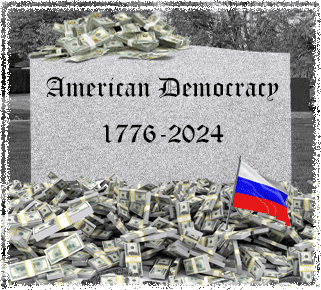
tombstone for American Democracy, 1776-2024, RIP (up)