





Homepage of the Drug War Philosopher, Brian Quass
blog icon orange rss icon with stylized radio waves bird icon for twitter bird icon for twitter substack icon


back navigation arrow forward navigation arrow


Why the Drug War is Worse than a Religion

by Brian Ballard Quass, the Drug War Philosopher

December 29, 2020


As a white kid who grew up listening to so-called black music in the '70s (not just the crossover hits of Labelle but the deep album cuts such as "Isn't it a Shame" and "Somewhere Over the Rainbow") I would occasionally experience the awkward phenomenon of having my white friends snicker or break into what for me was unwelcome parody when I made the mistake of playing one of my favorite soul hits during a get-together at my place.

Update: May 05, 2025

It actually made them uncomfortable to hear singers expressing so much emotion. Sure, they had grown to like "Lady Marmalade," but when Labelle really let herself go, emotionally speaking, on such lengthy ballads as "Isn't it a Shame," complete with melodious moaning and impassioned scatting, my white friends began to squirm in their seats like so many grade-schoolers, despite the fact that their college days were already long behind them.

In that reaction, I think we can see the real motivation behind America's Drug War: the white man's insistence that we all be as emotionally restrained as he is, that we "let ourselves go" a little, perhaps, in the same way that my friends could find it in their hearts to enjoy "Lady Marmalade," but that we never really truly "shake it like we mean it" in this life, as Labelle most obviously did in "Isn't it a Shame?" It strikes me, moreover, that this "white reaction" to soul music is "all of a piece" with the Caucasian preference in Shakespearean times for behavior to be "meet" and "seemly" and to not offend the sensibilities of the community with any emotional excesses. In short, the white race, if we must call it so, has placed such a premium upon thought (which is, indeed, the very touchstone of its own existence, according to Descartes) that it has come to fear any forays into the long-since unfamiliar lands of unbridled emotion.

With this backstory in mind, the Drug War may be seen as the enforcement, not simply of a religion, but of a whole way of "being in the world," a whole way of approaching life. We must be aggressive and ambitious, yes, and so the use of caffeine is not only legal but encouraged. However, we must not be TOO aggressive or ambitious (after all, that would not be "meet" and "seemly" and it might even empower the user to promote the overthrow of the uptight status quo) and so the use of cocaine 1 2 3 must be punished. In this way, the Drug War turns Aristotle's Golden Mean into the law of the land. "Dance if you must," it cries, "but never, never, shake it like you really mean it." Of course, even the Drug Warrior agrees that occasional self-forgetfulness is necessary in this life, and so we are free -- and even encouraged -- to use alcohol and beer. However, we must never achieve this self-forgetfulness with the help of a substance that inspires us to question the very thought-centric nature of the society in which we live (and so psychedelic use will be punished). Americans have to be uptight by law, and the last thing that the Drug Warrior wants is for us to realize through substance use that there are other perhaps more satisfying ways of seeing the world.

We can say then that modern drug law is designed to legally oblige Americans to be "uptight" (or "meet" and "seemly" as Shakespeare would have called it) and to have only those thoughts and feelings that are not quite passionate or novel enough to rock the boats of the thought-obsessed powers that be. And so the Drug War is far worse than the mere establishment of a religion, for in such an injustice, the tyrant may be appeased with a mere outward show of obedience. No, the Drug War tyrant is far more ambitious: he insists that we FEEL the way that he wants us to feel (namely uptight) on penalty of law.


EDITOR'S NOTE March 30, 2022: The substances that we ban today actually inspired entire religions. One of the earliest human religions, the Vedic which gave rise to Hinduism, was inspired by Soma, a psychedelic concoction created from the bounty of Mother Nature. Plato's views of the afterlife were inspired by the psychedelic kykeon at Eleusis. The Mesoamericans sought divine guidance from sacred mushrooms.

Thus the Drug War is not only the outlawing of specific religions, but it's the outlawing of the very source and fountainhead of religious feeling itself, and so the Drug War is religious tyranny twice over.


Author's Follow-up: December 15, 2024

picture of clock metaphorically suggesting a follow-up


Of course, the above argument has been made before, absent the 20th-century specifics. It is really just a gloss on Nietzsche's distinction between the Apollonian and Dionysian outlook on life4.


Author's Follow-up:

May 05, 2025

picture of clock metaphorically suggesting a follow-up


This distaste for excessive passion helps explain why Americans do not recognize the category error that is implicit in placing materialist scientists in charge of mind and mood medicine. Materialists are behaviorists when it comes to psychology and are therefore blind to the glaringly obvious benefits of drugs as expressed in anecdote, history and plain common sense. This is why materialist Dr. Robert Glatter could question the power of laughing gas to help the depressed in Forbes magazine in 20215 -- without having been laughed out of his job. It is absurd to suggest that laughing gas might not be beneficial for the depressed, a drug that inspires views of heaven itself. Even the editors at Readers Digest know that "Laughter is the best medicine." But then if materialists were to admit laughing gas 6 to the category of beneficial substances, they would be forced by dint of logical consistency to admit opium 7 and phenethylamines as well. It is therefore in everybody's interests that we put Dr. Spock of Star Trek in charge of mind and mood medicine. In doing so, we flatter materialists and give them work -- albeit in a psychological and religious field for which they have no qualifications -- meanwhile flattering the hoi polloi viz their unbounded faith in "science" to conquer all.

Common sense, on the other hand, would tell us an inconvenient truth: namely, that there are obvious potential beneficial uses for all drugs that inspire and elate. Indeed, the Hindu religion owes its existence to the use of a drug that inspired and elated, from which it follows that the outlawing of drugs is the outlawing of religion -- nay, of the religious impulse itself.


Notes:

1: What the Honey Trick Tells us about Drug Prohibition DWP (up)
2: Sigmund Freud's real breakthrough was not psychoanalysis DWP (up)
3: “Freud on Cocaine : Freud, Sigmund, 1856-1939 : Free Download, Borrow, and Streaming : Internet Archive.” 2023. Internet Archive. 2023. https://archive.org/details/freudoncocaine0000freu/page/n5/mode/2up?view=theater. (up)
4: Nietzsche and the Drug War DWP (up)
5: Glatter, Robert. 2021. “Can Laughing Gas (Nitrous Oxide) Help People with Treatment-Resistant Depression?” Forbes, June 9, 2021. https://www.forbes.com/sites/robertglatter/2021/06/09/can-laughing-gas-nitrous-oxide-help-people-with-treatmentresistant-depre (up)
6: Forbes Magazine's Laughable Article about Nitrous Oxide DWP (up)
7: The Truth About Opium by William H. Brereton DWP (up)


read more essays here


Ten Tweets

against the hateful war on US


Americans heap hypocritical praise on Walt Whitman. What they don't realize is that many of us could be "Walt Whitman for a Day" with the wise use of psychoactive drugs. To the properly predisposed, morphine gives a DEEP appreciation of Mother Nature.

The DEA is a Schedule I agency. It has no known positive uses.

There are endless ways that psychoactive drugs could be creatively combined to combat addiction and a million other things. But the drug warrior says that we have to study each in isolation, and then only for treating one single board-certified condition.

This is why "rock stars" use drugs: not just for performance anxiety (which, BTW, is a completely UNDERSTANDABLE reason for drug use), but because they want to fully experience the music, even tho' they may be currently short on money and being hassled by creditors, etc.

Americans have learned nothing but half-truths and lies about cocaine and opium thanks to the total censorship of drug benefits.

New article in Scientific American: "New hope for pain relief," that ignores the fact that we have outlawed the time-honored panacea. Scientists want a drug that won't run the risk of inspiring us.

This is why we would rather have a depressed person commit suicide than to use "drugs" -- because drugs, after all, are not dealing with the "real" problem. The patient may SAY that drugs make them feel good, but we need microscopes to find out if they REALLY feel good.

We live in a make-believe world in the US. We created it by outlawing all potentially helpful psychological meds, after which the number-one cause of arrest soon became "drugs." We then made movies to enjoy our crackdown on TV... after a tough day of being drug tested at work.

Most psychoactive substance use can be judged as recreational OR medicinal OR both. The judgements are not just determined by the circumstances of use, either, but also by the biases of those doing the judging.

Amphetamines are "meds" when they help kids think more clearly but they are "drugs" when they help adults think more clearly. That shows you just how bewildered Americans are when it comes to drugs.


Click here to see All Tweets against the hateful War on Us


back navigation arrow forward navigation arrow
Book Cover

Break the ice with a sledgehammer: place this book on your coffee table.

This book features 150 annotated images, designed to force brainwashed Americans to confront the fact that drug prohibition is wrong. Here is what author Richard Parrish II says of the book's compiler: "The drug prohibition philosopher provides first-hand, principled, persuasive, and insightful arguments against the current drug prohibition regime..."

Purchase Your Copy
Book Cover

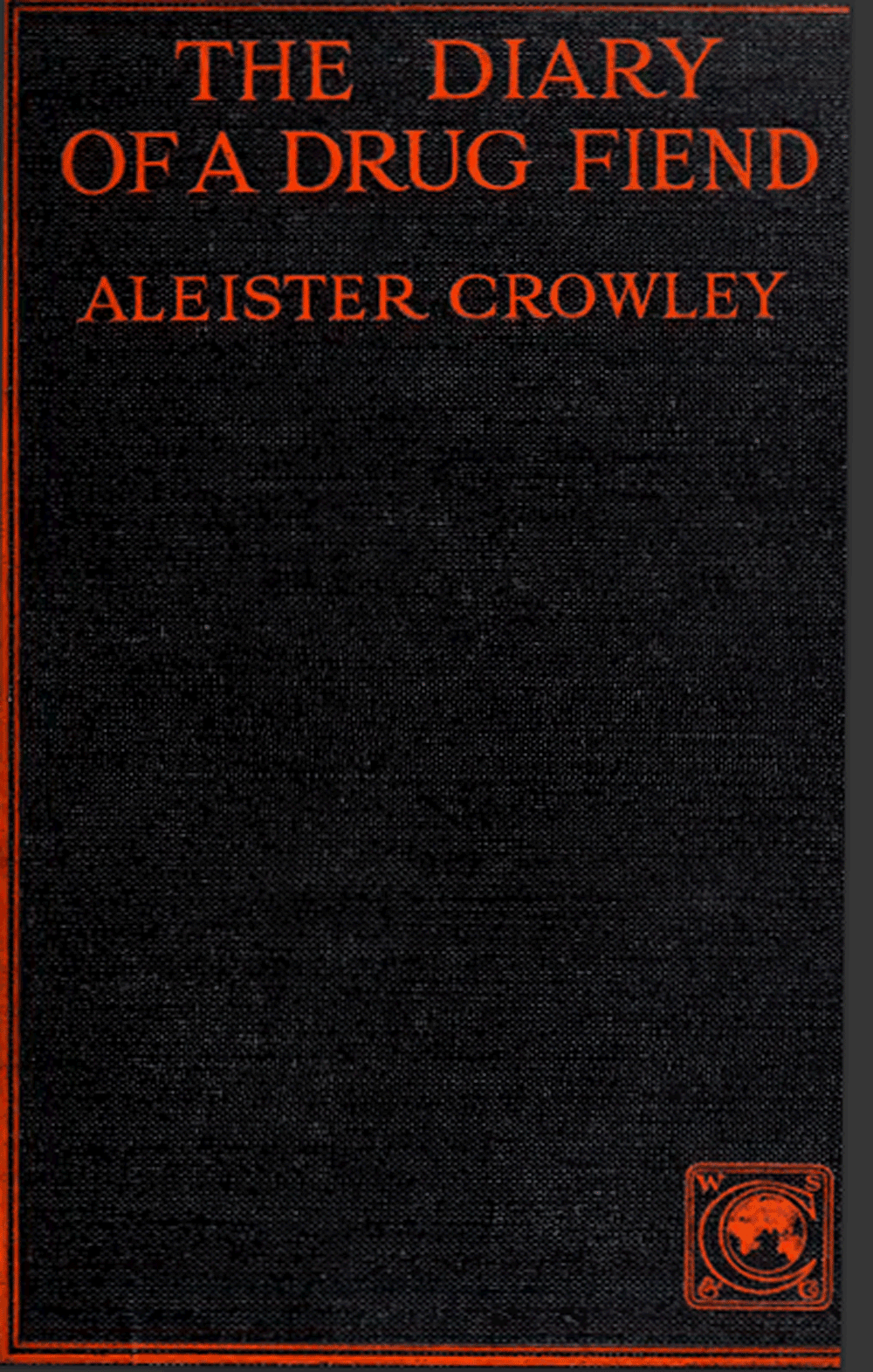
Diary of a Drug Fiend

This is the only full-cast recording of Aleister Crowley's 1922 classic paeon to common sense. It is the first book -- and so far almost the only book -- to stake out a philosophy of drug use that is compatible with human freedom, one in which we learn to use drugs as wisely as possible for the benefit of humanity. This recording was produced by the Drug War Philosopher and your purchases help support his effort to push back against the tragically counterproductive policy of drug prohibition, in the name of human freedom and of humanity's right to heal.

Purchase Your Copy


No cookies, no ads paid for by amoral and immoral billionaires (or trillionaires).


Unless otherwise indicated, no AI is used in the creation of site content. These essays represent the original ideas of their author and not the ideas that the author SHOULD have based on an algorithmic parsing of existing data. For more on this subject, consider the AI-related viewpoints to which the author subscribes as delineated in the New York Times opinion piece entitled "What 370,000 College Essays Tell Us About A.I.’s Effects on Creativity" by Rebecca Winthrop of the Brookings Institution.

The Partnership for a Death Free America is a proud sponsor of The Drug War Philosopher website @ abolishthedea.com.


Copyright 2026, Brian Ballard Quass Contact: quass@quass.com

tombstone for American Democracy, 1776-2024, RIP (up)