








 I've been told by many that I should have seen "my doctor" before withdrawing from Effexor. But, A) My doctor got me hooked on the junk in the first place, and, B) That doctor completely ignores the OBVIOUS benefits of indigenous meds and focuses only on theoretical downsides.
Countless millions suffer needlessly in silence because of America's fearmongering about drugs.
Governor Kotek is "dealing" with the homelessness problem in Oregon by arresting her way out of it, in fealty to fearmongering drug warriors.
Two weeks ago, a guy told me that most psychiatrists believe ECT is great. I thought he was joking! I've since come to realize that he was telling the truth: that is just how screwed up the healthcare system is today thanks to drug war ideology and purblind materialism.
How would we even KNOW that outlawed drugs have no positive uses? We first have to incorporate them in a sane, empathic and creative way to find that out, and the drug war makes such a sensible approach absolutely impossible.
I thought mycology clubs across the US would be protesting drug laws that make mushroom collecting illegal for psychoactive species. But in reality, almost no club even mentions such species. No wonder prohibition is going strong.
Alexander Shulgin is a typical westerner when he speaks about cocaine. He moralizes about the drug, telling us that it does not give him "real" power. But so what? Does coffee give him "real" power? Coke helps some, others not. Stop holding it to this weird metaphysical standard.
The term "drugs" is no more objective than the term "scabs." Both are meant to defame the things that they denote.
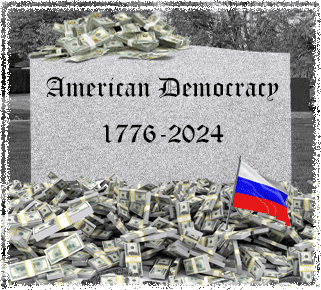
Everyone's biggest concern is the economy? Is nobody concerned that Trump has promised to pardon insurrectionists and get revenge on critics? Is no one concerned that Trump taught Americans to doubt democracy by questioning our election fairness before one single vote was cast?
I should have added to that last post: "I in no way want to glorify or condone drug demonization."
I've been told by many that I should have seen "my doctor" before withdrawing from Effexor. But, A) My doctor got me hooked on the junk in the first place, and, B) That doctor completely ignores the OBVIOUS benefits of indigenous meds and focuses only on theoretical downsides.
Countless millions suffer needlessly in silence because of America's fearmongering about drugs.
Governor Kotek is "dealing" with the homelessness problem in Oregon by arresting her way out of it, in fealty to fearmongering drug warriors.
Two weeks ago, a guy told me that most psychiatrists believe ECT is great. I thought he was joking! I've since come to realize that he was telling the truth: that is just how screwed up the healthcare system is today thanks to drug war ideology and purblind materialism.
How would we even KNOW that outlawed drugs have no positive uses? We first have to incorporate them in a sane, empathic and creative way to find that out, and the drug war makes such a sensible approach absolutely impossible.
I thought mycology clubs across the US would be protesting drug laws that make mushroom collecting illegal for psychoactive species. But in reality, almost no club even mentions such species. No wonder prohibition is going strong.
Alexander Shulgin is a typical westerner when he speaks about cocaine. He moralizes about the drug, telling us that it does not give him "real" power. But so what? Does coffee give him "real" power? Coke helps some, others not. Stop holding it to this weird metaphysical standard.
The term "drugs" is no more objective than the term "scabs." Both are meant to defame the things that they denote.
Everyone's biggest concern is the economy? Is nobody concerned that Trump has promised to pardon insurrectionists and get revenge on critics? Is no one concerned that Trump taught Americans to doubt democracy by questioning our election fairness before one single vote was cast?
I should have added to that last post: "I in no way want to glorify or condone drug demonization."

 (up)
(up)