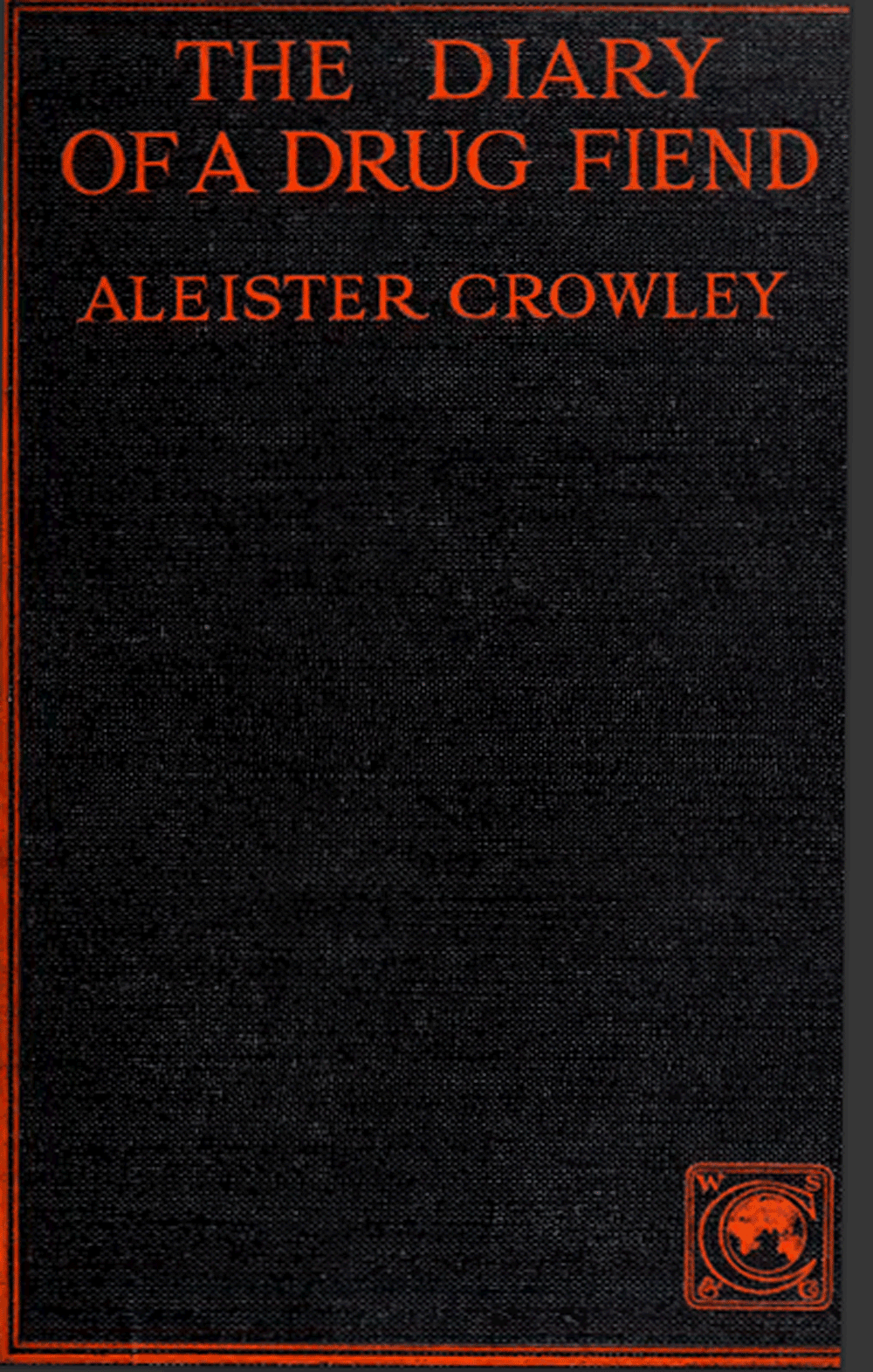






America's biggest drug pusher: The American Psychiatric Association:
by Ballard Quass, the Drug War Philosopher
July 16, 2019
How the disastrous materialist paradigm ruined psychiatry and addicted entire generations of Americans
I am an expert on the down side of the anti-depressant craze, having been over 40 years on the receiving end of materialist nostrums that I was told would correct my brain chemistry. Now I find that they have hopelessly screwed up that chemistry and have debarred me from profiting from the new psychedelic renaissance in depression therapy, thanks to the fact that SSRI + psychedelics causes Serotonin Toxicity Syndrome -- or, in any case, dampens the effects of psychedelics. Nor am I alone. It is a tragic irony that those of us who have dutifully followed the antidepressant bandwagon are now ineligible for the new non-addictive psychedelic therapy that is meant to replace it.
I decided to get off Effexor 1 to try psychedelic therapy, either in South America or in clinical trials in America. When I mentioned this to my psychiatrist, however, he told me that it was literally IMPOSSIBLE to get off of Effexor. He cited a new NIH study that shows a 95% recidivism rate 2 after three years for those who quit the drug. Bizarrely, my shrink seems to think that this proves that Effexor works. I don't know where to begin in correcting his problematic logic in reaching that conclusion.
If I had been told I was going to be addicted to a drug for life, I would have certainly chosen opium -- like Benjamin Franklin -- and not the drug Effexor. Despite our moral bluster, opium would be drastically better for me, since I could use it on weekends only (which would make the intervening weekdays far more bearable, as it did for De Quincey before an injury led him to take the drug on an addictive daily basis) - and even if I did become addicted, so what? That addiction becomes a problem only if supply is interrupted - and in this sense SSRIs are just as bad as opium . In fact, Effexor is far worse than opium 3 , which an addict can at least theoretically get off of after some major short-term suffering - whereas I'm told that I can NEVER get off of Effexor: ever.
The article that you posted points out some of the problems with relying on self-reporting about SSRI effects. But you failed to mention one problem. Those who find SSRIs to be valuable (at least initially) have nothing to compare their feelings to. Had they had an entheogenic encounter in their life, wherein they were overawed with beauty and meaning, then they would not necessarily consider the SSRI effects to be wonderful. In other words, while entheogens may help them "be all they can be," SSRIs may simply help them become satisfied with an unnecessarily humble status quo, never giving them a therapeutic taste of the heights of self-fulfillment that they might have otherwise reached in their lives.
Long-term Effexor use has not goaded me on to ever new heights: to the contrary, I feel a kind of numbing that I'm told is described by the word "anhedonia." At best, Effexor has made life bearable - but it has never inspired me and I have felt my creative spirit actually diminishing year by year. Moreover, Effexor has depressed me by turning me into an eternal patient and a ward of the healthcare state and a lifetime subscriber to Big Pharma 45 . I used to think that the APA recognized addiction as a bad thing, but they seem to have no problem with it as long as they can call it "chemical dependence" instead - though from a user's point of view, there is really no difference: getting off the drug is hell.
If one is going to pay the high price of addiction, they might at least be on a drug that provides actual emotional highs, if not insights and a sharpened mind. (But materialist APA considers that so much "woo-woo": they're claiming to fix a chemical imbalance after all, not make me merely feel good! )
Yet another reason to end the Drug War: Psychiatry hasn't a leg to stand on when it tells folks like myself to "just say no," since they have become the very epitome of the drug pusher, only with complete civil sanction. The corruption of psychiatry is evident in the fact that 1) they don't acknowledge the fact that they have turned folks like myself (for all practical purposes) into addicts and 2) they won't even try to help us get off of their SSRI poison - insisting instead that we make our peace with SSRIs and "take our meds" like the good little interchangeable humanoids that they seem to take us for.
This is why I've started the website ABOLISHtheDEA.com.
Still waiting for an Effexor withdrawal program that will wean me off of Effexor WHILE weaning me ON to the occasional use of therapeutic psychedelics. Most addiction counselors insist on making the addict feel horrible first - partly because they're legally unable to use meds that would ease the pain and partly because of an unexamined Puritan assumption that addiction cures must be painful.
I don't agree - not if the plants of Mother Nature were actually legal again and resourceful and knowledgeable shamans were given carte blanche to use them.
In any case, I don't have time to feel horrible. I have to make a living while dealing with my Effexor addiction.
June 8, 2022
You know that shrink that Brian mentioned? He was soon fired for having given Brian that heads-up about the poor prospects for "kicking" Effexor. That sad fact reminds me of Thomas Szasz's observations that while psychiatrists profit from the Drug War ideology, they are as likely as anyone else to become a victim of that war, especially if they make the faux pas of being completely honest about the downsides of that intolerant substance-hating religion.
"Judging" psychoactive drugs is hard. Dosage counts. Expectations count. Setting counts. In Harvey Rosenfeld's book about the Spanish-American War, a volunteer wrote of his visit to an "opium den": "I took about four puffs and that was enough. All of us were sick for a week."
Drug prohibition represents the biggest power grab by government in human history. It is the state control of pain relief and mental states.
When Americans "obtain their majority" and wish to partake of drugs safely, they should be paired with older adults who have done just that. Instead, we introduce them to "drug abusers" in prerecorded morality plays to reinforce our biased notions that drug use is wrong.
So he writes about the mindset of the deeply depressed, reifying the condition as if it were some great "type" inevitably to be encountered in humanity. No. It's the "type" to be found in a post-Christian society that has turned up its scientific nose at psychoactive medicine.
Philip Jenkins reports that Rophynol had positive uses for treating mental disorders until the media called it the "date rape drug." We thus punished those who were benefitting from the drug, tho' the biggest drug culprit in date rape is alcohol. Oprah spread the fear virally.
Uruguay wants to re-legalize psilocybin mushrooms -- but only for use in a psychiatrist's office. So let me get this straight: psychiatrists are the new privileged shaman? It's a mushroom, for God's sake. Just re-legalize the damn thing and stop treating us like children.
Drug Prohibition is a crime against humanity. It outlaws our right to take care of our own health.
We're living in a sci-fi dystopia called "Fahrenheit 452", in which the police burn thought-expanding plants instead of thought-expanding books.
The Drug War is the legally enforced triumph of human idiocy. We have rigged the deck so that our dunces can be right. The Drug War is a superstition. Indeed, it is THE modern superstition.
It's a category error to say that scientists can tell us if psychoactive drugs "really work." It's like asking Dr. Spock of Star Trek if hugging "really works." ("Hugging is highly illogical, Captain.")
Unless otherwise indicated, no AI is used in the creation of site content. These essays represent the original ideas of their author and not the ideas that the author SHOULD have based on an algorithmic parsing of existing data. For more on this subject, consider the AI-related viewpoints to which the author subscribes as delineated in the New York Times opinion piece entitled "What 370,000 College Essays Tell Us About A.I.’s Effects on Creativity" by Rebecca Winthrop of the Brookings Institution.