





Homepage of the Drug War Philosopher, Brian Quass
blog icon orange rss icon with stylized radio waves bird icon for twitter bird icon for twitter substack icon


back navigation arrow forward navigation arrow


How the Drug War turned me into an eternal patient

by Brian Ballard Quass, the Drug War Philosopher

August 18, 2020


If I had my life to live over again, I would never set foot in a psychiatrist's office, at least not while a Drug War was in effect. Why? Because the Drug War has outlawed every mood medicine except those that are the most addictive of all: namely, modern antidepressants 1 and benzodiazepines. So if you go to a psychiatrist's office, chances are you're going to be started on a "regimen" of highly addictive medications that will turn you into a patient for life. Even as I write this, 1 in 8 American men and 1 in 4 American women are addicted to Big Pharma meds.

I once naively thought that the whole point of psychotherapy was to make the patient self-sufficient and to empower them to face life on their own. But I have learned the hard way, after 40 years of addiction to prescription meds, that modern psychiatry does not seek to empower patients at all. In fact, it does the exact opposite, by turning them into patients for life, who must visit a shrink every 3 to 6 months of their lives in order to qualify for yet another prescription of the addictive pills on which they were started. What could be more demoralizing than this constant expensive and time-consuming reminder that one is an eternal patient, living life as a ward of the healthcare state?

If the meds in question were simply addictive, that would be bad enough, but the DEA requires that I see my doctor every three to six months to have him or her officially determine that I have the right to continue taking these expensive and ineffective meds - and I say "ineffective" advisedly, because Big Pharma PR to the contrary, the Effexor2 I'm taking does not fight depression. At best it seems to dull the mind to make one slightly less worried about that depression. And yet the DEA thinks that I can't be trusted after 40 long years to use these medicines wisely without constant surveillance by the medical establishment? What a laugh, considering that I myself would be the first to renounce these drugs were any of the hundreds of natural alternative medicines actually legal.

Why is the DEA so pathologically worried about drug misuse, even when the drug in question is legal and does not provide the user with anything approaching a good time? It's because the Drug War is all about superstitiously turning psychoactive substances into giant bugaboos, all-purpose scapegoats, holding them responsible for everything good and bad in the world. In the past (that is before 1914), we knew that substances were amoral and that their proper use depended solely on context. Society's goal was to educate the citizen about making wise decisions. In the superstitious Drug War era, we label substances themselves as bad, making the tyrannous claim that citizens cannot be trusted with them, that the government must either outlaw psychoactive substances or watch like a hawk as its citizens use such substances under the closest bureaucratic scrutiny possible.

Of course, if the legal dope that I was taking actually worked - like the cocaine 3 4 with which Sigmund Freud overcame his own depression or the opium 5 that helped Benjamin Franklin get through the rainy days -- I might not mind the regular visits to the behavioral health clinic to jump through the required hoops. But it's a double insult to be subjected to this demoralizing indignity for the purpose of receiving a prescription that one does not even want, to be catechized about one's mental health by a constantly changing roster of interns who might be half my age at most.

Perhaps someday I'll have the nerve to truthfully answer the shrink's obligatory question about suicide:

Q: Have you ever thought about taking your own life?

A: Only when I think about the fact that the Drug War has turned me into an eternal patient.


Author's Follow-up: September 30, 2022


There are plenty of scientific reasons to think that SSRIs don't work (see the works of Robert Whitaker, Irving Kirsch and Julie Holland), but there is a philosophic reason that they do not work as well. Before you can claim that a drug cures an illness, you have to tell me how you define the word "cure." I want to live large like a friend of Jack Kerouac, "The ones who are mad to live, mad to talk, mad to be saved, desirous of everything at the same time, the ones who never yawn or say a commonplace thing, but burn, burn burn like fabulous yellow roman candles." I will consider my depression "cured" when I am able to live life like that. But that is not Big Pharma 6 7 's definition of "cure." Their definition of "cure" is to make me accept the status quo, by essentially tranquilizing me -- not increasing sensations but numbing them.

That is not curing my depression, that is making me a good consumer in a capitalist society, which was never my goal.


Notes for essay entitled How the Drug War turned me into an eternal patient:

1: Antidepressants and the War on Drugs DWP (up)
2: How Drug Prohibition makes it impossible to get off of Effexor and other Big Pharma drugs DWP (up)
3: Sigmund Freud's real breakthrough was not psychoanalysis DWP (up)
4: “Freud on Cocaine : Freud, Sigmund, 1856-1939 : Free Download, Borrow, and Streaming : Internet Archive.” 2023. Internet Archive. 2023. https://archive.org/details/freudoncocaine0000freu/page/n5/mode/2up?view=theater. (up)
5: The Truth About Opium by William H. Brereton DWP (up)
6: Seife, Charles. 2012. “Is Drug Research Trustworthy?” Scientific American 307 (6): 56–63. https://doi.org/10.1038/scientificamerican1212-56. (up)
7: LaMattina, John. n.d. “Why Is Biopharma Paying 75% of the FDA’s Drug Division Budget?” Forbes. https://www.forbes.com/sites/johnlamattina/2022/09/22/why-is-biopharma-paying-75-of-the-fdas-drug-division-budget/. (up)


read more essays here


Ten Tweets

against the hateful war on US


America legalizes alcohol and then outlaws all the drugs that could help prevent and cure alcoholism.

If MAPS wants to make progress with MDMA they should start "calling out" the FDA for judging holistic medicines by materialist standards, which means ignoring all glaringly obvious benefits.

The best harm-reduction strategy is to re-legalize drugs.

What is the end game of the drug warrior? A world in which no one wants drugs? That's not science. It's the drug-hating religion of Christian Science. You know, the American religion that outsources its Inquisition to drug-testing labs.

The best harm reduction strategy would be to re-legalize opium and cocaine. We would thereby end depression in America and free Americans from their abject reliance on the healthcare industry, meanwhile ending gang violence and restoring the rule of law in Latin America.

Yeah. That's why it's so pretentious and presumptuous of People magazine to "fight for justice" on behalf of Matthew Perry, as if Perry would have wanted that.

David Chalmers says almost everything in the world can be reductively explained. Maybe so. But science's mistake is to think that everything can therefore be reductively UNDERSTOOD. That kind of thinking blinds researchers to the positive effects of laughing gas and MDMA, etc.

It is a violation of religious liberty to outlaw substances that inspire and elate. The Hindu religion was inspired by just such a drug.

The prohibitionist motto: "Billions for arrest, not one cent for education."

Guess who's in charge of protecting us from AI? Chuck Schumer! The same guy who protected us from drugs -- by turning America into a prison camp full of minorities and so handing two presidential elections to Donald Trump.


Click here to see All Tweets against the hateful War on Us


back navigation arrow forward navigation arrow
Book Cover

Break the ice with a sledgehammer: place this book on your coffee table.

This book features 150 annotated images, designed to force brainwashed Americans to confront the fact that drug prohibition is wrong. Here is what author Richard Parrish II says of the book's compiler: "The drug prohibition philosopher provides first-hand, principled, persuasive, and insightful arguments against the current drug prohibition regime..."

Purchase Your Copy
Book Cover

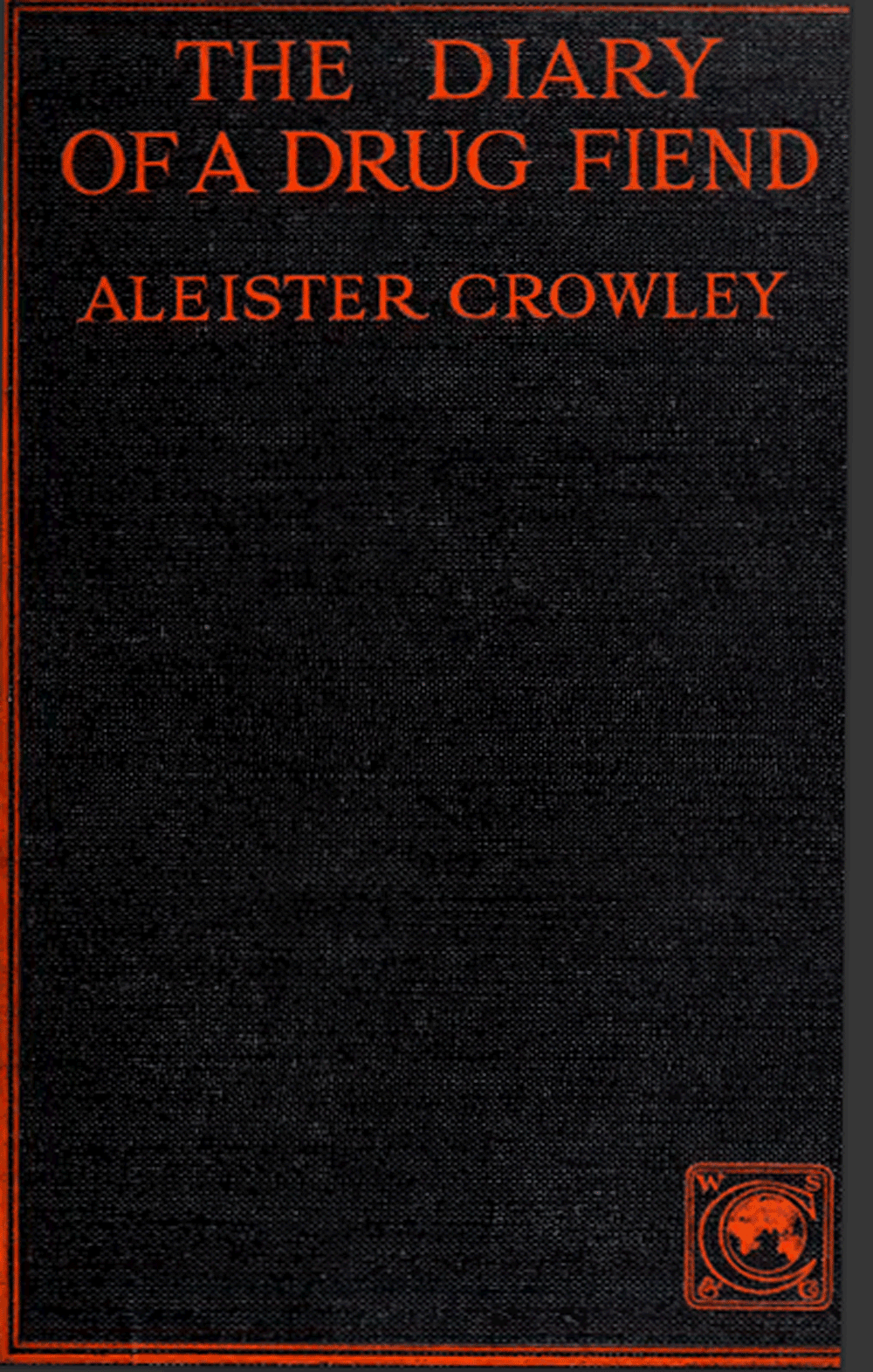
Diary of a Drug Fiend

This is the only full-cast recording of Aleister Crowley's 1922 classic paeon to common sense. It is the first book -- and so far almost the only book -- to stake out a philosophy of drug use that is compatible with human freedom, one in which we learn to use drugs as wisely as possible for the benefit of humanity. This recording was produced by the Drug War Philosopher and your purchases help support his effort to push back against the tragically counterproductive policy of drug prohibition, in the name of human freedom and of humanity's right to heal.

Purchase Your Copy


No cookies, no ads paid for by amoral and immoral billionaires (or trillionaires).


Unless otherwise indicated, no AI is used in the creation of site content. These essays represent the original ideas of their author and not the ideas that the author SHOULD have based on an algorithmic parsing of existing data. For more on this subject, consider the AI-related viewpoints to which the author subscribes as delineated in the New York Times opinion piece entitled "What 370,000 College Essays Tell Us About A.I.’s Effects on Creativity" by Rebecca Winthrop of the Brookings Institution.

The Partnership for a Death Free America is a proud sponsor of The Drug War Philosopher website @ abolishthedea.com.


Copyright 2026, Brian Ballard Quass Contact: quass@quass.com

tombstone for American Democracy, 1776-2024, RIP (up)