






Homepage of the Drug War Philosopher, Brian Quass
blog icon orange rss icon with stylized radio waves bird icon for twitter bird icon for twitter substack icon


back navigation arrow forward navigation arrow


I've got a bone to pick with Jim Hogshire

a philosophical review of 'Opium for the Masses'

by Brian Ballard Quass, the Drug War Philosopher

June 5, 2023


Jim Hogshire is one of the least bamboozled of authors when it comes to the subject of so-called 'drugs.' He recognizes that opium is just a substance and that (spoiler alert) human beings can actually use it wisely for both therapeutic and artistic purposes. (Who knew? Certainly not the Chicken Little Drug Warriors who are forever trying to scare our kids about drugs rather than to educate them.) Moreover he knows that the regular use of opium is no more problematic than the regular use of coffee and that addiction to the former can be avoided by the strategic timing of consumption. And he knows that even habituation can be defeated relatively painlessly and quickly with modern pharma-aided therapies -- that is to say, therapies which were already available over 20 years ago in 1999 when Jim published his book, thanks to which a disillusioned or repentant habitue - what the moralists would call an addict -- could literally sleep through the major symptoms of physical withdrawal. Finally, he knows that any drug -- or indeed any habit -- can cause psychological addiction, but this kind of addiction, being pathological in nature, is, as he correctly notes, beyond the scope of a book about opium .

But I come not to praise Hogshire, but to parse him - or at least to parse those of his viewpoints that fail to pass philosophical muster with yours truly.

Relax, I only have one bone to pick with Hogshire's "Opium for the Masses" (so far, at least):


First (and so far last) bone:

Hogshire keeps describing opium dreams as hallucinations, and I am sure that by some definitions this is true. Yet these experiences can be so detailed and complex that it seems premature to dismiss them as mere "will-of-the-wisps" of the heat-oppressed brain. We may readily admit that the figures within them are not "real" in themselves , but the mere fact that we see such things in such byzantine clarity may well be telling us something about the nature of reality writ large. I realize, for instance, that the neon-green depictions of Mesoamerican royalty that I saw after consuming peyote four years ago were not "real" objects that I could touch and feel - and yet the mere fact that they should appear to me thanks to the consumption of a cactus alkaloid suggested deep potential holistic truths about reality, rendering those dreams far more to me than just materialistic hallucinations that will be someday accounted for by a neurologist.

We know, in fact, that many psychoactive plant and fungi concoctions conduce to exotic "dreams" in those who partake of them. Given this backstory, I think Hogshire is rash in dismissing opium dreams as hallucinations. It's more in keeping with the principle of Occam's Razor that we consider these dreams to be similar in kind to all the dreams inspired by botanical medicine. The alternative is to give unearned credit to random and pointless evolution for unintentionally creating a world full of incredible dreams, all of which can be improbably accessed by Homo sapiens by consuming... wait for it, folks... a plant or fungus! (Who would have guessed? Answer: nobody at all, and least of all a materialist!)

There we go, bone picked!

I do have one more point to add for Hogshire heads, though this is less a criticism than an observation that I trust will flesh out a point that the author has already made in part. I am referring to the notion that withdrawal can be treated pharmacologically. Jim apparently had some specific treatments in mind when he broached this topic, but I would point out that the world will be our oyster when it comes to treating withdrawal -- once we legalize any and all medicines that work! Only imagine: a world in which we can use any substance that works!

The number-one reason why addiction has been such a bugaboo is that we have outlawed all drugs that could make it otherwise. Feeling a little down while coming off of a drug A? Obfuscate that feeling by using drug B & C! But the Drug Warrior has bamboozled us into thinking that the cure for addiction is always a hypocritically defined sobriety. They really believe that this is scientifically true and that it is somehow morally sleazy to use drugs to fight drugs. But that's nonsense. That is a religious belief, not a logical one. If I'm blue and nervous while getting off drug A, give me B & C to cheer me up. That's not a crime. It's common sense. We think otherwise because we have been indoctrinated from birth to fear drugs rather than to understand them and profit from them.

Of course such creative use of psychoactive medicines to fight psychoactive medicines needs to be informed by pharmacological wisdom -- which is yet another reason why we must abolish the Drug War root and branch and denounce it for being in favor of a very dangerous ignorance.


Opium for the Masses: Harvesting Nature's Best Pain Medication, by Jim Hogshire


June 5, 2023 In standing up for the potential ontological significance of the opium dream, Brian is thinking of the thesis advanced by Aldous Huxley in "The Doors of Perception," according to which the world that we normally perceive is but a fraction of the universe -- parsed in such a way as to be of practical use to our limited comprehension here-below.

Related tweet: June 6, 2023


Perhaps the most fascinating thing about opium is that it does not get rid of pain, it externalizes it. It gives the user the conceptual ability of those fabled mystics to envision the pain from outside, as if it were happening to someone else.

Related tweet: June 6, 2023


It's a truly amazing drug, for it gives the user the kind of mental abilities that only a lifetime of meditation can provide, and then only for a handful of devoted aesthetes.

Author's Follow-up: June 6, 2023

I took a shot at materialism 1 above and now I'd like to double down. For it is the materialist reductionist outlook that keeps us from recognizing the therapeutic value of substances like opium . When we're told that such substances have no recognized uses, that statement, if it's to have any truth value at all, has to presuppose the ideology of materialism. To the materialiat, the proof of efficacy has to reside in molecules and chemicals, not in undeniable anecdotes and human history. You say millions have found opium wonderful and it has inspired great poetry? That means nothing to the materialist. It's this myopic lack of common sense that causes otherwise brainy people like Dr. Robert Glatter to ask silly questions, like "Can laughing gas help people with treatment-resistant depression?", in an article of that title in the June 2019 edition of Forbes magazine. Of course laughing gas 2 can hep the depressed, by definition even! The reason Glatter doubts it is because he's a materialist and only accepts reductive explanations of efficacy.

This is why Descartes denied that animals could experience pain, because reductive evidence did not prove it. Sure, dogs will howl when you hurt them, but Descartes tells us that's just noise. Likewise laughing, for materialists like Glatter, is just noise.

The fact is, however, that common sense is not that problematic! Happiness -- drug induced or otherwise -- is happiness. What's more, happiness -- and the anticipation of happiness -- are health-producing.

For this reason, any drug in the world that provides a pleasant feeling can be valuable in treating depression. Any drug in the world. Even opium . Nor is the possibility of dependency a reason to ignore opium , for with opium , dependency might be called a bug, but for modern anti-depressants (upon which 1 in 4 American women are hooked for life), dependency is a feature. This is why doctors keep unabashedly telling such women to "keep taking your meds." We see then the outlawing of opium 3 is based on an aesthetic judgment about what constitutes the good life, not some scientific evidence of what does and does not work for the "user."


Notes for essay entitled I've got a bone to pick with Jim Hogshire: a philosophical review of 'Opium for the Masses':

1: How materialists lend a veneer of science to the lies of the drug warriors DWP (up)
2: Forbes Magazine's Laughable Article about Nitrous Oxide DWP (up)
3: The Truth About Opium by William H. Brereton DWP (up)


read more essays here


Ten Tweets

against the hateful war on US


Drug warriors abuse the English language.

Every time I see a psychiatrist, I feel like I'm playing a game of make-believe. We're both pretending that hundreds of demonized medicines do not exist and could be of no use whatsoever.

AI is inherently plagiaristic technology. It tells us: "Hey, guys, look what I can do!" -- when it should really be saying, "Hey, guys, look how I stole all your data and repackaged it in such a way as to make it appear that I am the genius, not you!"

All of our problems with opioids and opiates could have been avoided had the busybody Chicken Littles in America left well enough alone and let folks continue to smoke regulated opium peaceably in their own homes.

Drug prohibition is a caustic lye that destroys every democratic freedom that it comes in contact with.

The media called out Trump for fearmongering about immigrants, but the media engages in fearmongering when it comes to drugs. The latest TV plot line: "white teenage girl forced to use fentanyl!" America loves to feel morally superior about "drugs."

They drive to their drug tests in pickup trucks with license plates that read "Don't tread on me." Yeah, right. "Don't tread on me: Just tell me how and how much I'm allowed to think and feel in this life. And please let me know what plants I can access."

Drug warriors have taught us that honesty about drugs encourages drug use. Nonsense! That's just their way of suppressing free speech about drugs. Americans are not babies, they can handle the truth -- or if they cannot, they need education, not prohibition.

Scientists are responsible for endless incarcerations in America. Why? Because they fail to denounce the DEA lie that psychoactive substances have no positive medical uses.

ECT is like euthanasia. Neither make sense in the age of prohibition.


Click here to see All Tweets against the hateful War on Us


back navigation arrow forward navigation arrow
Book Cover

Break the ice with a sledgehammer: place this book on your coffee table.

This book features 150 annotated images, designed to force brainwashed Americans to confront the fact that drug prohibition is wrong. Here is what author Richard Parrish II says of the book's compiler: "The drug prohibition philosopher provides first-hand, principled, persuasive, and insightful arguments against the current drug prohibition regime..."

Purchase Your Copy
Book Cover

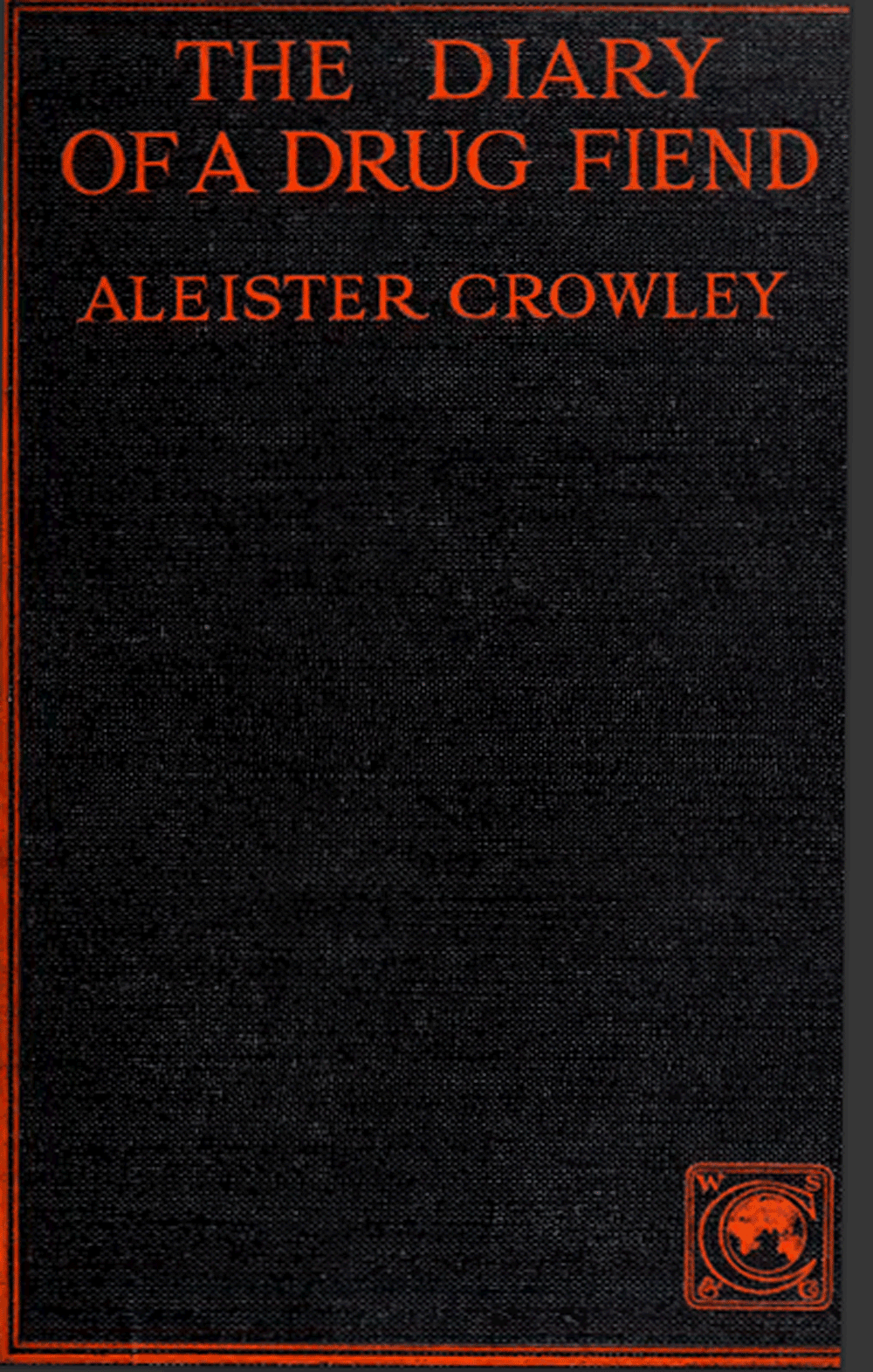
Diary of a Drug Fiend

This is the only full-cast recording of Aleister Crowley's 1922 classic paeon to common sense. It is the first book -- and so far almost the only book -- to stake out a philosophy of drug use that is compatible with human freedom, one in which we learn to use drugs as wisely as possible for the benefit of humanity. This recording was produced by the Drug War Philosopher and your purchases help support his effort to push back against the tragically counterproductive policy of drug prohibition, in the name of human freedom and of humanity's right to heal.

Purchase Your Copy


No cookies, no ads paid for by amoral and immoral billionaires (or trillionaires).


Unless otherwise indicated, no AI is used in the creation of site content. These essays represent the original ideas of their author and not the ideas that the author SHOULD have based on an algorithmic parsing of existing data. For more on this subject, consider the AI-related viewpoints to which the author subscribes as delineated in the New York Times opinion piece entitled "What 370,000 College Essays Tell Us About A.I.’s Effects on Creativity" by Rebecca Winthrop of the Brookings Institution.

The Partnership for a Death Free America is a proud sponsor of The Drug War Philosopher website @ abolishthedea.com.


Copyright 2026, Brian Ballard Quass Contact: quass@quass.com

tombstone for American Democracy, 1776-2024, RIP (up)