




Homepage of the Drug War Philosopher, Brian Quass
blog icon orange rss icon with stylized radio waves bird icon for twitter bird icon for twitter substack icon


back navigation arrow forward navigation arrow


MDMA for Psychotherapy

open letter to researcher Michael Mithoefer, MD

by Brian Ballard Quass, the Drug War Philosopher

August 11, 2020


Dear Michael,

I enjoyed reading your article in the MAPS1 Bulletin entitled "MDMA -Assisted Psychotherapy: How different is it from other psychotherapy?"

In regard to the mindless criminalization of drugs like MDMA , I thought you might be interested in my essay entitled "How the Drug War Killed Leah Betts - and ended the peaceful rave scene."


Best Wishes,
Ballard Quass
AbolishTheDEA.com


PS I'm one of psychiatry's millions of "eternal patients" in these days of the addictive pill paradigm, and so I have 40+ years of experience on the receiving end of psychiatric nostrums for fighting depression and anxiety. Given this vast experience, I hope you'll consider it worthwhile to read a criticism that I have of the scientific method when it comes to seeking out and justifying cures for depression.

The reductionist approach is always looking for "mechanisms of action," but it is my belief that this focus blinds researchers to common sense in many cases. Take MDMA , for instance. Given my secondhand knowledge of the effects of MDMA (as described both by "ravers" and by your study participants), I have sufficient information to know that MDMA would be an effective psychotherapeutic adjunct when used, say, between once a week and once a month in a psychiatrist's office. My conclusion, however, is based on a knowledge of human nature to which reductionist science gives little attention: the fact that a human being looks forward to positive experiences, and that this very anticipation can improve the quality of one's mental life.

If I were to propose such therapy, the reductionist might instinctively object: "But we want to know the mechanism of action before we proceed: namely, how does MDMA decrease depression in this case: what are the chemical mechanisms involved?" This statement, however, merely indicates that the scientist "just doesn't get it." The scientist wants to go in search of a phantom. The MDMA does not have to decrease depression directly in order to decrease depression. Its use simply constitutes an extremely positive experience, and anticipation of use does the rest of the work in decreasing the user's overall depression.

This is why drugs like cocaine and opium can be successfully vilified by Drug Warriors: they can (perhaps correctly) say that there is no direct chemical link between use and self-fulfillment or happiness in life. What they fail to realize, however, is that there need not be a direct link between drug and effect if the drug use provides anticipation. The mere knowledge that there is "a port in the storm" of internal mental life (whether it be provided through cocaine 2 3 , opium , MDMA , marijuana, or prayer) can provide one with happiness indirectly. Again, this is a psychological truism that reductionists seem always to ignore, constantly asking: "Yes, but how exactly does drug x, y or z decrease depression? What are the chemicals involved?"

The answer is, of course, that the drugs do not, strictly speaking, decrease depression at all: rather, they provide the user with anticipation of upcoming mental relief through use of said substances - and that mere anticipation does all the heavy lifting: anticipation does all the positive psychological work that the reductionist wants to ascribe scientifically to the drug itself.

And so the approval of MDMA as a drug to treat depression becomes unnecessarily problematic, as reductionist science scrambles to show chemical pathways whereby the MDMA can bring about the increased happiness with which it's associated, completely ignoring the powerful role that anticipation of regular MDMA therapy can play in boosting mood and one's own patience with the downsides of daily experience. (At least I fear that this could happen. I have no specific knowledge of the actual state of affairs viz. such research.)

I'm not saying that MDMA cannot have a direct and positive effect on the brain. I'm saying that this is not the only way that we can justify the use of such a substance in a psychotherapeutic setting. We need not downplay and ignore the simple fact that occasional scheduled MDMA use can improve a user's life through mere anticipation of the psychological relief and insights that the drug can supply in a positive setting.

Speaking personally, I would definitely look forward to such a psychiatric appointment and be happier simply in knowing that this appointment loomed on the horizon. What a contrast to the depression I currently feel knowing that a pro forma office visit is coming up: a visit that I'm forced to make every 3 to 6 months of my life in order to obtain re-authorization for my purchase of yet another expensive set of prescription drugs. (That's the problem with the DEA: they fetishize drugs, making them so "awesome" that even a user of 40 years cannot be trusted to use his medicine wisely without constant bureaucratic oversight, approval and reapproval.)

PPS I hope you don't mind, but this email will also appear on my website, where I hope my thoughts on this topic will inspire thinkers to unravel the tangled web of superstition and pseudoscience that currently constitutes America's anti-scientific attitude toward this fetishized scapegoat for social problems that we call "drugs." I trust that it "goes without saying" that these are simply general philosophical observations, not criticisms directed toward you personally. So thank you for your patience and attention, and I wish you best of luck in your important work with MDMA 4 as a psychotherapeutic tool.


The Links Police

Do you know why I stopped you? That's right, because the Drug War has given me carte blanche to be a noxious busybody. That, and I wanted to give you a few more links showing how drugs can help us stop mass shootings, as soon as we drop the drug-war ideology of substance demonization, that is.



?201?


March 1, 2023

Michael has not yet quite seen his way clear to get back to me, but then this was written three years ago when I was still a kid -- scarcely 62 years old if I was a day! What I was trying to say above is that the use of drugs like coca and opium 5 can create a virtuous circle of effects -- by giving someone something to look forward, taking one's mind off of negative thoughts, thereby improving performance, thereby making one happy, thereby taking one's mind off negative thoughts, thereby improving performance, etc.

That's a virtuous circle to which modern scientistic psychology is blind! And so they do not want to give drugs that will merely help: no, they want to "cure" me with drugs that work based on what one can see under a microscope. The result of such scientism, of course, is today's psychiatric pill mill 6 , thanks to which 1 in 4 American women are hooked on Big Pharma 7 8 meds that purport (wrongly, as it turns out) to treat depression and anxiety on a "scientific" basis. I'm something of an expert on this topic, as I have been on the receiving end of such nostrums for 40+ years, and the one thing I can say about tricyclics, benzodiazepines, SSRIs and SNRIs is that they are and have been all about TRANQUILIZING ME, not about making me happy or giving me a feeling of success or giving me something to look forward to in this life.


Notes for essay entitled MDMA for Psychotherapy: open letter to researcher Michael Mithoefer, MD:

1: Three Problems With Rick Doblin's MAPS DWP (up)
2: Sigmund Freud's real breakthrough was not psychoanalysis DWP (up)
3: “Freud on Cocaine : Freud, Sigmund, 1856-1939 : Free Download, Borrow, and Streaming : Internet Archive.” 2023. Internet Archive. 2023. https://archive.org/details/freudoncocaine0000freu/page/n5/mode/2up?view=theater. (up)
4: How the Drug War killed Leah Betts DWP (up)
5: The Truth About Opium by William H. Brereton DWP (up)
6: Antidepressants and the War on Drugs DWP (up)
7: Seife, Charles. 2012. “Is Drug Research Trustworthy?” Scientific American 307 (6): 56–63. https://doi.org/10.1038/scientificamerican1212-56. (up)
8: LaMattina, John. n.d. “Why Is Biopharma Paying 75% of the FDA’s Drug Division Budget?” Forbes. https://www.forbes.com/sites/johnlamattina/2022/09/22/why-is-biopharma-paying-75-of-the-fdas-drug-division-budget/. (up)


read more essays here


Ten Tweets

against the hateful war on US


The massive use of plea deals lets prosecutors threaten drug suspects into giving up their rights to a fair trial.

Scientists cannot tell us if using drugs is worth the risk any more than they can tell us if free climbing is worth the risk, or horseback riding or parkour.

America arrests people whose only crime is that they are trying to be all that they can be in life... in such a way that psychiatrists are not getting THEIR cut.

There is more hope in dope than there is in the psychiatric pill mill.

Americans have learned nothing but half-truths and lies about cocaine and opium thanks to the total censorship of drug benefits.

We should place prohibitionists on trial for destroying inner cities.

The UN of today is in an odd position regarding drugs: they want to praise indigenous societies while yet outlawing the drugs that helped create them.

When people tell us there's nothing to be gained from using mind-improving drugs, they are embarrassing themselves. Users benefit from such drugs precisely to the extent that they are educated and open-minded. Loudmouth abstainers are telling us that they lack these traits.

The DEA is gaslighting Americans, telling them that drugs with obvious benefits have no benefits whatsoever. Scientists collude in this lie thanks to their adherence to the emotion-scorning principles of behaviorism.

Ug! Fire bad! There were 4,731 fire-related deaths in America in 2023. Learn more at the Partnership for a Death Free America.


Click here to see All Tweets against the hateful War on Us


back navigation arrow forward navigation arrow
Book Cover

Break the ice with a sledgehammer: place this book on your coffee table.

This book features 150 annotated images, designed to force brainwashed Americans to confront the fact that drug prohibition is wrong. Here is what author Richard Parrish II says of the book's compiler: "The drug prohibition philosopher provides first-hand, principled, persuasive, and insightful arguments against the current drug prohibition regime..."

Purchase Your Copy
Book Cover

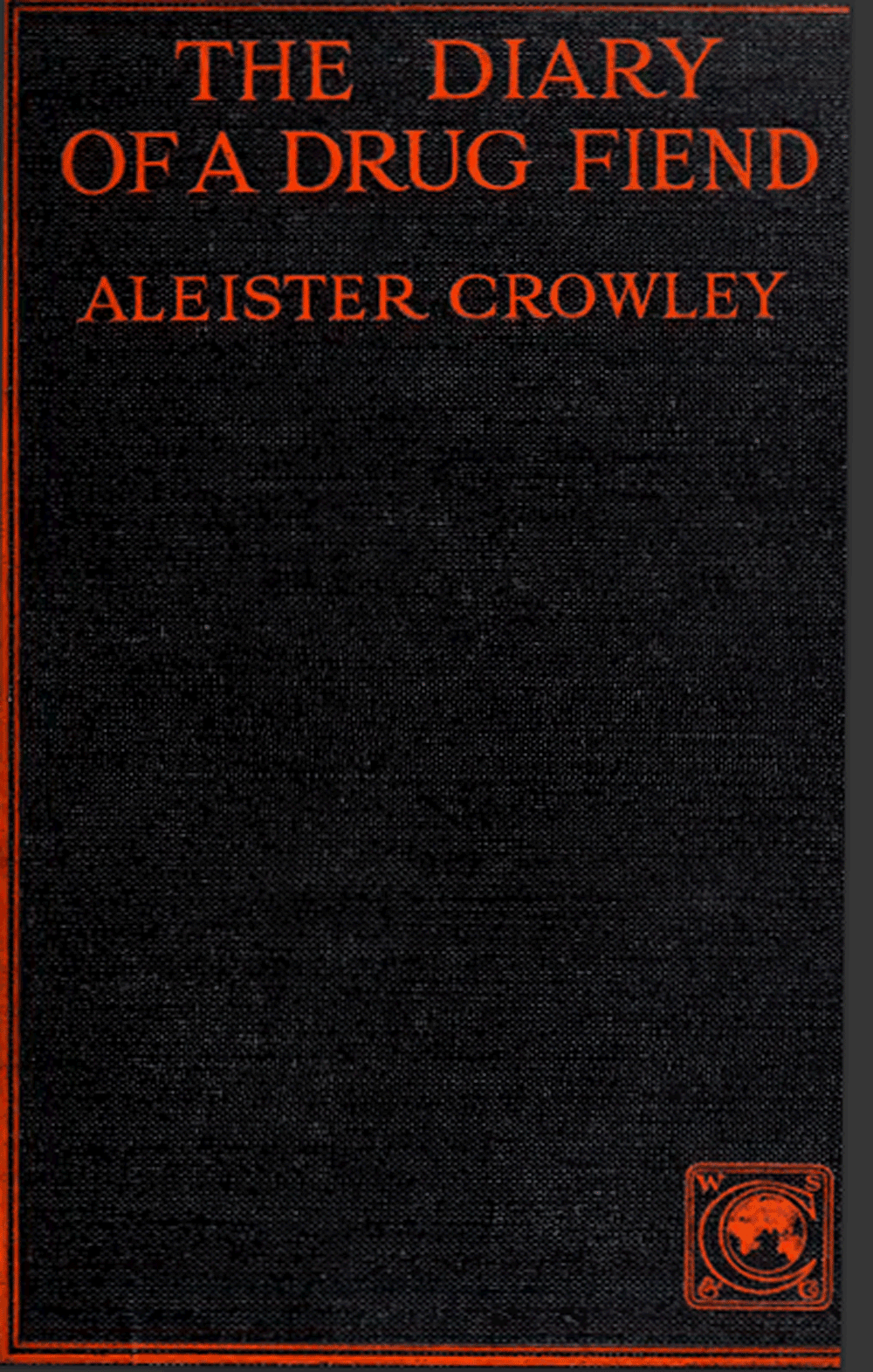
Diary of a Drug Fiend

This is the only full-cast recording of Aleister Crowley's 1922 classic paeon to common sense. It is the first book -- and so far almost the only book -- to stake out a philosophy of drug use that is compatible with human freedom, one in which we learn to use drugs as wisely as possible for the benefit of humanity. This recording was produced by the Drug War Philosopher and your purchases help support his effort to push back against the tragically counterproductive policy of drug prohibition, in the name of human freedom and of humanity's right to heal.

Purchase Your Copy


No cookies, no ads paid for by amoral and immoral billionaires (or trillionaires).


Unless otherwise indicated, no AI is used in the creation of site content. These essays represent the original ideas of their author and not the ideas that the author SHOULD have based on an algorithmic parsing of existing data. For more on this subject, consider the AI-related viewpoints to which the author subscribes as delineated in the New York Times opinion piece entitled "What 370,000 College Essays Tell Us About A.I.’s Effects on Creativity" by Rebecca Winthrop of the Brookings Institution.

The Partnership for a Death Free America is a proud sponsor of The Drug War Philosopher website @ abolishthedea.com.


Copyright 2026, Brian Ballard Quass Contact: quass@quass.com

tombstone for American Democracy, 1776-2024, RIP (up)