






Homepage of the Drug War Philosopher, Brian Quass
blog icon orange rss icon with stylized radio waves bird icon for twitter bird icon for twitter substack icon


back navigation arrow forward navigation arrow


Open Letter to Rick Doblin and Roland Griffiths

the downsides of 'working within the system'

by Brian Ballard Quass, the Drug War Philosopher

December 2, 2022


At the risk of being charged as a heretic in the pro-legalization community, I have to engage in a little push-back against the scientific approach to drug-law reform being championed by Rick Doblin and Roland Griffiths. Of course, I cheer on their efforts to the extent that they succeed in bringing mental godsends to people in need (which is to say almost everybody in the world, whether in fighting depression or truly awakening their minds to the marvels of life), but I think we should stop for a moment and consider the downsides of the system that they are "playing ball with" in order to attain their goals.

Update: May 20, 2025

First, the scientific method is not the appropriate way to study psychedelics as healing medicine. Sure, science can try to quantify what's going on in the brain of a "user" and identify brain receptors and electrical activity, but it can and should have nothing to say about the meaning and value of such experiences. Those are qualitative issues which science, by its very quantitative nature, is not qualified to assess. As philosophers would say, the scientist deals with the world of res extensa, things that can be measured, and typically denies the very existence of a separate world of thought, res cogitans, to the point that they even chided Roland for including the word "consciousness" in the name of his new center for the study of psychedelics. In other words, the scientist qua scientist looks at the epiphanies spawned by psychedelics and says, "Nothing to see here. It's all just the result of matter combining in various ways without any regard for the hopes and dreams of carbon-based computers like ourselves."

But that does not stop scientists from trying to snag qualitative data from study participants, while doing their best to shield the participants from the supposedly prejudicial influence of their environment. The usual scientific approach in this regard is to perform double-blind and even triple-blind experiments in the hope of receiving "unbiased" feedback from their psychedelic trial participants. In other words, the standard MO is to keep the test subject in the dark -- or even mislead them -- about the nature of the substance that they are about to ingest. But as Alexander Shulgin points out, such experiments are borderline immoral when the drug being tested is a psychedelic, a drug whose positive experiences are generally imparted only to those who approach those experiences with the right set of expectations. When we lie to such clients, or even just "keep them in the dark" about the nature of the substance that they are to receive, then we put them at risk of a bad trip -- yes, even in cases where we give them nothing but a placebo! In other words, when it comes to psychedelics, the scientific method has met its match. Psychedelics, by the subjective nature of their effects, starkly confront us with the unacknowledged limits of the scientific approach to life, which Americans naively believe can deal with any topic under the sun.

(Incidentally, I'm always surprised when I hear researchers breezily talking about how they lie to research study participants in order to avoid giving them "expectations." Even if we find those lies useful, they have surely reached their sell-by date now, since every decently educated drug study participant knows that it is, and has long been, common practice for researchers to lie to the participants of psychologically oriented research studies. So when modern studies employ such mendacity, the question needs to be asked in the nature of a game theory inquiry: how many study participants were expecting the researchers to lie to them and so discounted the pre-study information that they were given?)

Here's another problem with the scientific approach to drug research: it never puts the downsides of psychoactive substances in a proper context.

The scientific environment in which these guys work is astonishingly anti-use, as if drug evaluation guidelines had been written by Mary Baker Eddy herself. The algorithm for approving a psychoactive drug seems to be as follows: If the substance could (even theoretically) cause problems for a few uneducated white teenagers, then it must not be used anywhere, ever, for anybody. Thus millions -- perhaps billions -- of people go without godsend medicine. Yet Roland, by his silence on this topic, seems to think that this is a just and reasonable way to proceed. We want to be cautious after all. But it's that ENORMOUS caution that has kept me for a lifetime now from leaning down and using the plant medicine that grows at my feet.

It's as if the researchers think they can save EVERYBODY by keeping a substance illegal, whereas all they are really doing is shifting the downsides of their drug disapproval decisions to the quietest, least empowered communities, like the chronically depressed for instance, who are no political threat, as they generally sit at home leading what Thoreau called "lives of quiet desperation." No politician is going to raise hell if the well-being of this taciturn demographic is not taken into consideration by drug researchers.

What will it take for scientists to wake up to the fact that the drug-approval process is incredibly anti-statistical? Why are the interests of juvenile delinquents always put ahead of the millions of needy depressed like myself? What we need is a new March on Washington, in which the depressed and those suffering pain demand their rights and demand to be considered as full stakeholders in the drug approval game, rather than as a group that can be safely thrown under the bus so that scientists can cater to the prejudices of the loudest-shouting Drug Warrior demagogue in Washington, DC.

To further illustrate the contextual blindness of modern drug researchers, consider the following questions that never occur to such researchers:

1) How many suicides could be prevented if we legalize this psychoactive medicine?
2) How many topers might give up alcohol if we legalize this psychoactive medicine?
3) How many lives will grind to a slow depressive halt if we do NOT legalize this psychoactive medicine?
4) How many inner-city youth will be killed by gun violence 1 caused by prohibition if we do NOT legalize this psychoactive medicine?
5) How many users will die or be harmed by tainted product if we do NOT legalize this psychoactive medicine?
6) How many will use this substance unwisely if we do not legalize, normalize and fund research on this psychoactive medicine?
7) Should use of this psychoactive medicine lead to habituation, would that be any worse than the lifetime habituation that occurs for 1 in 4 American women on Big Pharma 2 3 meds?

This is just another way of saying to safety-obsessed drug researchers: you can't save everybody!

I'm not saying to ignore safety concerns, merely to place them in some context. Roland, for instance, cites some anecdotal studies that some MDMA users have long-term problems that they attribute to the drug, although he admits that these rare cases seem to involve unusually heavy use and that the MDMA may have been mixed with other drugs (not to mention the fact that purity of the drug is always rendered in doubt thanks to substance prohibition). But this is a concern that merits a warning label and public education, surely, not an across-the-board ban on a time-honored empathogen that could be used therapeutically to end school shootings and to dissuade world leaders from green-lighting the use of nuclear weapons! (Ketamine treatment should come with a warning about potential urinary problems for excessive use, but because science today is politicized, such well-documented potential downsides are hushed up with impunity by Ketamine providers. So much for America's supposedly "scientific" process of drug approval.)

Yet another related problem with the scientific method: its number-one consideration (at least as a matter of official policy) is user safety. But the number-one consideration of drug users is self-actualization and self-transcendence, with safety coming in second. My personal goal in life, for instance, is to know myself and the world I live in, and psychoactive drugs help me when they show me that there is so much more to reality than the world as perceived by my socially trained five senses. I would far prefer to live a full drug-empowered life for 60 years than a dull drug-free life for 80. Like the opium 4 -loving physician Avicenna, 'I prefer a short life with width to a narrow one with length.' So when scientists tell me of a drug's danger, as if that's the last and final word on the subject, I say, "Thanks, but now let me make up my mind for myself whether to use it or not," because the decision to use is always a personal one, based on one's own philosophy of what constitutes the good life -- and science, for all its powers, is not able to tell me what sort of life I should lead. Science values longevity and safety in the abstract. Fine. But for me, self-actualization comes first.

But to repeat, more power to these guys if they can make headway against this "scientific" system for drug approval. That said, Rick has been busting his proverbial for 30 years now and the legalization date for MDMA 5 just keeps getting pushed back further and further by the bureaucratic system that he's partnered with. If Trump "comes to power" again, all bets are off on the turnaround time on the long-overdue approval this one solitary and much-maligned substance.

To be honest, I'm hoping that such frustratingly incremental efforts ("incremental" being a generous word here) will eventually be rendered moot by the initiatives of states like Colorado and Oregon, where substance legalization 6 continues apace and where the therapeutic value of at least some psychoactive meds is now acknowledged. The time is ripe, at least in such enlightened outposts, for the creation of a replacement for pill-mill psychiatry, whereby the depressed will no longer be looked upon as replaceable widgets amenable to one-size-fits-all cures that enrich the 1%. In this new paradigm, the very concept of a psychiatric "patient" will disappear, as the depressed and the carefree visit the same pharmacologically savvy empath 7 to learn about themselves and the world around them through a new kind of drug-assisted therapy, whose goal is neither to turn them into good consumers nor flower children, but simply to help them live the "good life" according to their own definition of that term.


Author's Follow-up:

May 20, 2025

picture of clock metaphorically suggesting a follow-up


It's touching to see how naive I was back in December of 2022. I actually thought that Oregon and Colorado drug law reforms were part of an inevitable march in the direction of a sensible non-medicalized view of psychoactive medicines. Drug warriors have since infiltrated the state of Oregon and overturned their decision to decriminalize drug possession. There was even an attempt last year to outlaw free speech about drugs in the state. These Drug Warriors want to return ASAP to America's time-honored practice of sweeping social problems under the rug of drug laws, the practice of redefining social problems as drug problems. Just give the police the power to arrest the homeless and you no longer have to deal with the lack of affordable housing. As for those whom we have poisoned by refusing to teach about and regulate drugs, we merely have to arrest those people to make that government-created health problem disappear from the American mind. This attitude is so wrong and so evil that one scarcely knows where to begin in attacking it. That is why I have written hundreds of essays on the topic of imbecilic drug prohibition, to come at the problem from every possible angle and so attempt to cause complacent America to renounce at long last its many prohibitionist pieties. Especially those right-wingers who insist on no government interference with guns. Do they not see that drug prohibition puts the government in charge of pain relief and of deciding how and how much you can think and feel in life? Do you really think that a government that claims such power will stint at outlawing guns the moment they think they have the power to do so?

Principles, guys! Principles! That's what America was founded upon and that's what the Drug War is all about completely ignoring!


Notes for essay entitled Open Letter to Rick Doblin and Roland Griffiths: the downsides of 'working within the system':

1: Firearm Violence in the United States Center for Gun Violence Solutions, Johns Hopkins University (up)
2: Seife, Charles. 2012. “Is Drug Research Trustworthy?” Scientific American 307 (6): 56–63. https://doi.org/10.1038/scientificamerican1212-56. (up)
3: LaMattina, John. n.d. “Why Is Biopharma Paying 75% of the FDA’s Drug Division Budget?” Forbes. https://www.forbes.com/sites/johnlamattina/2022/09/22/why-is-biopharma-paying-75-of-the-fdas-drug-division-budget/. (up)
4: The Truth About Opium by William H. Brereton DWP (up)
5: How the Drug War killed Leah Betts DWP (up)
6: “National Coalition for Drug Legalization.” n.d. National Coalition for Drug Legalization. https://www.nationalcoalitionfordruglegalization.org/. (up)
7: pharmacologically-savvy empath: this is an empathic individual with an ethnobotanical knowledge of safe and beneficial drug use worldwide, someone who recognizes psychological common sense and can advise on protocols that meet user needs while avoiding unwanted dependency. (up)


read more essays here


Ten Tweets

against the hateful war on US


America's "health" system was always screaming at me about the threat of drug dependency. Then what did it do? It put me on the most dependence-causing drugs of all time: SSRIs and SNRIs.

Researchers insult our intelligence when they tell us that drugs like MDMA and opium and laughing gas have not been proven to work. Everyone knows they work. That's precisely why drug warriors hate them.

We deal with "drug" risks differently than any other risk. Aspirin kills thousands every year. The death rate from free climbing is huge. But it's only with "drug use" that we demand zero deaths (a policy which ironically causes far more deaths than necessary).

I'm told antidepressant withdrawal is fine because it doesn't cause cravings. Why is it better to feel like hell than to have a craving? In any case, cravings are caused by prohibition. A sane world could also end cravings with the help of other drugs.

No imaginable downside could persuade westerners that guns and alcohol were too dangerous. Yet the DEA lies about almost all psychoactive drugs, saying there are no good uses.

Now the US is bashing the Honduran president for working with "drug cartels." Why don't we just be honest and say why we're REALLY upset with the guy? Drugs is just the excuse, as always, now what's the real reason? Stop using the drug war to disguise American foreign policy.

Reagan paid a personal price for his idiocy however. He fell victim to memory loss from Alzheimer's, after making a career out of demonizing substances that can grow new neurons in the brain!

The addiction gene should be called the prohibition gene: it renders one vulnerable to prohibition lies and limitations: like the lack of safe supply, the lack of choices, and the lack of information. We should pathologize the prohibitionists, not their victims.

The UK just legalized assisted dying. This means that you can use drugs to kill a person, but you still can't use drugs to make that person want to live.

The problem with blaming things on addiction genes is that it whitewashes the role of society and its laws. It's easy to imagine an enlightened country wherein drug availability, education and attitudes make addiction highly unlikely, addiction genes or no addiction genes.


Click here to see All Tweets against the hateful War on Us


back navigation arrow forward navigation arrow
Book Cover

Break the ice with a sledgehammer: place this book on your coffee table.

This book features 150 annotated images, designed to force brainwashed Americans to confront the fact that drug prohibition is wrong. Here is what author Richard Parrish II says of the book's compiler: "The drug prohibition philosopher provides first-hand, principled, persuasive, and insightful arguments against the current drug prohibition regime..."

Purchase Your Copy
Book Cover

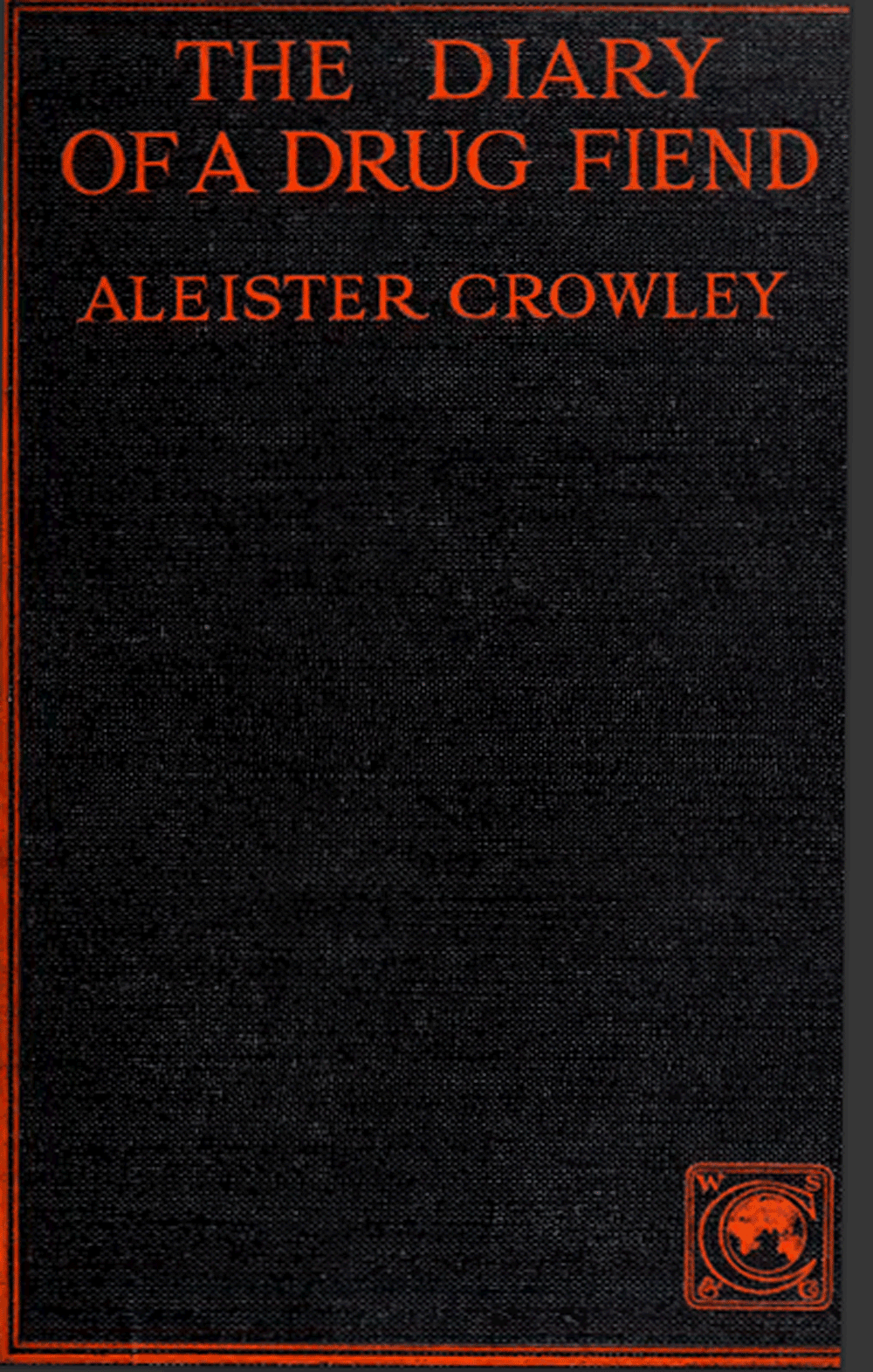
Diary of a Drug Fiend

This is the only full-cast recording of Aleister Crowley's 1922 classic paeon to common sense. It is the first book -- and so far almost the only book -- to stake out a philosophy of drug use that is compatible with human freedom, one in which we learn to use drugs as wisely as possible for the benefit of humanity. This recording was produced by the Drug War Philosopher and your purchases help support his effort to push back against the tragically counterproductive policy of drug prohibition, in the name of human freedom and of humanity's right to heal.

Purchase Your Copy


No cookies, no ads paid for by amoral and immoral billionaires (or trillionaires).


Unless otherwise indicated, no AI is used in the creation of site content. These essays represent the original ideas of their author and not the ideas that the author SHOULD have based on an algorithmic parsing of existing data. For more on this subject, consider the AI-related viewpoints to which the author subscribes as delineated in the New York Times opinion piece entitled "What 370,000 College Essays Tell Us About A.I.’s Effects on Creativity" by Rebecca Winthrop of the Brookings Institution.

The Partnership for a Death Free America is a proud sponsor of The Drug War Philosopher website @ abolishthedea.com.


Copyright 2026, Brian Ballard Quass Contact: quass@quass.com

tombstone for American Democracy, 1776-2024, RIP (up)