




Homepage of the Drug War Philosopher, Brian Quass
blog icon orange rss icon with stylized radio waves bird icon for twitter bird icon for twitter substack icon


back navigation arrow forward navigation arrow


The Invisible Mass Shootings

open letter to Criminologist James Alan Fox

by Brian Ballard Quass, the Drug War Philosopher

July 6, 2022


James Alan Fox is a professor at Northwestern University who has been tracking mass shooting deaths in America since 2006. The following comment is in response to gun violence 1 in America: A long list of forgotten victims" published July 6, 2022 on WTOP.com.

Hi, Professor Fox.

I find the Gannett Corporation's coverage of inner-city shootings to be very un-enlightening, since they report on deaths without ever mentioning the Drug War. For as Ann Heather Thompson wrote in the Atlantic in 2014, "Without the War on Drugs, the level of gun violence 2 that plagues so many poor inner-city neighborhoods today simply would not exist."

Mayors around the country profess bafflement at the increase in such violence, and yet they ignore the obvious cause: the fact that inner cities are armed to the teeth thanks to the way that drug prohibition has incentivized drug dealing in poor and poorly educated communities.

Lisa Ling even produced a whole documentary about Chicago violence (over 800 killed in 2021) and did not even MENTION the Drug War.

This is why the Drug War survives to this day, because no one holds it to account for the evil that it's facilitating.

I hope you will do your part to get USA Today (and the other media outlets that you advise) to acknowledge this connection and to stop pretending that the yearly rise in inner-city gun deaths is some kind of inexplicable fluke.

As to mass shootings, I'm not sure they are as rare as you suggest, at least in inner cities. I think the reality is that the press does not characterize multi-victim shooting incidents as "mass shootings" if they occur in inner cities that are rife with daily gunfire. On July fourth, at least 5 people were shot outside a Richmond hot spot but I didn't see that story running nationwide, or even on news station WTOP.com, for that matter, located in Washington D.C., just 150 miles north of Richmond.


Notes for essay entitled The Invisible Mass Shootings: open letter to Criminologist James Alan Fox:

1: Firearm Violence in the United States Center for Gun Violence Solutions, Johns Hopkins University (up)
2: Firearm Violence in the United States Center for Gun Violence Solutions, Johns Hopkins University (up)


read more essays here


Ten Tweets

against the hateful war on US


And we should not insist it's a problem if someone decides to use opium, for instance, daily. We certainly don't blame "patients" for using antidepressants daily. And getting off opium is easier than getting off many antidepressants -- see Julia Holland.

All drugs have positive uses at some dose, for some reason, at some time -- but prohibitionists have the absurd idea that drugs can be voted up or down. This anti-scientific notion deprives the modern world of countless godsends.

You can get a Ph.D. in healthcare, and not learn a thing about the glaringly obvious benefits of drugs, as demonstrated by history, anecdote and common sense.

Orchestras will eventually use psychedelics to train conductors. When the successful candidate directs mood-fests like Mahler's 2nd, THEY will be the stars, channeling every known -- and some unknown -- human emotions. Think Simon Rattle on... well, on psychedelics.

If opium and cocaine were re-legalized, hospital buildings would no longer be the secular cathedrals of our time. Some of that wealth would actually go to healthy people.

There would be little or no profiling of blacks if the Drug War did not exist.

In "How to Change Your Mind," Michael Pollan says psychedelic legalization would endanger young people. What? Prohibition forces users to decide for themselves which mushrooms are toxic, or to risk buying contaminated product. And that's safe, Michael?

Americans are starting to think that psychedelics may be an exception to the rule that drugs are evil -- but drugs have never been evil. The evil resides in how we think, talk and legislate about drugs.

Antidepressants might be fine in a world where drugs were legal. Then it would actually be possible to get off them by using drugs that have inspired entire religions. In the age of prohibition, however, an antidepressant prescription is usually a life sentence.

"Dope Sick"? "Prohibition Sick" is more like it. The very term "dope" connotes imperialism, racism and xenophobia, given that all tribal cultures have used "drugs" for various purposes. "Dope? Junk?" It's hard to imagine a more intolerant, dismissive and judgmental terminology.


Click here to see All Tweets against the hateful War on Us


back navigation arrow forward navigation arrow
Book Cover

Break the ice with a sledgehammer: place this book on your coffee table.

This book features 150 annotated images, designed to force brainwashed Americans to confront the fact that drug prohibition is wrong. Here is what author Richard Parrish II says of the book's compiler: "The drug prohibition philosopher provides first-hand, principled, persuasive, and insightful arguments against the current drug prohibition regime..."

Purchase Your Copy
Book Cover

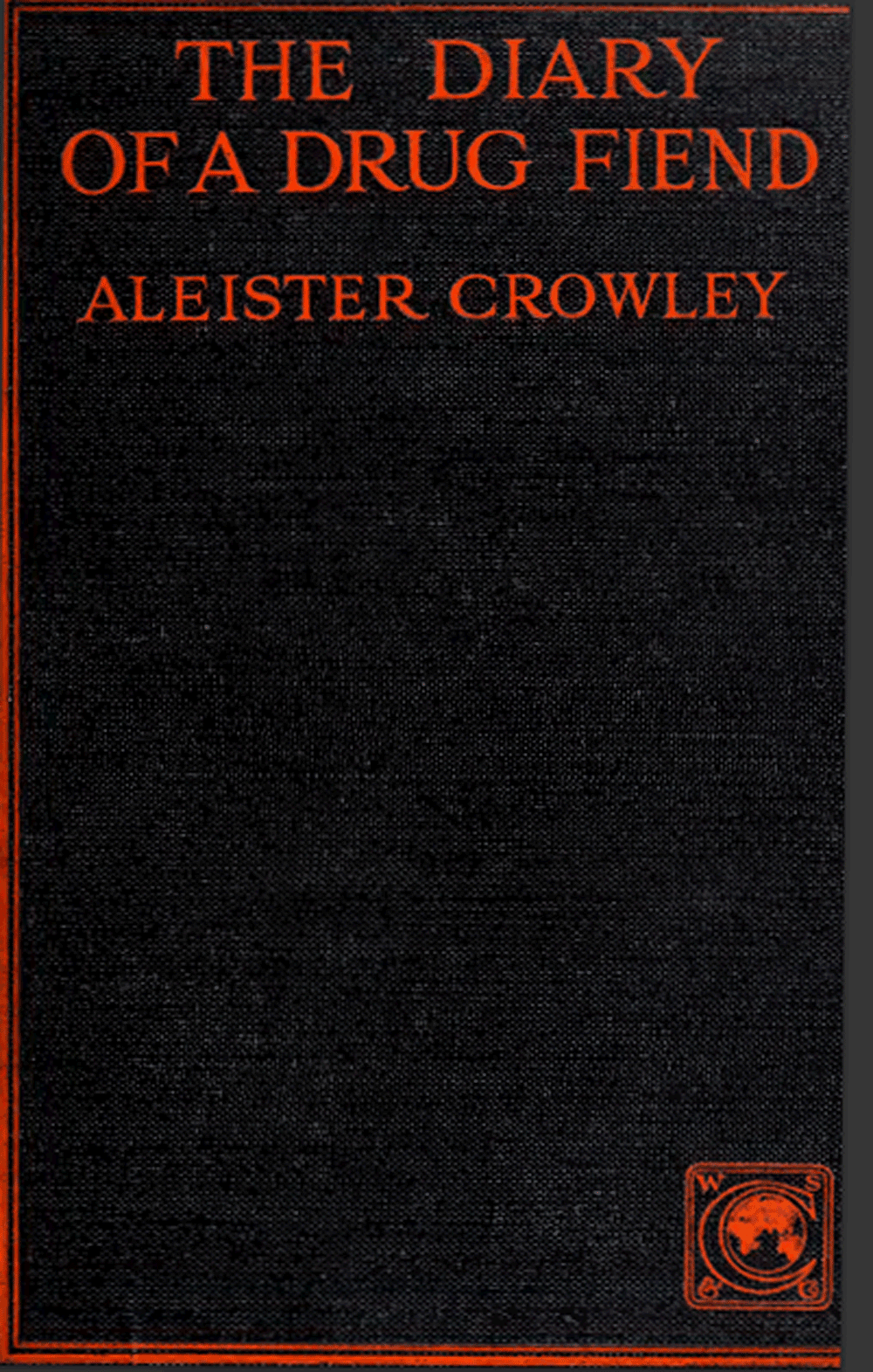
Diary of a Drug Fiend

This is the only full-cast recording of Aleister Crowley's 1922 classic paeon to common sense. It is the first book -- and so far almost the only book -- to stake out a philosophy of drug use that is compatible with human freedom, one in which we learn to use drugs as wisely as possible for the benefit of humanity. This recording was produced by the Drug War Philosopher and your purchases help support his effort to push back against the tragically counterproductive policy of drug prohibition, in the name of human freedom and of humanity's right to heal.

Purchase Your Copy


No cookies, no ads paid for by amoral and immoral billionaires (or trillionaires).


Unless otherwise indicated, no AI is used in the creation of site content. These essays represent the original ideas of their author and not the ideas that the author SHOULD have based on an algorithmic parsing of existing data. For more on this subject, consider the AI-related viewpoints to which the author subscribes as delineated in the New York Times opinion piece entitled "What 370,000 College Essays Tell Us About A.I.’s Effects on Creativity" by Rebecca Winthrop of the Brookings Institution.

The Partnership for a Death Free America is a proud sponsor of The Drug War Philosopher website @ abolishthedea.com.


Copyright 2026, Brian Ballard Quass Contact: quass@quass.com

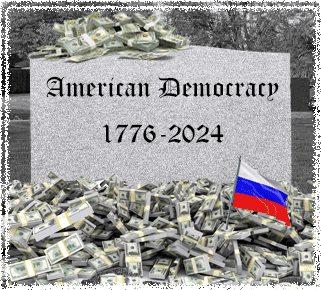
tombstone for American Democracy, 1776-2024, RIP (up)