




no access Open Letter to Richard Hammersley
Homepage of the Drug War Philosopher, Brian Quass
blog icon orange rss icon with stylized radio waves bird icon for twitter bird icon for twitter substack icon


back navigation arrow forward navigation arrow


Open Letter to Richard Hammersley

about addiction

by Brian Ballard Quass, the Drug War Philosopher

August 11, 2022


Dear Professor Hammersley

I hope you don't mind if I share a few thoughts on your excellent paper on Academia.edu entitled "Why the pervasive addiction myth is believed."

1) You conclude the article by rightly pointing out that the very term "drugs" is problematic. That's all too true. I think this is the main reason why discussions on this topic give off more heat than light, because the term "drugs" is an assumption-laden term and as such has no place in a rational discourse. The term has passed its expiration date and should be replaced with a judgment-free term like "psychoactive substances." (I like to use the term "godsend substances" for it points out that there is another way of looking at Mother Nature's pharmacy than through the jaundiced eyes of the Drug Warrior.) For "drugs" is not only a hypocritical term (in that it does not refer to tobacco and alcohol, for instance), but it is an anti-scientific one, for the term "drugs": means the following: "substances for which there are no positive uses, whatsoever, for anyone, anywhere, under any circumstances." But the fact is that there are no substances of this kind in the world. Even the deadly Botox can be used rationally in the right doses for the right person in the right circumstance. And so merely to use the term "drugs" is to tacitly sign off on Drug Warrior lies and, indeed, a whole anti-scientific way of looking at the world. For the term "drugs" as used today is like the term "scab": it not only connotes a thing but it passes judgment on that thing in so doing. For this reason, I think that the term "drugs" should be deconstructed at the beginning of all articles about addiction, at least when they are addressed to the heavily indoctrinated layperson in western society.

2) Speaking of which, we may just as well refer to "drugs" as godsend medicines. They are not a scourge. Nothing that nature grows is a scourge. If substances are misused, surely it is an education problem, not a drug problem.

3) You come close to saying that an ideal world would be one without drugs, but this is a Christian Science preference, not a logical truth. If one were to grow up in a hypothetical rain forest surrounded by psychoactive medicines, I do not think it would ever occur to one that they had a moral duty to renounce the use of the substances that surround them. Rather, you would consider it your duty to learn how to use them safely for good purposes. I wish that the Uvalde shooter Salvador Ramos HAD actually used drugs -- namely ecstasy -- for he would then have been far less likely to have found the stomach to kill grade schoolers.

4) As always, it's depressing to read articles like yours because even the good news it reports is usually bad. For instance, the 2000 Runciman report sounds positive because it suggests punishing cannabis-related offenses less harshly than those involving buprenorphine -- however, the report authors apparently still assumed that the only way to deal with "use" is to punish it -- not to educate users as to how to avoid addiction, say, or how to find better drugs to achieve the transcendence that the users were seeking.

5) Speaking of transcendence: Human beings have sought self-transcendence since caveman days. Much of the use that we decry today as hedonism can be equally well understood as a search for self-transcendence, an escape from the psychological limits that have been placed upon one by nature and nurture. Even if we feel that hedonism should be outlawed (a problematic view in itself) it sounds tyrannical to deny human beings the right to self-transcendence, especially considering that the kinds of substances we demonize today have inspired entire religions, as coca was an Incan god, mushrooms inspired religious cults in South America, and the Vedic religion was inspired by the psychoactive effects of Soma. Is not then the Drug War an attack on religion -- nay, an attack on the religious impulse itself?

6 I would argue that "addiction" is a political term. Consider America before 1914. Perhaps as many as 10% of the population were opium habitues (compared to the 1 in 4 American women who are chemically dependent on Big Pharma 1 2 drugs for a lifetime as a direct result of the Drug War giving psychiatry a monopoly on mood medicine). These pre-1914 opium 3 users were habitues, not addicts. Opium-loving Benjamin Franklin was certainly not considered an addict. Then the Harrison Narcotics act was passed and, hey presto, America was suddenly full of addicts. Gee, how did THAT happen?

7 This leads naturally to item 7, the fact that the Drug War causes all of the problems that it purports to solve. In 1915, America suddenly had an "addiction" problem, perhaps, but it was "addiction by fiat," since the government had effectively made Americans addicts -- by forcing them to go cold turkey and/or to seek illicit supplies of their drug of choice. (We would have a new addiction problem today if we outlawed coffee -- or alcohol, or tobacco, or antidepressants 4.)

8 Ecstasy is one of the safest drugs on the planet. Yet while liquor kills 95,000 a year in America, beer-swilling politicians eagerly seek out anecdotal stories of a handful of deaths caused by ecstasy -- like the death of British raver Leah Betts, which was clearly caused by a lack of safe-use info which was a product of the UK's focus on punishment over education. The UK's crackdown on Ecstasy turned the once-peaceful dance floor into the Wild West, where concert organizers suddenly had to hire special forces troops to keep the peace.

9. The term "drugs" is a scapegoat for all social problems, giving politicians the free pass they need to avoid spending money on real education of the young and fixing up inner cities. Politicians are not skinflints, mind: they just want to spend their money on prisons and policing, not on educating folks and therefore possibly giving them ideas of their own about what constitutes the good life. The people's "good life" may not involve consumerism, after all.

10. The Drug War steals elections for conservative politicians. There is no way that Trump would have been elected had not the Drug War removed hundreds of thousands of black felons from the voting rolls. Millions of others were effectively removed since many US prisons do not allow inmates to vote.

11. In a world with mass shootings, in which we're living under a nuclear sword of Damocles, someone should be arguing that we NEED drugs like Ecstasy, to remedy the fatal flaw of Homo sapiens, namely their ability to demonize and hate "the other," a term which nowadays includes "drug dealers," whom we feel free to address with terms that were once reserved for the Jews in Nazi Germany: "scumbags" and "filth."

12. Speaking of which, rather than worrying about drugs, we should be worrying about the Drug War movies 5 6 7 8 in which vigilante justice is glorified9, as in "Running from the Devil," in which the cigarette-smoking DEA agent hangs one "drug suspect" from a meat hook and shoots another in cold blood at pointblank range. Trump's election is small surprise when one considers the popularity of such films. The problem is, Americans think they can have democracy and the Drug War too, but that's not going to happen. Indeed, if Trump wins another turn, he's going to start executing the disfranchised blacks that previous Drug Warriors had been content merely to marginalize.

These notes aren't all about addiction, of course, but this is all interrelated.

Hope my thoughts on this subject were of interest to you, and thanks for your time!


Notes:

1: Seife, Charles. 2012. “Is Drug Research Trustworthy?” Scientific American 307 (6): 56–63. https://doi.org/10.1038/scientificamerican1212-56. (up)
2: LaMattina, John. n.d. “Why Is Biopharma Paying 75% of the FDA’s Drug Division Budget?” Forbes. https://www.forbes.com/sites/johnlamattina/2022/09/22/why-is-biopharma-paying-75-of-the-fdas-drug-division-budget/. (up)
3: The Truth About Opium by William H. Brereton DWP (up)
4: Antidepressants and the War on Drugs DWP (up)
5: Glenn Close but no cigar DWP (up)
6: Running with the torture loving DEA DWP (up)
7: Blast-off for Planet Hypocrisy! DWP (up)
8: Drug War Quotes in TV and Movies DWP (up)
9: Glorifying Beneficial Drug Use DWP (up)


read more essays here


Ten Tweets

against the hateful war on US


Scientists are so used to ignoring "drugs" that they don't even realize they're doing it. Yet almost all books about consciousness and depression (etc.) are nonsense these days because they ignore what drugs could tell us about those topics.

Almost every article about suicide is shallow because it takes drug prohibition as a natural baseline, even though drug prohibition outlaws substances that could so clearly elevate mood.

I've found that almost no one in the medical establishment has a clue about the endless positive uses that there would be for drugs in a world in which we decided to use them as wisely as possible for human benefit.

No substance is bad in and of itself. Fentanyl has positive uses, at specific doses, for specific people, in specific situations. But the drug war votes substance up or down. That is hugely anti-scientific and it blocks human progress.

Until we legalize ALL psychoactive drugs, there will be no such thing as an addiction expert. In the meantime, it's insulting to be told by neuroscience that I'm an addictive type. It's pathologizing my just indignation at psychiatry's niggardly pharmacopoeia.

This is why we would rather have a depressed person commit suicide than to use "drugs" -- because drugs, after all, are not dealing with the "real" problem. The patient may SAY that drugs make them feel good, but we need microscopes to find out if they REALLY feel good.

Doc to Franklin: "I'm sorry, Ben, but I see no benefits of opium use under my microscope. The idea that you are living a fulfilled life is clearly a mistake on your part. If you want to be scientific, stop using opium and be scientifically depressed like the rest of us."

Irony of ironies, that the indignant 19th-century hatred of liquor should ultimately result in the outlawing of virtually every mind-affecting substance on the planet EXCEPT for liquor.

I never said that getting off SSRIs should be done without supervision. If you're on Twitter for medical advice, you're in the wrong place.

SSRIs are created based on the materialist notion that cures should be found under a microscope. That's why science is so slow in acknowledging the benefit of plant medicines. Anyone who chooses SSRIs over drugs like San Pedro cactus is simply uninformed.


Click here to see All Tweets against the hateful War on Us


back navigation arrow forward navigation arrow


No cookies, no ads.


Unless otherwise indicated, no AI is used in the creation of site content. These essays represent the original ideas of their author and not the ideas that the author SHOULD have based on an algorithmic parsing of existing data. For more on this subject, consider the AI-related viewpoints to which the author subscribes as delineated in the New York Times opinion piece entitled "What 370,000 College Essays Tell Us About A.I.’s Effects on Creativity" by Rebecca Winthrop of the Brookings Institution.

The Partnership for a Death Free America is a proud sponsor of The Drug War Philosopher website @ abolishthedea.com.


Copyright 2026, Brian Ballard Quass Contact: quass@quass.com

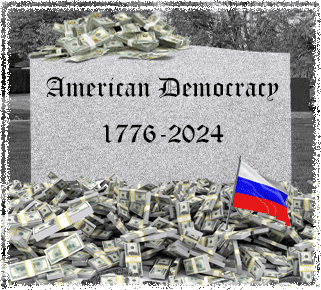
tombstone for American Democracy, 1776-2024, RIP (up)