




Homepage of the Drug War Philosopher, Brian Quass
blog icon orange rss icon with stylized radio waves bird icon for twitter bird icon for twitter substack icon


back navigation arrow forward navigation arrow


Open Letter to Erica Zelfand

or at least to her gatekeeper

by Brian Ballard Quass, the Drug War Philosopher

June 29, 2024


Hi, folks.

Is there any way that I can communicate with Erica Zelfand1? I'm a 65-year-old veteran user of antidepressants 2 and I am going to get off during a year with the help of psilocybin, San Pedro cactus, and other drugs, including, eventually ayahuasca.

Update: May 20, 2025

I have written hundreds of essays on this topic and would really like to share my feelings as someone who has been on the receiving end of psychiatry's nostrums for 40 years.

To me, the common sense way to get off Effexor 3 in a year would be to get the "meds" compounded such that each successive pill contains 364/365th dose of the previous pill.

This is common sense, but my latest psychiatrist wants to do 37.5 at a time and then make me count pilules!

Where can I find someone who will compound the drug for me? Why do psychiatrists insist that I do what's best and easiest for THEM, not for myself?

Also, it makes psychological common sense that I can get off Effexor by using psilocybin, not just once, but in the microdosing recommended by Paul Stamets4.

This makes perfect psychological common sense and yet my psychiatrist is less than interested in it.

As you can tell, I have issues with psychiatry because of its focus on what's easiest for the psychiatrist.

But no one I write to on this subject responds to me, so I'm not sure why I'm trying.

Hope to hear from Erica, though.

Thanks,

An eternal patient thanks to the psychiatric pill mill.

PS Also, I'm tired of the talk about mushrooms not being "proven" yet. They have been proven for THOUSANDS OF YEARS. I should not have to wait for materialist science to catch up with common sense.


Author's Follow-up: June 29, 2024

picture of clock metaphorically suggesting a follow-up


I fear this letter is a little terse, but that's what happens when you're ignored long enough: your frustration starts to seep into your prose. It's partly because I composed this letter while thinking about the way that I was basically blown off by my new psychiatrist.5

Author's Follow-up: October 31, 2024

picture of clock metaphorically suggesting a follow-up


When am I going to learn that the movers-and-shakers in the psychedelic game do not want to discuss issues: they want to sell stuff! Quite the change from 25 years ago, when you merely had to post some thought-provoking content on a topic and relevant parties would be emailing you that very day with feedback.


Author's Follow-up:

May 20, 2025

picture of clock metaphorically suggesting a follow-up


This was really a pointless letter, as it turns out. I failed to realize that Erica has obvious financial motivations and is in no hurry to discuss the problems of drug criminalization in the abstract. This is not to criticize Erica for making a living, merely to suggest that I mistook her prime directive in life. I have always been a philosopher at heart, and so I just naturally assume that others will be interested in discussing the why's and wherefores of human folly with me.

I should mention, however, that I have made enormous progress in getting off Effexor -- albeit with the help of a limited handful of psychoactive medicines -- used legally, of course, in places like Oregon and Mexico. (Oh, I am such a good boy!)

But I refuse to be gaslighted6. No one is going to convince me that getting off even Effexor has to be such a huge "ask." The fact that getting off any drug (even alcohol) is hard is only because Americans refuse to study and use psychoactive medicine for human benefit. They prefer to superstitiously condemn such substances instead.

Once we re-legalize drugs, once we study them for common-sense positive uses, teach safe use, and admit the possibility of fighting drugs with drugs, then addiction and unwanted dependence will be limited only to obvious exceptions (like "Howard the Drunkard" from the old Andy Griffith Show). For the inconvenient truth is that all drugs that inspire and elate have prima facie uses to fight depression and anxiety and addiction, either alone or in combinations: uses that we know, moreover, by deductive reasoning about basic psychology and for which we need no proof from lab scientists. What is recidivism after all but the result of a temporary but overwhelming feeling of existential angst -- and nothing is more obvious than that such moments could be "gotten through" -- if not even enjoyed -- with the help of substances that inspire and elate. I once relapsed on Effexor withdrawal after making overly ambitious reductions -- but it is crystal-clear to me that this relapse would not have happened had I been able to use laughing gas 7 or opium 8 or coca or a wide variety of phenethylamines to live through those few hours in which the existential angst seemed overwhelming for me.

This is why there is a symbiosis today between addiction "experts" and drug prohibition. We need these so-called "experts" precisely because we have outlawed everything that could work for the "addict." Drug prohibition has created a world full of addicts -- and a whole new specialty field purporting to "treat" them. It is as if we had outlawed all food except for gruel and then we looked to experts to treat people for malnutrition. "Of course you are undernourished," says the expert, "but that's only because you are not eating the right kind of gruel!" Whereas a real "expert" on malnutrition would be the one who is pointing out loudly and clearly that the government has outlawed everything that would work for the malnourished: namely, a vast variety of healthy and nutritious foods.


Notes for essay entitled Open Letter to Erica Zelfand: or at least to her gatekeeper:

1: Erica Zelfand 2024 (up)
2: Antidepressants and the War on Drugs DWP (up)
3: How Drug Prohibition makes it impossible to get off of Effexor and other Big Pharma drugs DWP (up)
4: Paul Stamets The Joe Rogan Experience (podcast), 2017 (up)
5: What the psychiatrist said when I told him I wanted to get off Effexor DWP (up)
6: How psychologists gaslight us about beneficial drug use DWP (up)
7: Forbes Magazine's Laughable Article about Nitrous Oxide DWP (up)
8: The Truth About Opium by William H. Brereton DWP (up)


read more essays here


Ten Tweets

against the hateful war on US


Our government treats drugs like uranium and spends hundreds of billions of dollars trying to scare us about them.

There are no merely recreational drugs. All drugs that elate have obvious potential uses for the depressed.

That's another problem with "following the science." Science downplays personal testimony as subjective. But psychoactive experiences are all ABOUT subjectivity. With such drugs, users are not widgets susceptible to the one-size-fits-all pills of reductionism.

Almost all talk about the supposed intractability of things like addiction are exercises in make-believe. The pundits pretend that godsend medicines do not exist, thus normalizing prohibition by implying that it does not limit progress. It's a tacit form of collaboration.

LA Police Chief Daryl Gates said drug users should be summarily executed. William Bennett said drug dealers should be beheaded. These are the Nazi attitudes that the drug war inculcates. This racist and brutal ideology must be wiped out.

Anyone who has read Pihkal by Alexander Shulgin knows that the drug warriors have it exactly backwards. Drugs are our friends. We need to find safe ways to use them to improve ourselves psychologically, spiritually and mentally.

There would be little or no profiling of blacks if the Drug War did not exist.

Psychiatrists never acknowledge the biggest downside to modern antidepressants: the fact that they turn you into a patient for life. That's demoralizing, especially since the best drugs for depression are outlawed by the government.

"The Legislature deliberately determines to distrust the very people who are legally responsible for the physical well-being of the nation, and puts them under the thumb of the police, as if they were potential criminals." -- Aleister Crowley on drug laws

Americans are starting to think that psychedelics may be an exception to the rule that drugs are evil -- but drugs have never been evil. The evil resides in how we think, talk and legislate about drugs.


Click here to see All Tweets against the hateful War on Us


back navigation arrow forward navigation arrow
Book Cover

Break the ice with a sledgehammer: place this book on your coffee table.

This book features 150 annotated images, designed to force brainwashed Americans to confront the fact that drug prohibition is wrong. Here is what author Richard Parrish II says of the book's compiler: "The drug prohibition philosopher provides first-hand, principled, persuasive, and insightful arguments against the current drug prohibition regime..."

Purchase Your Copy
Book Cover

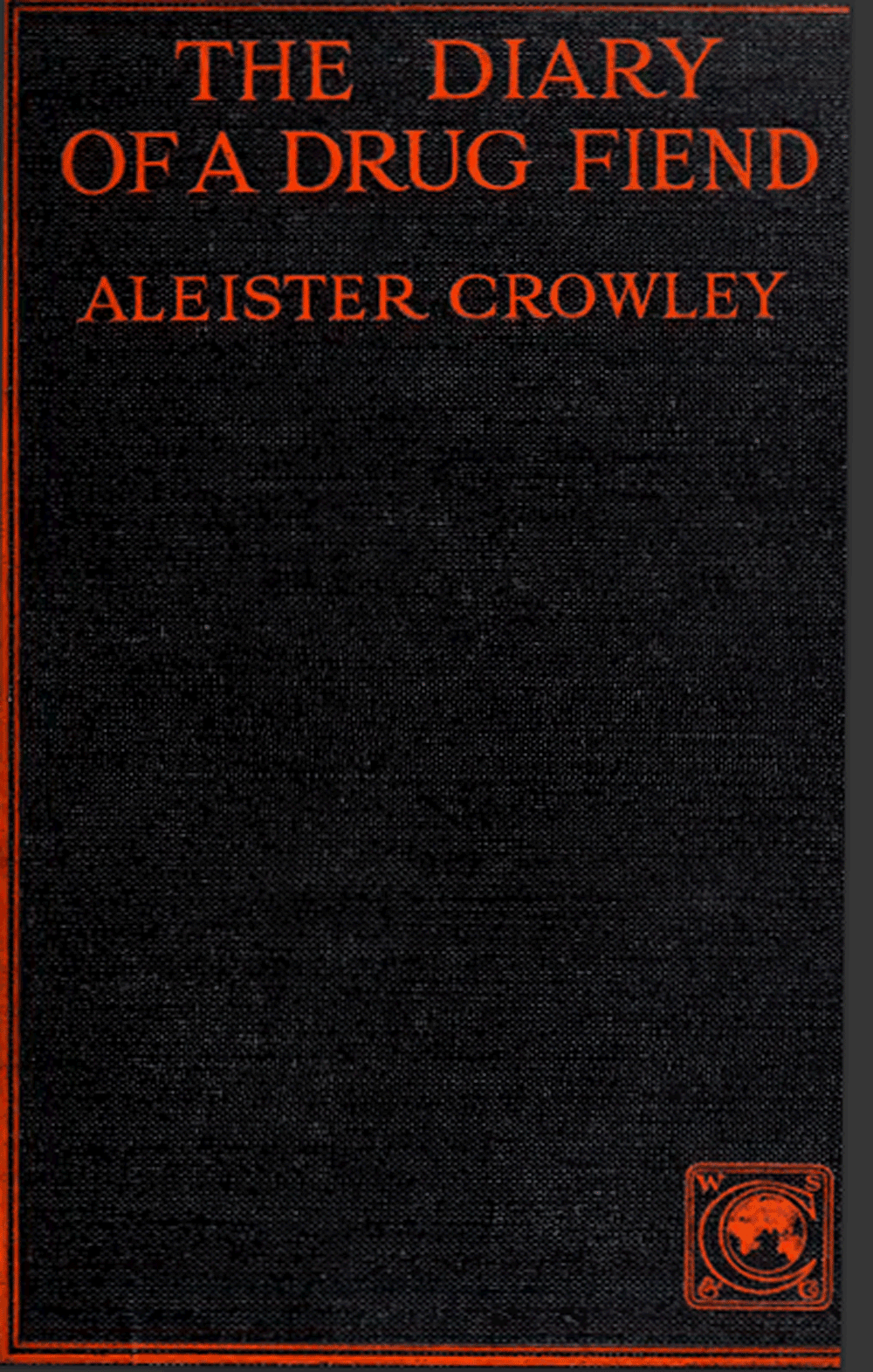
Diary of a Drug Fiend

This is the only full-cast recording of Aleister Crowley's 1922 classic paeon to common sense. It is the first book -- and so far almost the only book -- to stake out a philosophy of drug use that is compatible with human freedom, one in which we learn to use drugs as wisely as possible for the benefit of humanity. This recording was produced by the Drug War Philosopher and your purchases help support his effort to push back against the tragically counterproductive policy of drug prohibition, in the name of human freedom and of humanity's right to heal.

Purchase Your Copy


No cookies, no ads paid for by amoral and immoral billionaires (or trillionaires).


Unless otherwise indicated, no AI is used in the creation of site content. These essays represent the original ideas of their author and not the ideas that the author SHOULD have based on an algorithmic parsing of existing data. For more on this subject, consider the AI-related viewpoints to which the author subscribes as delineated in the New York Times opinion piece entitled "What 370,000 College Essays Tell Us About A.I.’s Effects on Creativity" by Rebecca Winthrop of the Brookings Institution.

The Partnership for a Death Free America is a proud sponsor of The Drug War Philosopher website @ abolishthedea.com.


Copyright 2026, Brian Ballard Quass Contact: quass@quass.com

tombstone for American Democracy, 1776-2024, RIP (up)