






Homepage of the Drug War Philosopher, Brian Quass
blog icon orange rss icon with stylized radio waves bird icon for twitter bird icon for twitter substack icon


back navigation arrow forward navigation arrow


Why Philosophers Need to Stop Dogmatically Ignoring Drugs

an open letter to Matthew D. Segall PhD

by Brian Ballard Quass, the Drug War Philosopher

March 18, 2024


Matthew D. Segall seems to be one of those rare philosophers who at least senses that altered states have relevance when discussing Kant and Whitehead, though he never broached the subject on his discussion about Whitehead two years ago for the Darlington Trust. One can only assume that it's still verboten to discuss this subject in mixed company -- i.e., an audience that may contain as many materialists as panpsychics. This is a shame, however, since William James himself specifically tells us that altered states must be investigated in order to understand ultimate reality: it is a matter of our philosophical duty, in fact. As he writes in "The Varieties of Religious Experience" (which, in case you're keeping score at home, is actually a transcription from a series of lectures given by James):

No account of the universe in its totality can be final which leaves these other forms of consciousness quite disregarded. How to regard them is the question--for they are so discontinuous with ordinary consciousness."


Yet disregard them we must because of Drug War ideology and the social and political pressure to confirm thereunto. It's not just that the field of philosophy has been censored. That would be bad enough. But the censors have instilled so much fear into the hearts of their victims that philosophers decline to even admit that they are censored, let alone to complain about the fact. It is more than their jobs are worth to even admit that demonized substances exist, let alone that they could tell us something about ultimate reality and the nature of human understanding. This is why I say that we live in a dark ages with respect to philosophical investigation, which, by the way, is something that only I am free to point out because of my lowly status as an academic outsider.

For here is the inconvenient truth:

Anyone who reads Whitehead or Kant must be immediately struck by the applicability of altered states to their discussion of epistemology (unless the only thing said reader knows about drugs is what the government has told them). Kant tells us, for instance, that we human beings have one way of learning about the sensible world, and that is through the conceptual categories that we all share collectively. Well, here is where a perky young freshman in the front of the classroom should raise his or her hand and shout: "But didn't William James say otherwise?" And then, after the gasps and sighs have finally subsided, the whippersnapper would quote the great psychologist to the effect that:

Rational consciousness as we call it, is but one special type of consciousness, whilst all about it, parted from it by the filmiest of screens, there lie potential forms of consciousness entirely different."


"How then," continues the upstart, "can we opine advisedly about epistemology without at least contemplating James's thesis about altered states?

And that know-it-all is onto something! Both Kant and Whitehead advance a kind of filter theory of reality, whereby we see only what our senses permit us to see, i.e. a practical reality. And yet when James at least partially demonstrates this theory in concreto with the help of "drugs," philosophers completely ignore the fact. Indeed, the Harvard bio of William James does not even mention his work with nitrous oxide, aka laughing gas .


No discussion of Kant and Whitehead should fail to mention altered states. William James said we should investigate these. Why do almost all philosophers pretend that drugs do not exist, even Whitehead, who took James' place at Harvard?!


Even as we speak, the US is attempting to outlaw laughing gas . I have written about this to hundreds of philosophers, and none of them respond. No one complains about this censorship of philosophical investigation.


To answer my own question: We live in a new dark ages wherein academics pretend that drugs do not exist and so have nothing to tell us about psychology or philosophy. "Drugs" has joined "The Book of the Damned 1 " by Charles Fort 2 .


In psychology, this unspoken hatred of "drugs" leads us to refuse to give MDMA 3 and laughing gas 4 to the suicidal. Meanwhile, we let folks use drugs to kill themselves (euthanasia) but not to make themselves want to live.


That's it, thanks, Matthew. I enjoyed your YouTube chat on Whitehead for the Darlington Trust, BTW -- though I was rather irritated by the frequent commercial interruptions which often appeared midsentence. ;)


Oops. Sorry, one more idea: We need a university to host a Department of Drug War Studies, the mere existence of which will remind the hoi polloi that this is not a niche issue, indeed the Drug War was responsible for the election of Trump.


Author's Follow-up: March 17, 2024

picture of clock metaphorically suggesting a follow-up


Well, I managed to alienate Dr. Segall. He took my posts as a criticism of his own presentations, whereas I was trying to point out that he was one of the few philosophers whom I have seen discussing the topic of drugs openly. But it is worth noting that even Matthew did not mention the word "drugs" in his YouTube address about Whitehead for the Darlington Trust in 2022.

So we got off to a bad start on Twitter -- and then I was told that Whitehead DOES talk about drugs. He is the Whitehead scholar so I will take his word for it. But Whitehead wrote before the Drug War had changed the word "drugs" into a catchall for all things disreputable. He did not talk about drugs as we understand them today -- indeed he could not because he did not live in our time with our understandings (or rather misunderstandings) of that concept. Whitehead's expositors certainly do not mention drugs. Even Segall did not mention the word "drugs" in his address -- that's forbidden because of that bad rep that the word has acquired. So I really felt like I was being gaslighted by being told that all is well, that drugs are being fully considered viz. Whitehead -- or -- when it comes to philosophical investigations.

This is surely not what Segall meant to say but it was what came across in his tweet -- which is why Twitter should not be used to discuss philosophical niceties. But in my defense, I tried to contact Matthew first by email, but his webpage, as far as I could see, provides no way to contact him except by social media.

I was left with the impression in our Twitter barrage that Segall does not believe that philosophers are censored in the age of the Drug War, which to me is just total gaslighting 5 . All academia is massively censored. It's not enough to say that they discuss things that could be interpreted as referring to drugs.

I would love to discuss these things in person, but until I get those letters behind my name, I remain a non-entity.

One of the biggest problems of the War on Drugs is that everyone underestimates the extent which it has censored academia. Indeed, in a forum for Bernardo Kastrup, I was told that I should reserve my talk about drugs for forums which focus on that subject, as if drug prohibition was an isolated issue without any impact in the real world.

Most Americans have thought for decades now that the Drug War is an issue only for evil "druggies" and "scumbag" dealers. They are now learning that they cannot have democracy AND a Drug War, that they have to choose. For the Drug War resulted in the election of Donald Trump by throwing millions of his minority opponents in jail -- which was one of the racist purposes of the Drug War from the very beginning. And so, as Julian Buchanan tells us, the Drug War has succeeded -- for its goals were always to destroy democracy and empower rich racists.


Notes for essay entitled Why Philosophers Need to Stop Dogmatically Ignoring Drugs: an open letter to Matthew D. Segall PhD:

1: The Book of the Damned continued DWP (up)
2: Charles Fort Didn't Know from Damnation DWP (up)
3: How the Drug War killed Leah Betts DWP (up)
4: Forbes Magazine's Laughable Article about Nitrous Oxide DWP (up)
5: The Semmelweis Effect in the War on Drugs DWP (up)


read more essays here


Ten Tweets

against the hateful war on US


I have yet to find one psychiatrist who acknowledges the demoralizing power of being turned into a patient for life. They never list that as a potential downside of antidepressant use.

It's always wrong to demonize drugs in the abstract. That's anti-scientific. It begs so many questions and leaves suffering pain patients (and others) high and dry. No substance is bad in and of itself.

Laughing gas inspired the philosophy of William James. Outlawing N20 is outlawing academic freedom. Laughing gas should be available for the suicidal. Drug prohibition is not a victimless crime.

If I want to use the kind of drugs that have inspired entire religions, fight depression, or follow up on the research of William James into altered states, I should not have to live in fear of the DEA crashing down my door and shouting: "GO! GO! GO!"

The FDA approves of shock therapy and the psychiatric pill mill, but they cannot see the benefits in MDMA, a drug that brought peace, love and understanding to the dance floor in 1990s Britain.

First we outlaw all drugs that could help; then we complain that some people have 'TREATMENT-RESISTANT DEPRESSION'. What? No. What they really "have" is an inability to thrive because of our idiotic drug laws.

Racist drug warriors make cities dangerous with drug prohibition -- then they use that danger as an excuse to send in the National Guard.

Scientists are so used to ignoring "drugs" that they don't even realize they're doing it. Yet almost all books about consciousness and depression (etc.) are nonsense these days because they ignore what drugs could tell us about those topics.

Thanks to the Drug War, folks are forced to become amateur chemists to profit from DMT, a drug that occurs naturally in most living things. This is the same Drug War that is killing American young people wholesale by refusing to teach safe use and regulate drug supply.

Drug prohibition began as a racist attempt to prevent so-called "miscegenation." The racist's fear was not that a white woman would use opium or marijuana or cocaine, but that she might actually fall in love with a Chinese, Hispanic or Black person respectively.


Click here to see All Tweets against the hateful War on Us


back navigation arrow forward navigation arrow
Book Cover

Break the ice with a sledgehammer: place this book on your coffee table.

This book features 150 annotated images, designed to force brainwashed Americans to confront the fact that drug prohibition is wrong. Here is what author Richard Parrish II says of the book's compiler: "The drug prohibition philosopher provides first-hand, principled, persuasive, and insightful arguments against the current drug prohibition regime..."

Purchase Your Copy
Book Cover

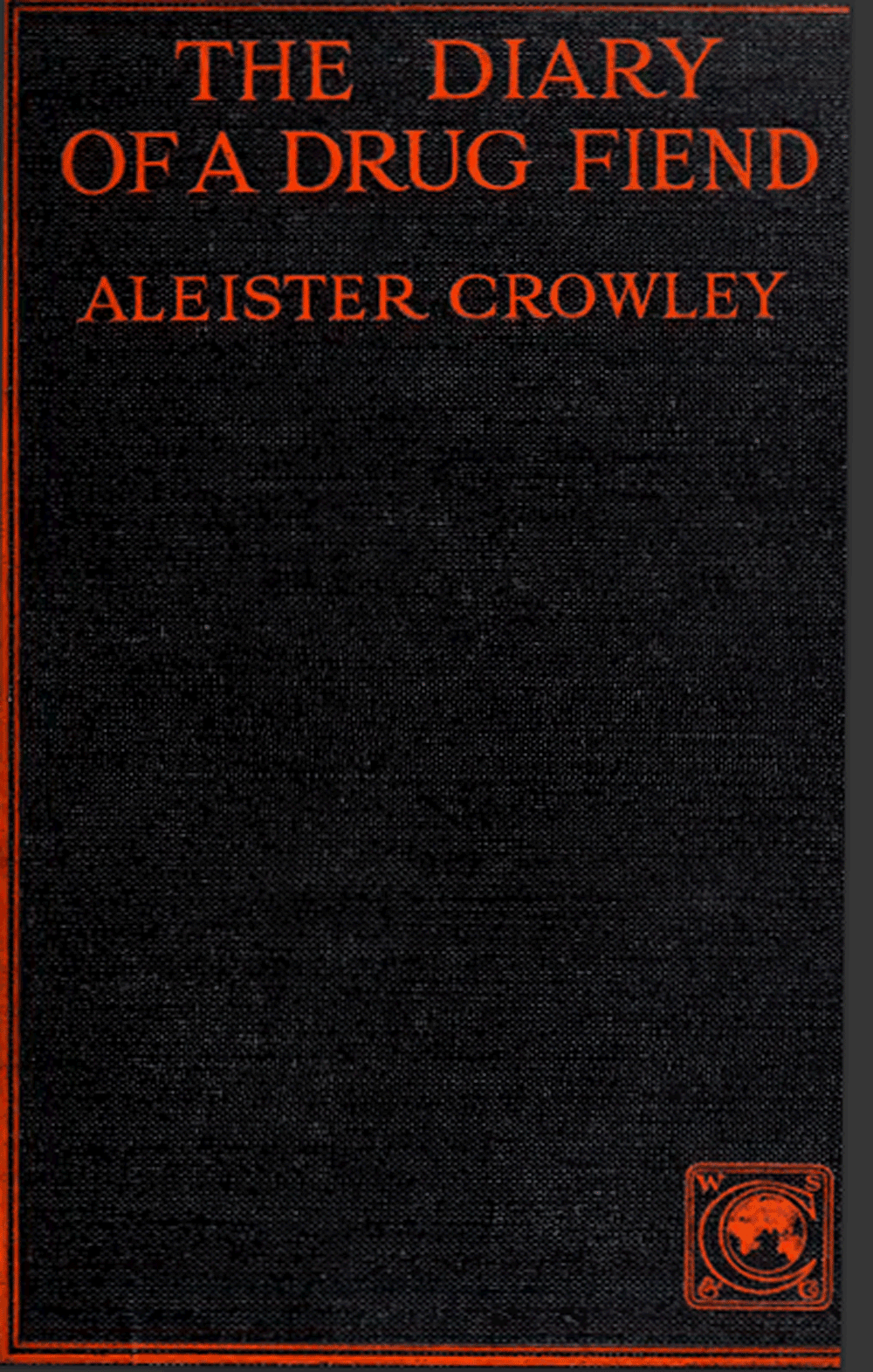
Diary of a Drug Fiend

This is the only full-cast recording of Aleister Crowley's 1922 classic paeon to common sense. It is the first book -- and so far almost the only book -- to stake out a philosophy of drug use that is compatible with human freedom, one in which we learn to use drugs as wisely as possible for the benefit of humanity. This recording was produced by the Drug War Philosopher and your purchases help support his effort to push back against the tragically counterproductive policy of drug prohibition, in the name of human freedom and of humanity's right to heal.

Purchase Your Copy


No cookies, no ads paid for by amoral and immoral billionaires (or trillionaires).


Unless otherwise indicated, no AI is used in the creation of site content. These essays represent the original ideas of their author and not the ideas that the author SHOULD have based on an algorithmic parsing of existing data. For more on this subject, consider the AI-related viewpoints to which the author subscribes as delineated in the New York Times opinion piece entitled "What 370,000 College Essays Tell Us About A.I.’s Effects on Creativity" by Rebecca Winthrop of the Brookings Institution.

The Partnership for a Death Free America is a proud sponsor of The Drug War Philosopher website @ abolishthedea.com.


Copyright 2026, Brian Ballard Quass Contact: quass@quass.com

tombstone for American Democracy, 1776-2024, RIP (up)
