




Homepage of the Drug War Philosopher, Brian Quass
blog icon orange rss icon with stylized radio waves bird icon for twitter bird icon for twitter substack icon


back navigation arrow forward navigation arrow


Common Sense Drug Withdrawal

an open letter to Austin of the Huachuma Project

by Brian Ballard Quass, the Drug War Philosopher

May 6, 2024


Tut-tut! This is philosophy, not medical advice. It discusses the ideal world, not the world in which we actually live. Of course, anyone who does not already recognize this fact is definitely reading the wrong website, but today we are so censorious about 'drugs,' that I feel like it's my positive duty to talk down to you folks! Speaking of which, some of you are looking a little peak-ed to me. Remember, your mother told you to eat vegetables for a reason! Humph!


Note: This morning our author had an informative chat with Austin of The Huachuma Project in Portugal1. They discussed Brian's desire to get off of antidepressants 2 with the motivating help of entheogens3. Brian followed up on the 20-minute call by forwarding Austin the following document via WhatsApp, informing him that reading it was optional but that he (Brian) wanted to explain his (Brian's) views about drug-withdrawal protocol in a little more detail, especially since the duo's video chat had been subject to occasional frame freezes and signal loss. And so here now is his (Brian's) forwarded essay.


I keep hearing from materialist doctors and researchers that one has to 'get off' of one drug before getting 'on' another.

'So, you want to get off of Effexor 4 ? Fine,' says the doctor. 'You get off of Effexor, and then we'll talk.'


Of course that protocol makes drug withdrawal a Catch-22 situation for the user. It provides literally zero hope for the would-be 'patient.' Moreover, its implementation is designed to benefit the materialist doctor, not the patient. Legally and technically speaking, it decreases doctor/researcher liability and overall workload by providing less variables to monitor and adjust. The patient suffers but the doctor/researcher is 'covered.' And yet it is psychological common sense that it would help to increase the dose of an entheogen WHILE decreasing the dose of an antidepressant. The 'user' is motivated, not just by the entheogen as currently used, but by the knowledge that those entheogen-sparked improvements will continue growing in intensity as his or her use of antidepressants decreases. This, I believe, is precisely the sort of motivation that one needs to 'stay the course' in such situations. I have some experience in this area. I spent 10 years getting 'off' of Valium, but I am sure I could have done it in a few months had I been given the motivation to do so, and that motivation could have been sparked by 'teacher plants' and other drugs.

To put this another way: I don't believe that 'getting off' something first (prior to using other meds) is in the interest of the patient, but rather of the researcher or doctor, at least when it comes to the use of psychoactive medicines. I think, moreover, that one of the biggest problems we westerners have with 'drugs' is that we refuse to even contemplate the idea of 'fighting drugs with drugs.' The unspoken goal of most rehab is not so much the improvement of the patient as it is turning that patient into a drug-free individual, and those two goals are not the same.

But we westerners are so convinced that 'drugs are not the answer' that we recoil at the idea of using a drug(s) to get off a drug. We consider it a copout. But the shamanic approach would say otherwise, especially when informed by a little western common sense. Drugs are never bad in and of themselves in such an approach but rather substances to be used for human benefit and not to be withheld based on some abstract principles, like those formulated by Mary Baker Eddy.

i say that materialist doctors are biased against fighting drugs with drugs because they are biased against common sense, i. e. , any conclusion that cannot be drawn from observations made with a microscope.

This is why a materialist like Dr. Robert Glatter could write a 2021 piece in Forbes magazine entitled 'Can laughing gas 5 help those with treatment-resistant depression?'6 Surely this is a laughable title. Everyone knows that laughing can help the depressed - and not just the laughing itself but the anticipation of laughing7. The Readers Digest has known for a hundred years that 'laughter is the best medicine.' It relaxes the mind AND body. But Glatter is a materialist and materialists totally ignore that psychological truth, just as they ignore all the historic and anecdotal evidence of the benefits of time-honored plant medicines. They are like Dr. Spock or Sergeant Friday: they want 'just the facts, ma'am,' and to them, the facts can only be seen under a microscope. For them, the testimony of the spiritually elevated user is a subjective opinion, not a fact.

With these ideas in mind, I maintain that the ideal withdrawal therapy for antidepressants would work something like this:

  1. Have a pharmacist create a year's worth of antidepressants, compounded in such a way that the first pill contains the full dosage that the patient is currently taking (in my case 225 mg. of Venlafaxine) and that the last pill would contain a miniscule fraction of that dosage, with all interim doses decreasing proportionally. In my case, that would mean that each successive pill to be taken daily would contain roughly .6 mgs less Venlafaxine than the previous pill. Thus the pill taken at the midpoint of therapy (on the 182nd day or so) would contain roughly 112 mg. of Venlafaxine.


  2. As one follows the above regimen with Venlafaxine, the potency and frequency of entheogen use would increase correspondingly. Of course, one cannot decide in advance what the correct potency and frequency of use would be on a daily basis, but the dose should be adjusted upward as necessary to prevent and/or counteract any backsliding in the withdrawal regimen stated above. How? By inspiring the user psychologically with plant medicine, thus helping them see their situation creatively and in a new light.


In this way, one leverages the power of anticipation to get the user off of the anti-depressant.

Of course, I am not a doctor (least of all a materialist doctor), but there is what philosophers would call 'prima facie' evidence that such a protocol would work, based on what we know about the psychology of motivation and the lengthy lists of psychological benefits that are known to accrue to many, if not most, who work with entheogens like psilocybin and huachuma8.

The protocol's chances of success will only increase as more plant medicines become relegalized, since then the 'therapist' can do more than simply adjust the dosage and frequency of entheogens (as in step 2 above), but they can use different entheogens (and/or combinations of entheogens) in their quest to find the most adequate biochemical inspiration for a specific client. Shamans have always had this freedom. It is only in the west that we have determined a priori that psychoactive drugs have no positive uses whatsoever - a position that can only be maintained by the complete abandonment of common sense, not to mention the scientific principle that substances are only good or bad with respect to the context of use. It is also, of course, a lie, historically speaking.

Of course, the dependence-causing nature of SNRIs like Venlafaxine should not be underestimated. Julie Holland says that such meds can be harder to kick than heroin 9 10. Heroin leaves the system in a week or so, whereas SNRIs change baseline brain chemistry and it may take months, perhaps years (if ever???), for the initial baseline to return.

I think there is also a tendency in western medicine to moralize dependency and search for hidden causes. This has its place, of course. But 1 in 4 American women are dependent on these meds. This tells me that the real hidden cause of this mass dependency is prohibition, since I cannot believe that all these women had hidden traumas that got them hooked on antidepressants: rather, it was prohibition itself that got these people hooked. How? By outlawing all other mood-changing drugs, almost all of which are less dependence-causing than antidepressants. Yes, all people have hidden issues of some kind, but when we pathologize women en masse like this, we ignore the obvious culprit behind their dependency, which is drug law.

I could make a much stronger case for the 'drug-swapping' therapy that I recommend above, but it will jangle in the ears of all westerners who have been taught from grade school that they must fear drugs.

The fact is that any drug that elates the user could be used in the above routine, not just drugs that today we classify as 'entheogens,' although entheogens would remain a mainstay of the kind of protocol that I am recommending here. Drug war ideology insists that such use would be morally wrong and even cause addiction, but those are mere biases. Many of the drugs that elate and inspire do not cause addiction - like the phenylethylamines of Alexander Shulgin11. Even addictive drugs can be used non-addictively, notwithstanding the fearmongering of racist Drug Warriors. When all drugs are legal again, the therapist could employ a wide range of mood-elevating substances in such a way that the user need never know which specific drug was being employed at a given time, thus rendering addiction unlikely if not impossible. The therapist could even use those drugs the mere mention of which cause consternation in drug-hating America12.

Of course, this goes against our moral sense in the west that addiction and dependence therapy must be hard and hellish or it is not real therapy. But this, I maintain, is a puritanical prejudice, not a fact.

The problem in 'selling' my therapy is that it merely makes psychological sense, the kind of thing that materialists completely ignore. For what is the problem with withdrawal, after all? It's not simply the bad feelings experienced by the subject but the feeling that those sensations will never cease. There is thus literally nothing to look forward to. That's one definition of the hell that many therapists seem to think is the patient's due. If, however, one is given, say, weekly mood elevation in safe and non-addictive ways, one can look forward to a surcease of negative feelings and so 'stay the course' on withdrawal from the unwanted substance.

Nor does this bar the user from exploring hidden conflicts. In fact, it gives them a chance to do so since it makes them increasingly eligible for the kind of entheogenic therapies that will help them unmask conflicts. What's more, such substances can help 'loosen the tongue' and the mind, enabling them to think and contemplate truths more freely than when both their mind and body are shrouded in a straitjacket of gloomy despair.

To repeat: this is all psychological common sense, but we have a variety of materialist and Christian Science prejudices in the west that keep us from acknowledging it.

This brings up one of the shortcomings of Dr. Gabriel Mate's otherwise fascinating work: his insistence on referring all addiction to what he calls 'inner pain.'13 By doing so, he completely exonerates the Drug War for its role in creating problematic dependency and addiction. Prior to 1914, there were opium 14 habitues in the States. After 1914, there were only addicts. There had been no sudden mass introduction of 'inner pain' in this case. It was drug law which decided by fiat that these individuals would henceforth be considered problematic. When psychologists pathologize such people, they are blaming the victim while helping to normalize the prohibition that created their problems in the first place15 16.


Author's Follow-up: May 6, 2024

picture of clock metaphorically suggesting a follow-up


Of course when all drugs are re-legalized and we teach people instead of arresting them, the above protocols will not even require a therapist/shaman. One may choose to have one, of course. Who, after all, could not benefit from a little assistance from a pharmacologically savvy empath? But someday we will again treat adults AS adults when it comes to psychoactive medicine and let them decide how much hand-holding they need to use them wisely -- not based on fearmongering public service ads and a self-serving DEA, but based on the facts. And not just the reductively derived facts that myopic science deigns to recognize, but all the facts: including the long and ever-growing list of positive anecdotes about drug use that have been carefully censored from the public discourse by American media and those billionaires who both own and control it17.


Notes for essay entitled Common Sense Drug Withdrawal: an open letter to Austin of the Huachuma Project:

1: The Huachuma Project 2024 (up)
2: Antidepressants and the War on Drugs DWP (up)
3: https://www.academia.edu/113227654/Entheogens_and_Sacred_Psychology Sotillos, Samuel Bendeck, Academia.Edu, 2024 (up)
4: How Drug Prohibition makes it impossible to get off of Effexor and other Big Pharma drugs DWP (up)
5: Forbes Magazine's Laughable Article about Nitrous Oxide DWP (up)
6: Glatter, Robert. 2021. “Can Laughing Gas (Nitrous Oxide) Help People with Treatment-Resistant Depression?” Forbes, June 9, 2021. https://www.forbes.com/sites/robertglatter/2021/06/09/can-laughing-gas-nitrous-oxide-help-people-with-treatmentresistant-depre (up)
7: The Therapeutic Value of Anticipation DWP (up)
8: Journeying with Huachuma, the Sacred Andean Cactus Vounteer Latin America, 2020 (up)
9: Hall, Wayne, and Megan Weier. 2016. “Lee Robins’ Studies of Heroin Use among US Vietnam Veterans.” Addiction 112 (1): 176–80. https://doi.org/10.1111/add.13584. (up)
10: Richard Louis Miller. 2017. Psychedelic Medicine : The Healing Powers of LSD, MDMA, Psilocybin, and Ayahuasca. Rochester, Vermont: Park Street Press. (up)
11: Scribd.com: The Nature of Drugs Vol 1 Shulgin, Alexander, Transform Press, Santa Fe, 2021 (up)
12: Even if a drug becomes addictive and/or if daily use seems desirable, we need not despair. For let's be honest: 1 in 4 American women take a Big Pharma med every day of their life. There is no logical reason why we should call that use admirable while demonizing the former kind of use. The real question should be: does the drug use help the user live the kind of life that they desire? THAT should be our goal, not to turn these "users" into Christian Scientists! (up)
13: Sherlock Holmes versus Gabriel Maté DWP (up)
14: The Truth About Opium by William H. Brereton DWP (up)
15: Speak now or forever hold your peace about drug prohibition DWP (up)
16: How psychologists gaslight us about beneficial drug use DWP (up)
17: Billionaire Democracy: The Hijacking of the American Political System Tyler, George R., Pegasus Books, Michigan, 2016 (up)


read more essays here


Ten Tweets

against the hateful war on US


Prohibition never ended. Busybody Americans just gave alcohol a big Mulligan for killing 178,000 a year in America alone and then began fighting to outlaw everything else.

I've always wondered why we don't just let heroin users be -- or better yet, re-legalize drugs and give them choices. Why are they punished for using heroin daily while we praise 1 in 4 women for taking an even more dependence-causing drug every day of their life?

We should start taking names. All politicians and government officials who work to keep godsends like psilocybin from the public should be held to account for crimes against humanity when the drug war finally ends.

The DEA conceives of "drugs" as only justifiable in some time-honored ritual format, but since when are bureaucrats experts on religion? I believe, with the Vedic people and William James, in the importance of altered states. To outlaw such states is to outlaw my religion.

We deal with "drug" risks differently than any other risk. Aspirin kills thousands every year. The death rate from free climbing is huge. But it's only with "drug use" that we demand zero deaths (a policy which ironically causes far more deaths than necessary).

Many psychedelic fans are still drug warriors at heart. They just think that a nice big exception should be carved out for the drugs that they're suddenly finding useful.

William James knew that there were substances that could elate. However, it never occurred to him that we should use such substances to prevent suicide. It seems James was blinded to this possibility by his puritanical assumptions.

Americans heap hypocritical praise on Walt Whitman. What they don't realize is that many of us could be "Walt Whitman for a Day" with the wise use of psychoactive drugs. To the properly predisposed, morphine gives a DEEP appreciation of Mother Nature.

Whether we judge people only by the words that they say or only by the substances of which they partake, we are ignoring the most important things: what they really mean and how they really behave.

I just can't believe... [image]


Click here to see All Tweets against the hateful War on Us


back navigation arrow forward navigation arrow
Book Cover

Break the ice with a sledgehammer: place this book on your coffee table.

This book features 150 annotated images, designed to force brainwashed Americans to confront the fact that drug prohibition is wrong. Here is what author Richard Parrish II says of the book's compiler: "The drug prohibition philosopher provides first-hand, principled, persuasive, and insightful arguments against the current drug prohibition regime..."

Purchase Your Copy
Book Cover

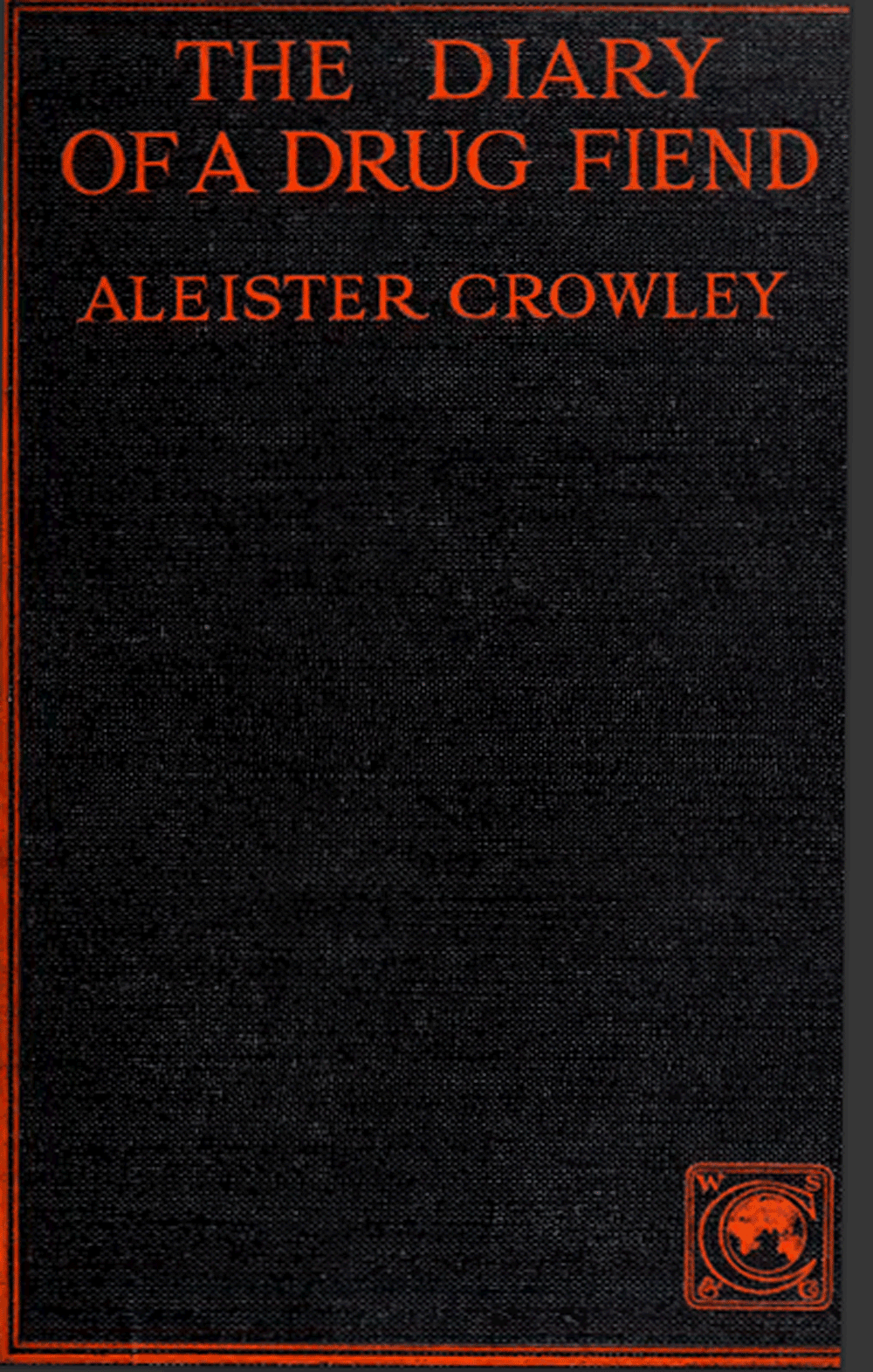
Diary of a Drug Fiend

This is the only full-cast recording of Aleister Crowley's 1922 classic paeon to common sense. It is the first book -- and so far almost the only book -- to stake out a philosophy of drug use that is compatible with human freedom, one in which we learn to use drugs as wisely as possible for the benefit of humanity. This recording was produced by the Drug War Philosopher and your purchases help support his effort to push back against the tragically counterproductive policy of drug prohibition, in the name of human freedom and of humanity's right to heal.

Purchase Your Copy


No cookies, no ads paid for by amoral and immoral billionaires (or trillionaires).


Unless otherwise indicated, no AI is used in the creation of site content. These essays represent the original ideas of their author and not the ideas that the author SHOULD have based on an algorithmic parsing of existing data. For more on this subject, consider the AI-related viewpoints to which the author subscribes as delineated in the New York Times opinion piece entitled "What 370,000 College Essays Tell Us About A.I.’s Effects on Creativity" by Rebecca Winthrop of the Brookings Institution.

The Partnership for a Death Free America is a proud sponsor of The Drug War Philosopher website @ abolishthedea.com.


Copyright 2026, Brian Ballard Quass Contact: quass@quass.com

tombstone for American Democracy, 1776-2024, RIP (up)